What the Fix Involves
Most of the houses we get calls from in Westlake went up around 1983
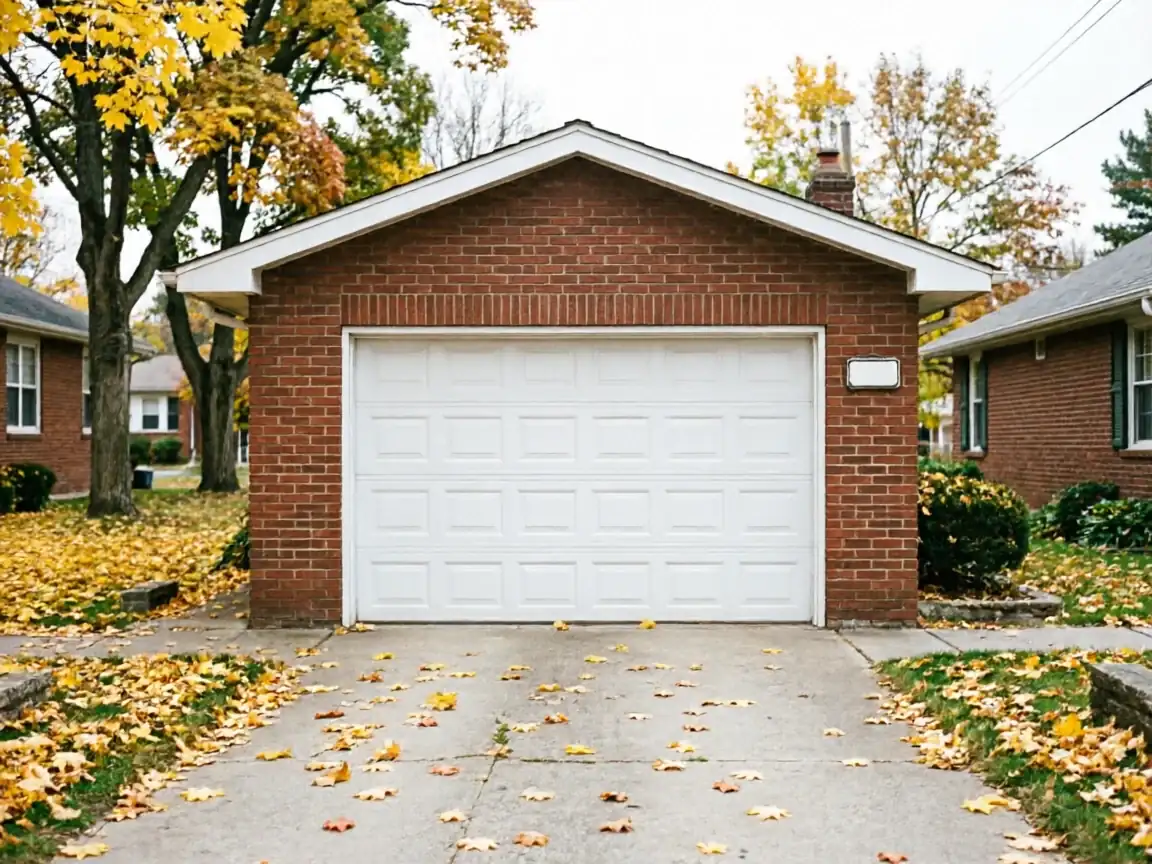
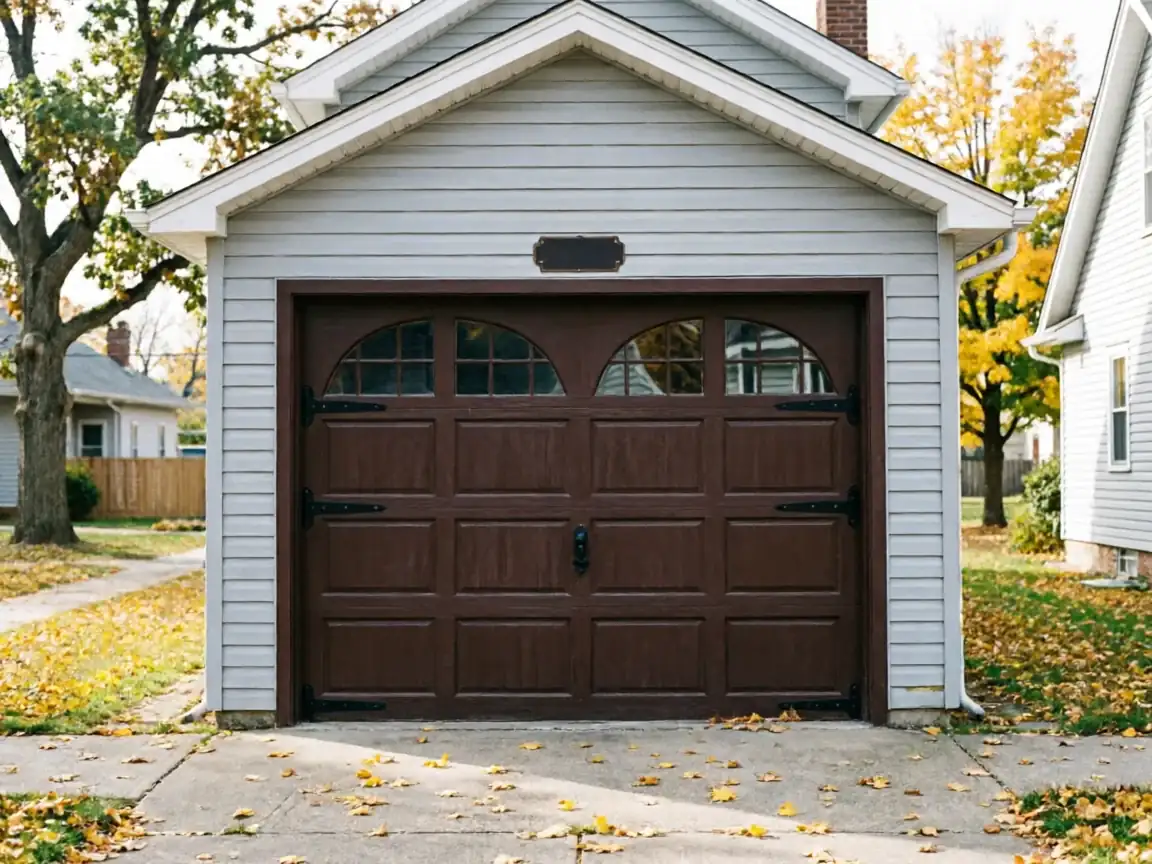
Which puts the garage door and opener a good fifteen years newer than the typical house across the rest of our service area, where the build year runs closer to 1968. That matters for spring repair because a door from the early '80s is usually on a factory torsion spring set sized for a heavier insulated panel than the older steel doors common elsewhere in Lorain County, not the single-spring extension setups you still find on pre-1970 garages.
The job itself doesn't change much
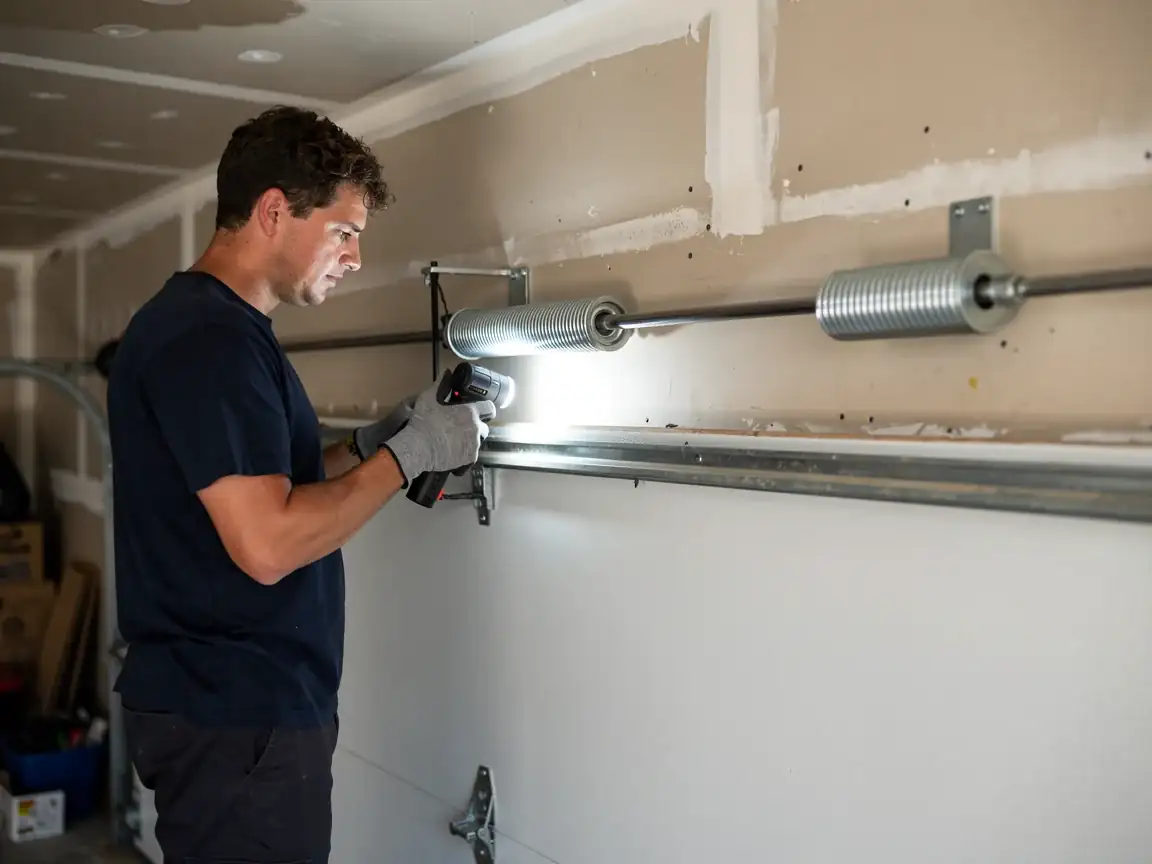
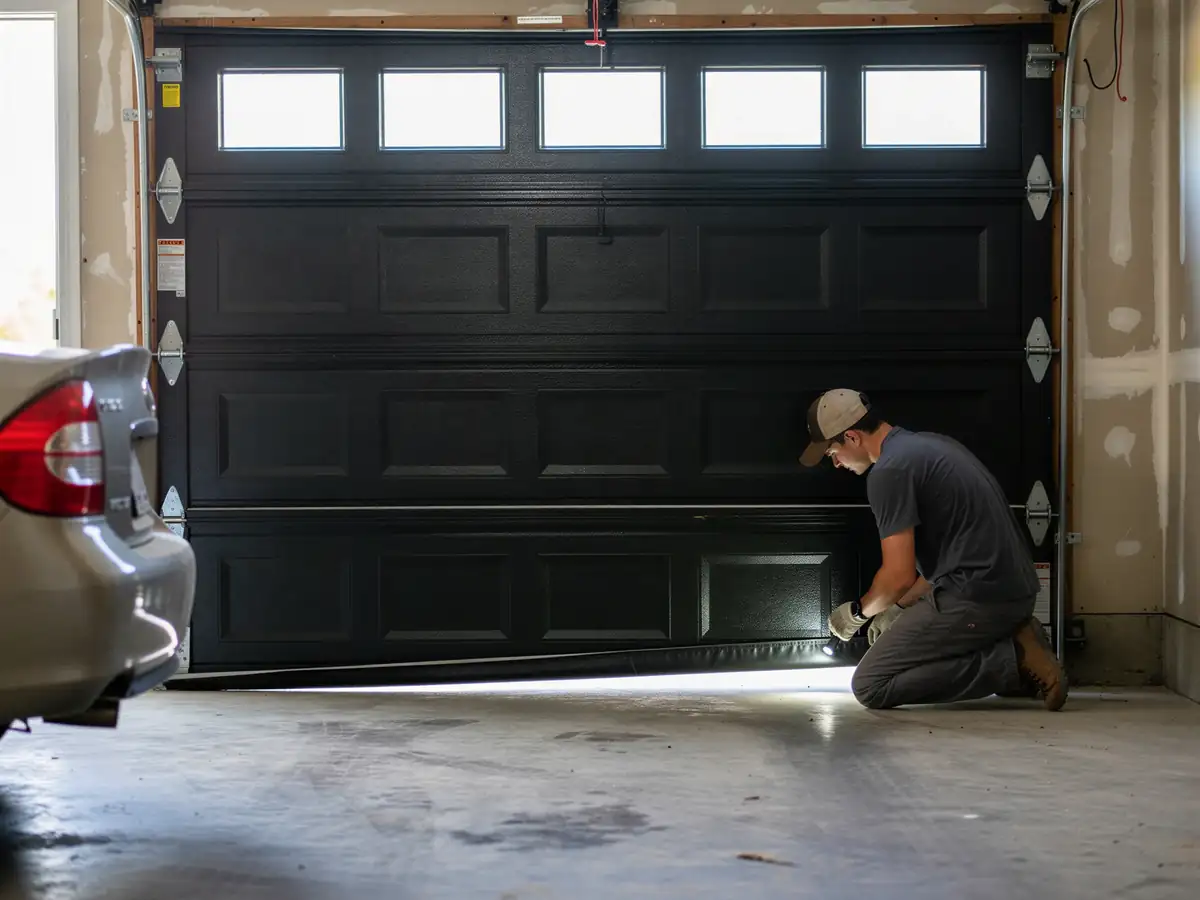
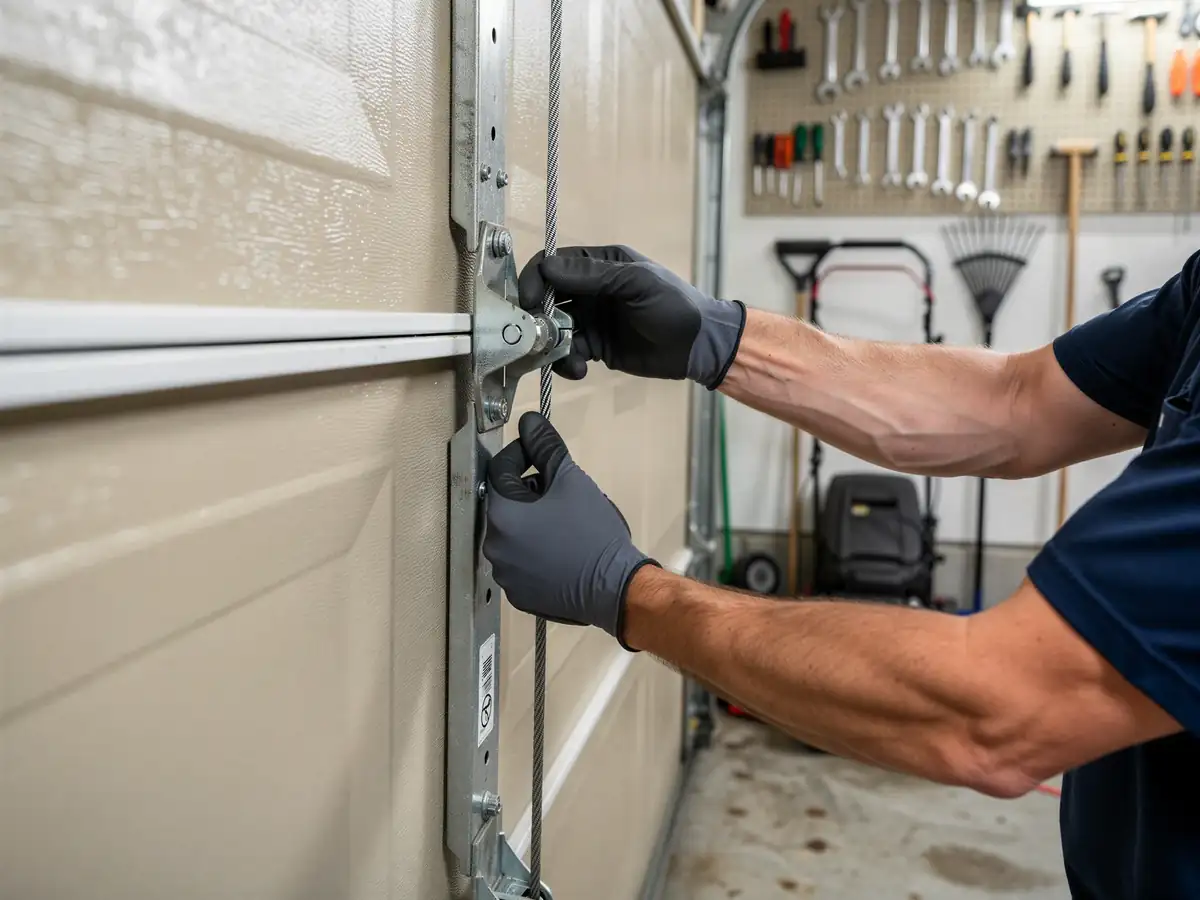
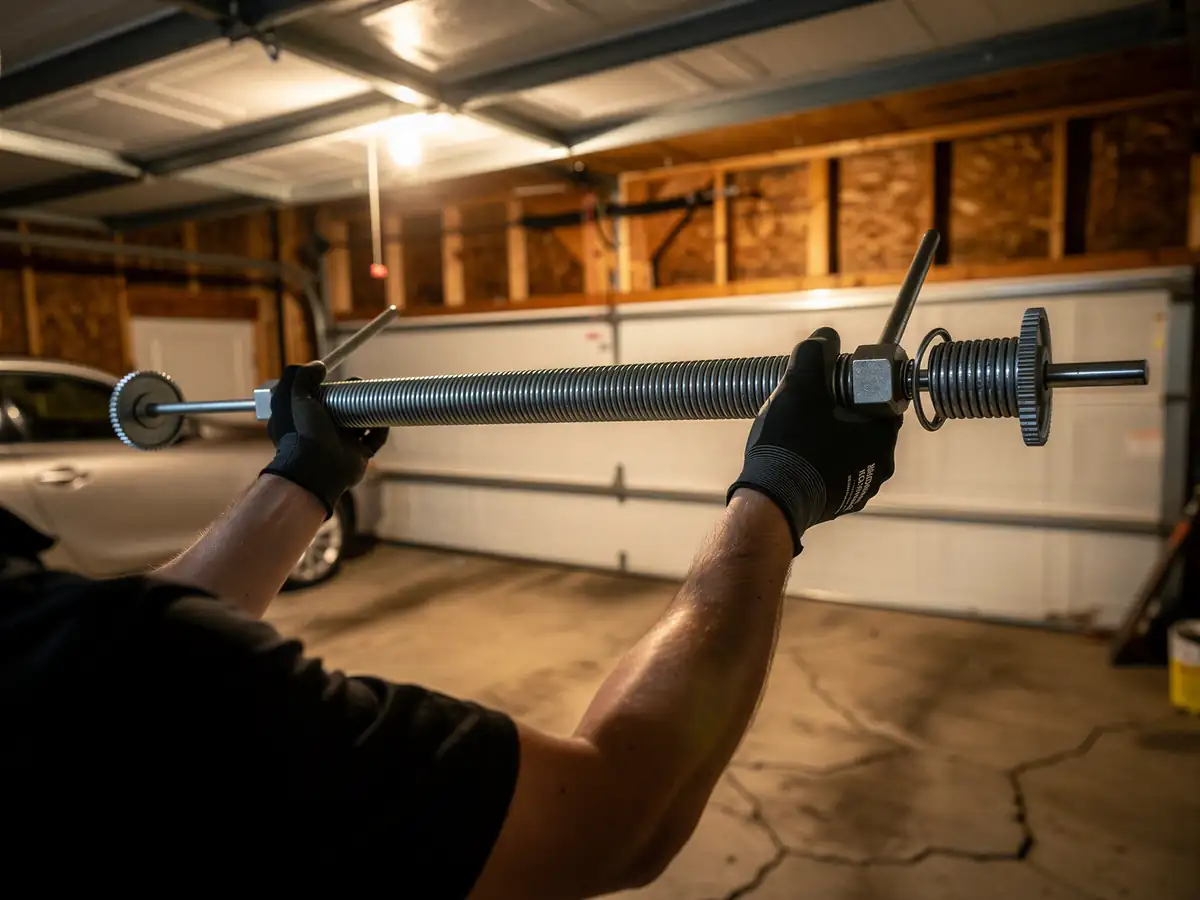
We measure the door's wire size, wind count, and drum size off the broken spring (never off the door weight alone, since sag changes that number), unwind the old winding cones, install a matched pair sized to the door, and set tension so the door balances a few inches off the floor on its own. On a double door from this era we almost always replace both springs together, since the second one is close behind the first.
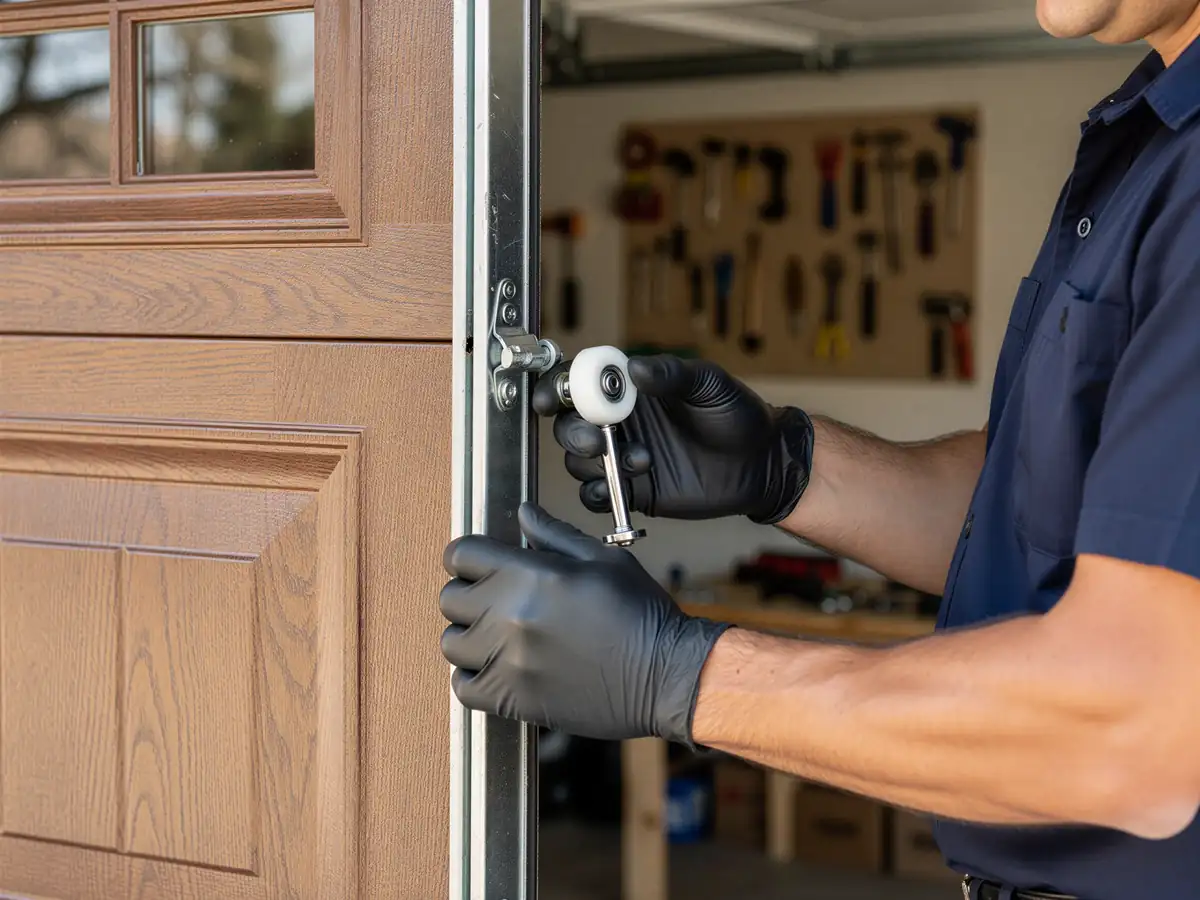
We also check the cables and the center bearing plate while we're in there
Since a snapped spring on a door this age sometimes takes a cable with it.
How Long You Are Without the Door
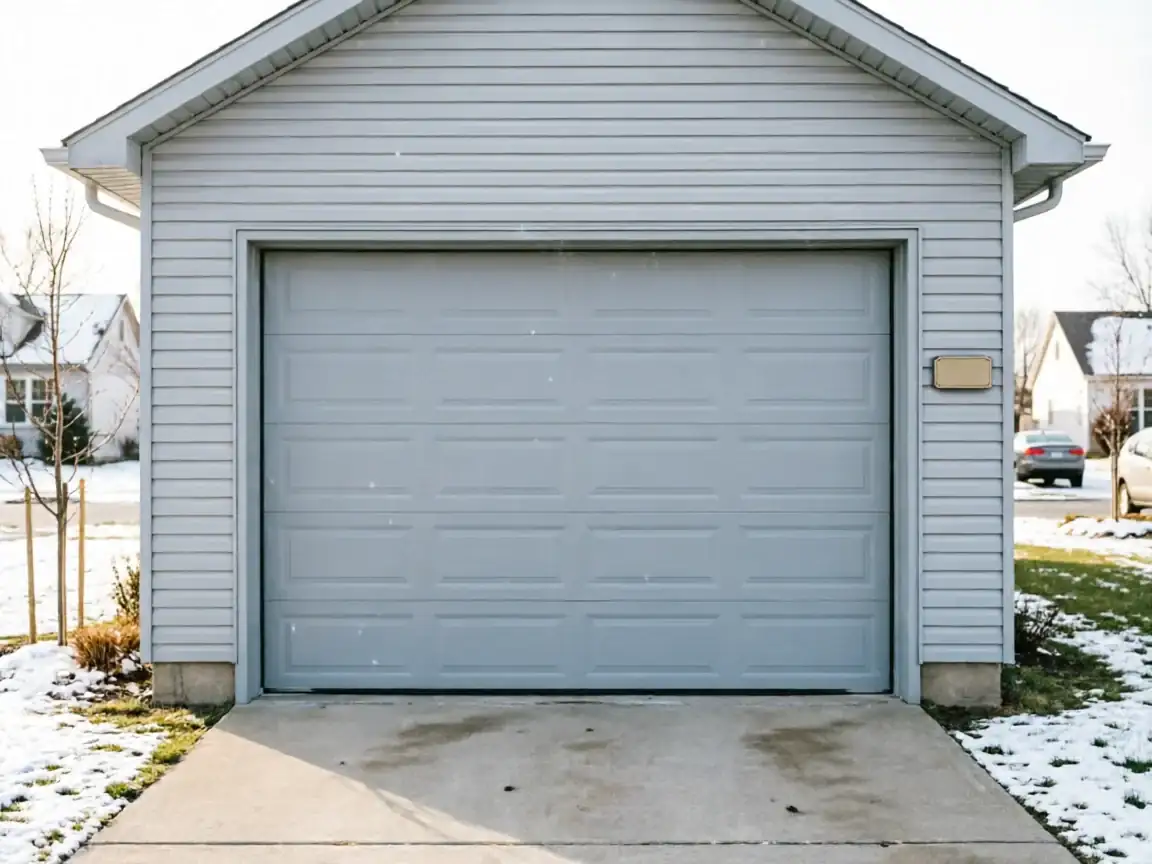
A straight spring swap on a Westlake door is usually a single visit, start to finish. Where it runs longer is if the broken spring took out a cable or bent the bottom bracket on the way down - not unusual on a wider double door - and we need to source a part that matches the opener and track hardware from that build era rather than whatever's sitting on the truck that day.
We don't carry every bracket size for every door built in the early '80s; some of that hardware is specific to the opener brand the builder used at the time. If we hit that, we'll tell you straight rather than force a part that doesn't fit.
Can You Do This Yourself
We'll say this plainly: don't wind a torsion spring yourself. The wire gauge and wind count on a door built for a heavier insulated panel store more force than the extension springs on an older, lighter door, and the winding bars that work fine on one can slip on the other if you're not used to the feel of it. People lose fingers and worse on this exact job every year.
What you can safely check yourself: whether the door is binding on the track, whether a cable has frayed or popped off a pulley, and whether the opener is straining and reversing instead of lifting cleanly. Any of those point to a spring problem and are reasons to call rather than keep opening the door.
Parts We Carry
For a house built in the early '80s range common in Westlake, we stock torsion springs in the wire sizes and wind counts that match the heavier insulated doors from that period, along with standard cable, rollers, and center bearings. What we don't keep on the truck is every proprietary bracket tied to a specific builder-grade opener from that era - if your door needs one of those, we'll order it and tell you honestly how long that takes rather than guess.
We also carry the lighter-gauge extension springs used on older steel doors, since we cover houses across the wider Lorain area built as far back as the late 1930s, but that's not usually what we're pulling for a Westlake call.
Why It Happens Here
Springs fail on a cycle count, not a calendar, so a door built around 1983 and used twice a day for forty years has put in roughly the same number of cycles as an older door used less. What's different in Westlake is the climate load on top of that: our area sits in a cold-moderate band, and a spring near the end of its life is more likely to snap on a sub-freezing morning when the steel is stiff and the garage is colder than the house. That's true everywhere we cover, but it's often the first cold snap of the season that finishes off a spring that was already stretched thin from years of use.