How It Shows Up
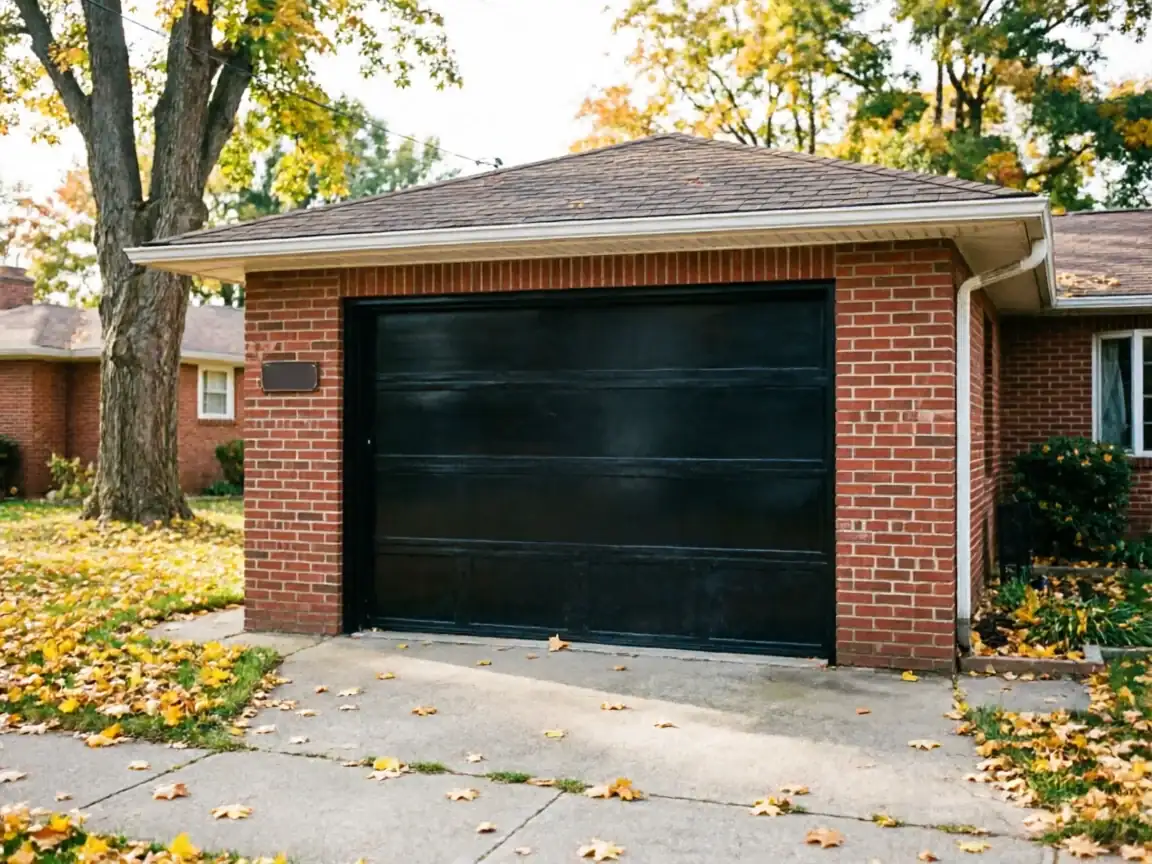
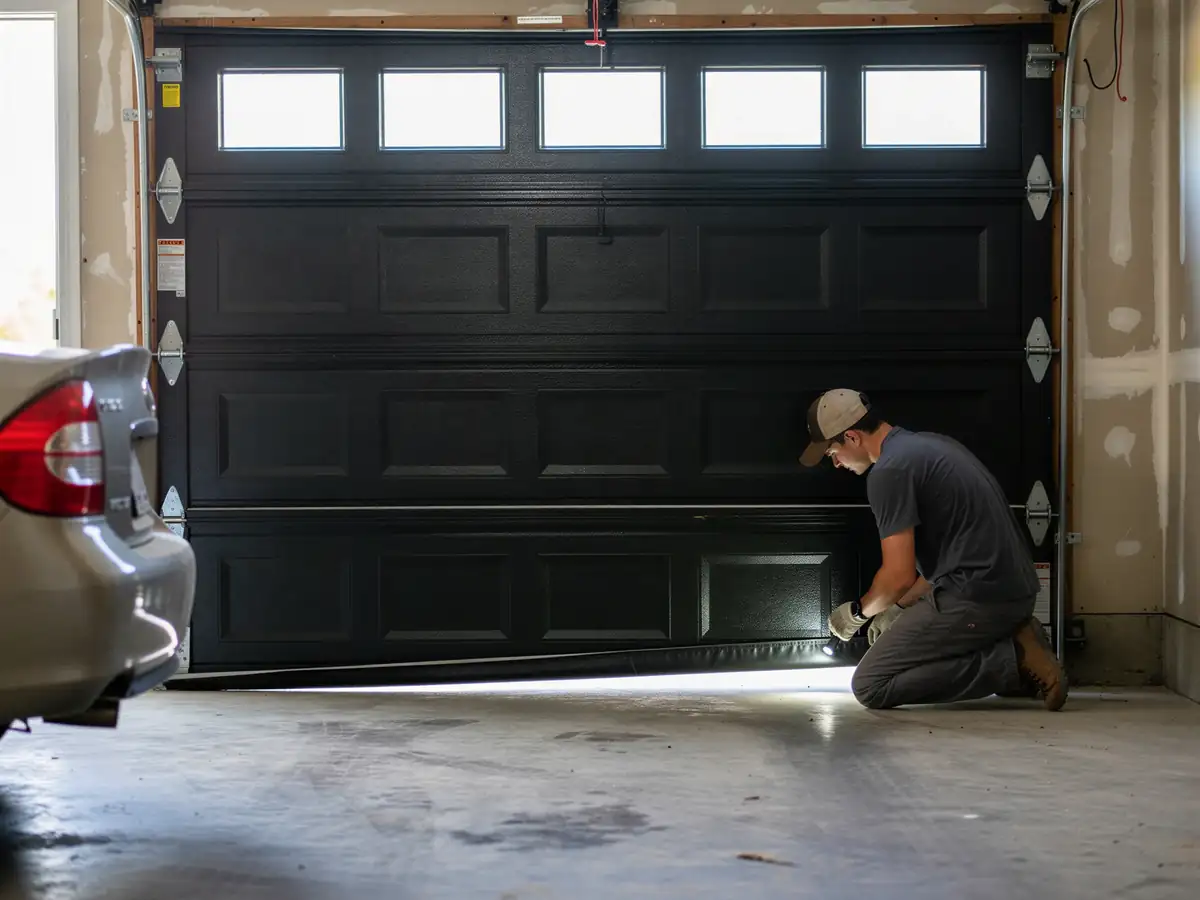
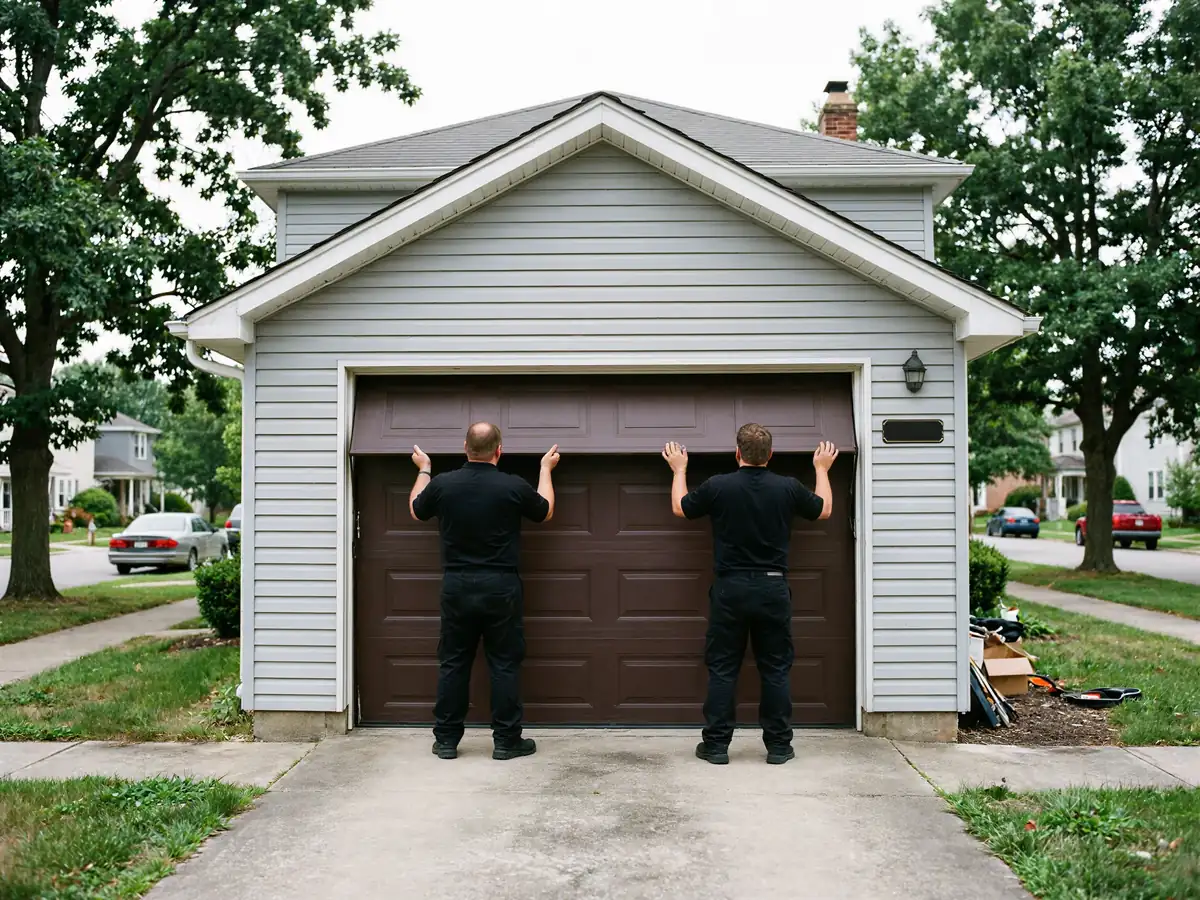
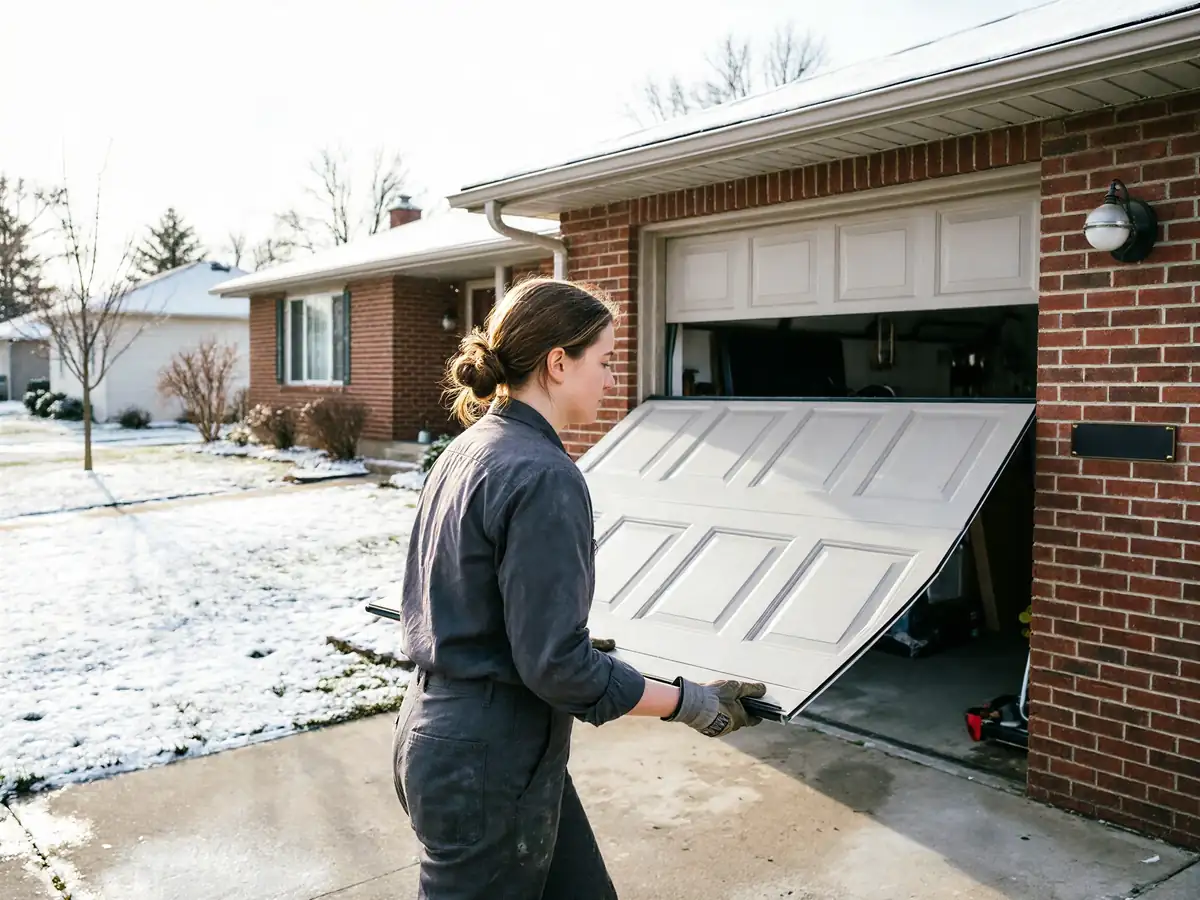
Panel damage on an older steel door usually starts small and gets worse fast once moisture gets behind the skin. You'll see a dent from a backed-into bumper or a thrown ball that doesn't pop back out, or a bottom panel that's gone soft and rust-streaked where snow melt sits against it all winter. On doors from the 1960s-70s stock common across this area, the steel gauge is often thinner than what gets installed today, so a hit that would just scuff a modern door can crease the whole section. Once a panel creases, the door doesn't seal right at that spot anymore, and whatever's getting in - cold air, water, mice - has a door open for it literally. Sometimes it's not an impact at all: it's a bottom panel that's rusted through from the inside out because a past owner never resealed the bottom seal gap. You'll notice it as a line of rust bleeding through paint, or the panel flexing when the door's down and the wind pushes on it.
Why It Happens Here
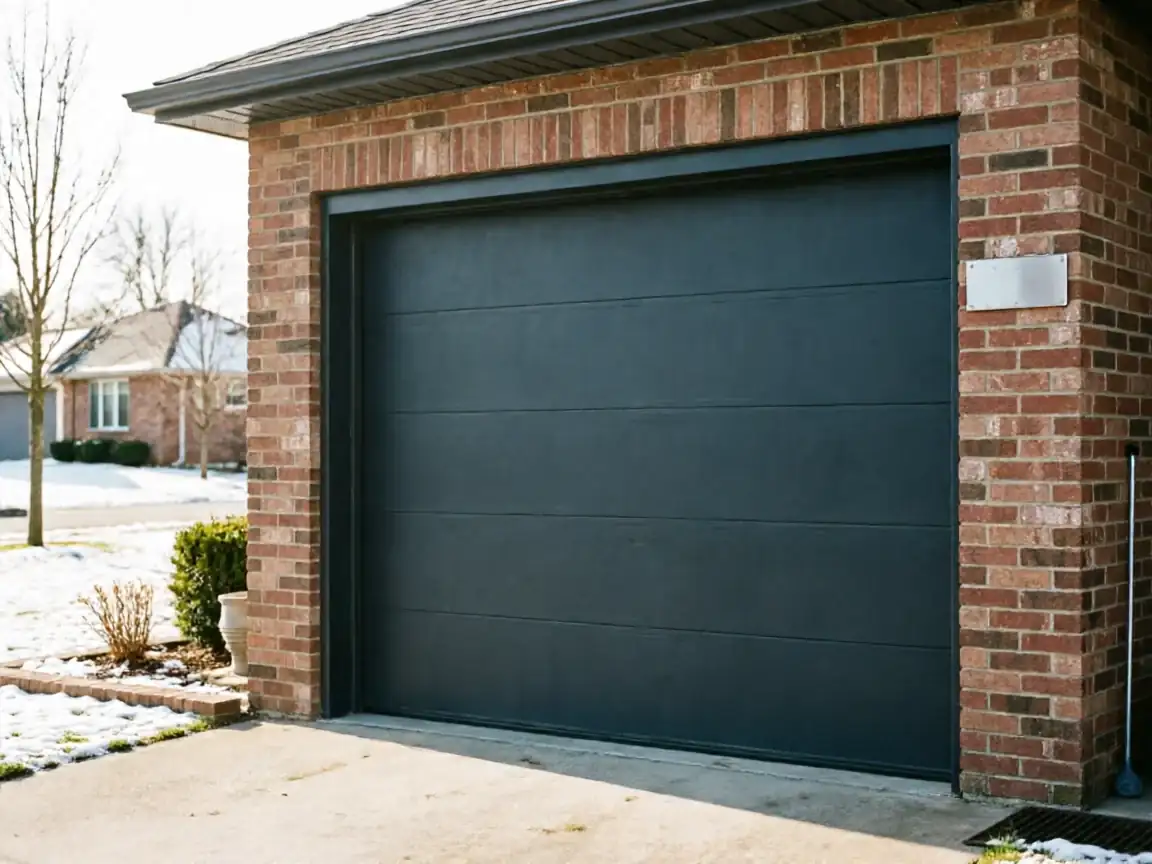
Lorain sits in a cold, moderate climate band, which means freeze-thaw cycling through a long stretch of the year - ice forms in seams and gaps, melts, refreezes, and works at any weak point in the panel skin or the joint between sections. On a door built when 1960s-70s construction was standard, insulation was thinner or absent, so condensation forms on the inside of the panel in cold months and that moisture doesn't have anywhere to go but into the seams. Combine that with housing stock running from 1938 up through 2002, median build year 1968, and you've got a lot of doors in this area old enough that their panels are original, their coatings are worn through, and the steel underneath has had five or six decades of freeze-thaw to find the thin spots. It's not bad luck - it's a predictable failure mode for doors this age in this climate. Newer doors with thicker galvanized steel and better insulation don't show this pattern nearly as often.