The Problem
Most of the garage doors we open up in Lorain are original to houses built somewhere between 1938 and 2002
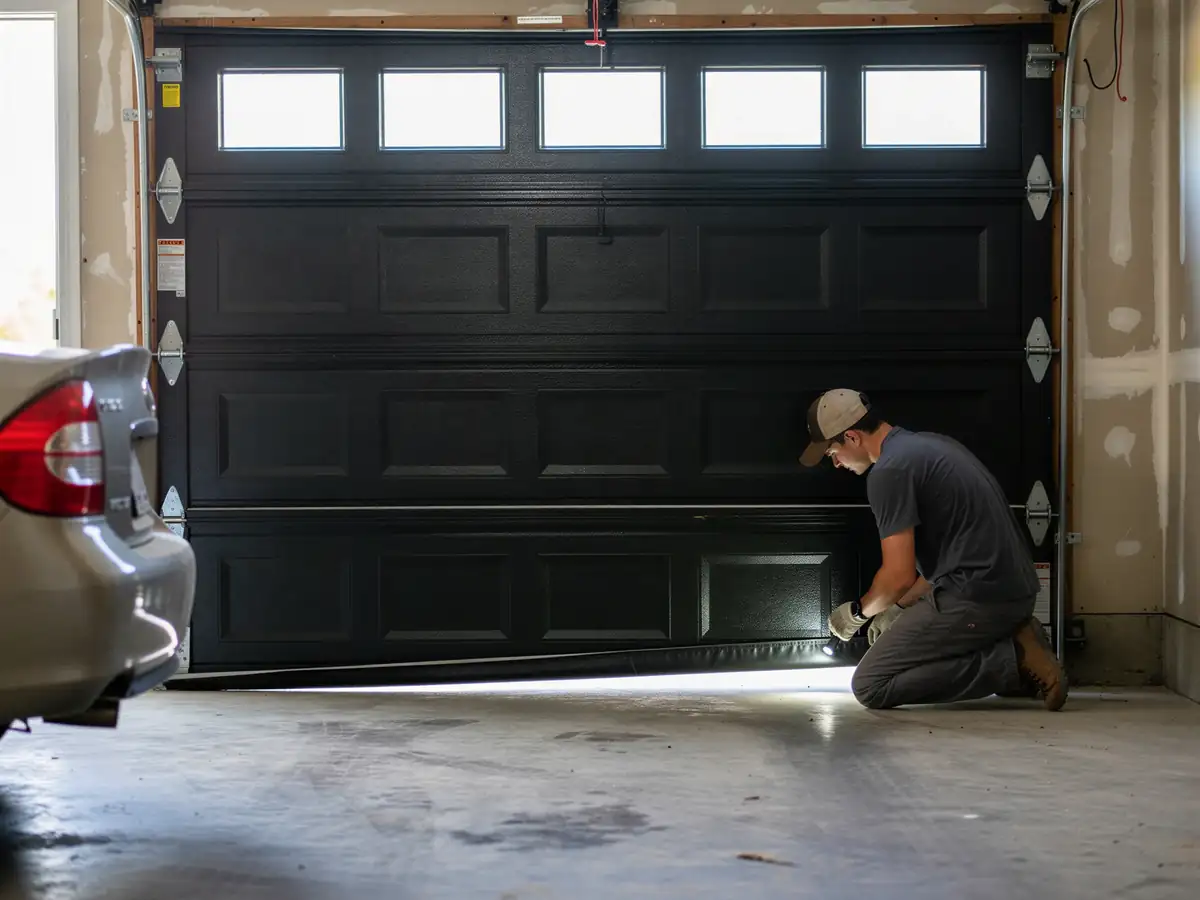
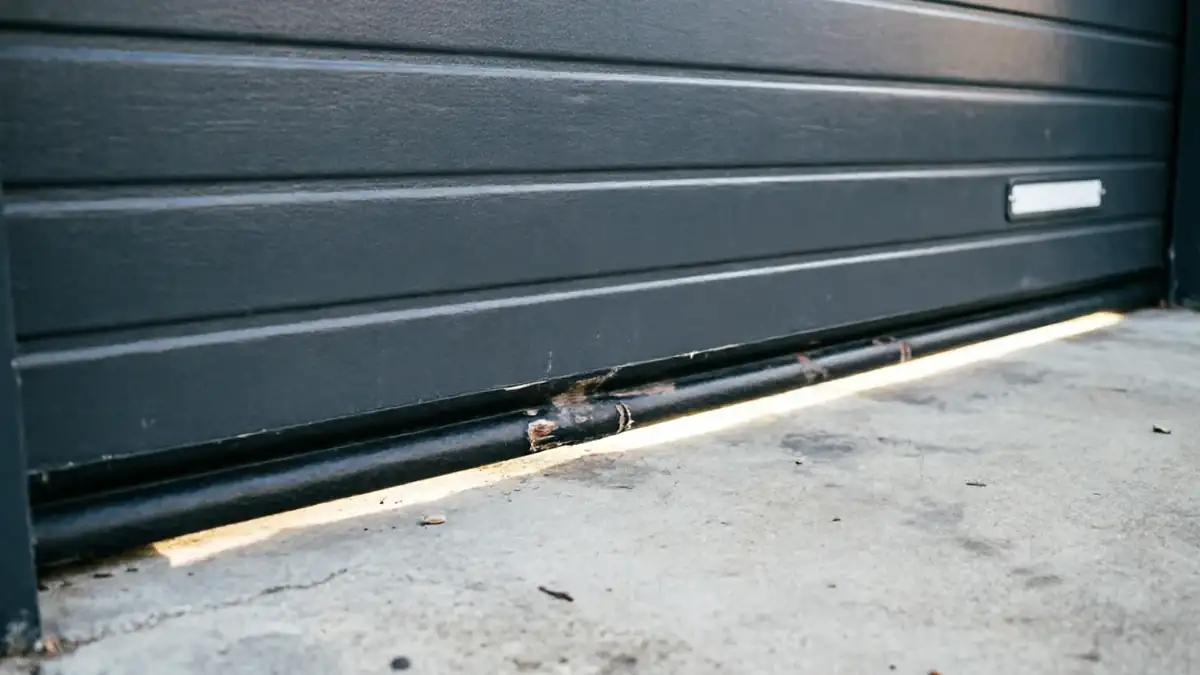
With the median landing around 1968. That means the weatherstripping on a lot of these doors is older than the homeowner calling us. Rubber bottom seals go stiff and crack. The vinyl flap at the bottom of an older steel door shrinks and pulls away from the slab, leaving a gap you can see daylight through on a sunny afternoon. Side seals, if the door even has them, were often an afterthought on doors from that era and were never sized to the track they're mounted on.
This isn't a defect, it's just age
A seal that was fine in 1975 has had five decades of sun, cold, and road salt tracked in off the floor to work against it. The fix is rarely complicated, but it does mean actually pulling the old seal and track off rather than caulking around it, which is the shortcut we see most often and the one that buys you maybe one winter before the gap reopens.
The Seasonal Bit
Lorain sits in a cold moderate climate band, and that matters more for a garage door seal than people expect. It's not extreme cold that kills a seal, it's the cycling. A seal that freezes solid overnight and then softens again by afternoon is working harder than one that just sits at a steady temperature all winter. Over a few seasons that cycle is what turns a pliable vinyl flap into something brittle that snaps off in a sheet the first time you back the car over it.
The draught complaints always spike the same time of year, right when the first hard cold snap hits and homeowners notice the garage is suddenly ten degrees colder than it was in October. The seal didn't fail that week. It had been going for months, and the cold just made it obvious. If your garage shares a wall with living space, that draught isn't just a garage problem anymore, it's showing up on the furnace.
Where People Go Wrong
The most common mistake we see is treating the symptom instead of the part. Someone notices cold air at the bottom of the door and runs a bead of caulk along the slab, or tacks a strip of foam weatherstripping from the hardware store over top of the old seal instead of replacing it. Both buy a little time. Neither holds up through a real Lorain winter because the old seal underneath is still the thing failing, and now there's two worn pieces stacked on top of each other instead of one correctly fitted seal.
The second mistake is sizing. A lot of these 1960s and 70s doors have tracks that have shifted slightly over the decades, so a seal bought off the shelf without checking the track width ends up loose at one end and overcompressed at the other, which wears it out again within a season.
We'll say plainly: if the door panel itself is warped or the bottom edge has rusted through, a new seal won't fix the draught. At that point you're better off replacing the bottom panel or the door, not chasing the gap with another round of weatherstripping.
How Local Conditions Play In
Across the roughly 22 named areas that make up this service area
The housing is overwhelmingly that same 1960s to 70s build, which means the garage door seal situation looks pretty similar from one neighborhood to the next. It's not that any one subdivision has it worse, it's that the whole area came up in the same couple of decades, under the same building practices, and is now aging through the same cold moderate winters at roughly the same rate.
With more than 71,792 owner-occupied houses across this area
A large share of them were built before anything like a modern thermal standard applied to garage doors. That's not a knock on the houses, it's just the era. It does mean that a seal job here is rarely a one-off oddity. We see the same track style, the same shrunken vinyl, the same gap at the same corner, on street after street, because the houses themselves came from the same stretch of years.
- 71,792 owner-occupied