Serving Lorain, OH & nearby
(440) 218-4885
Lorain, OH

What Those Garage Door Sounds Are Telling You

In Lorain, homes built mostly in the 1960s and 70s show specific door noises as parts age and cold snaps stress hardware. Here's what each sound means.

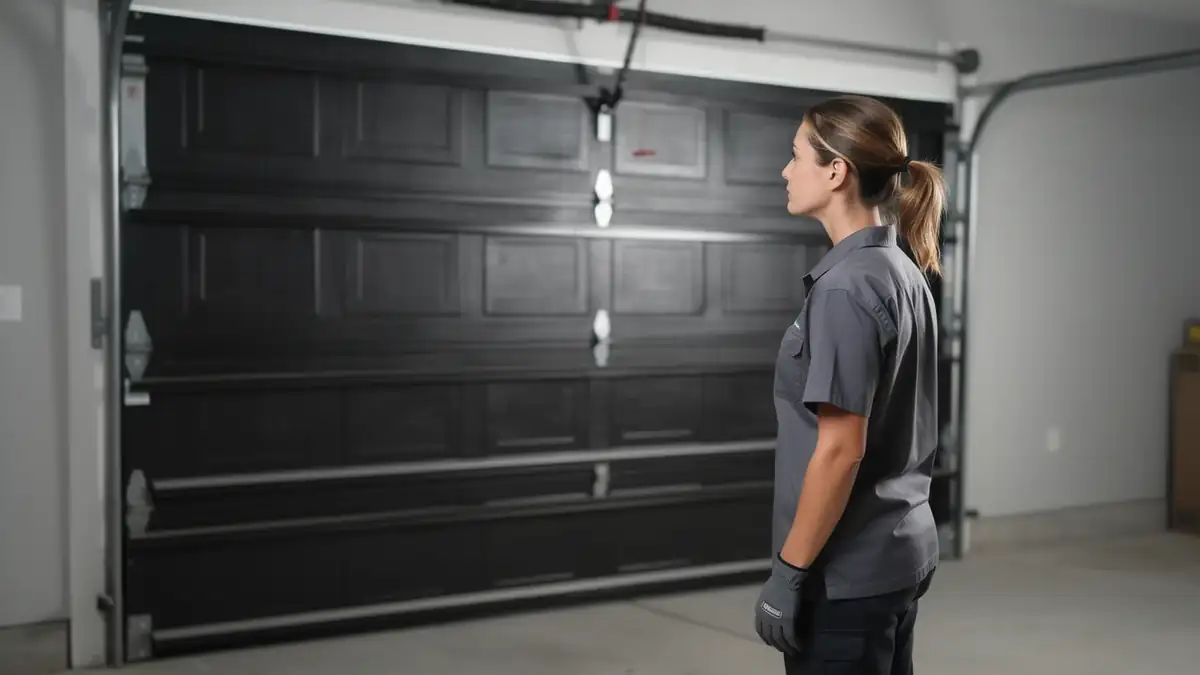
A technician in a gray shirt and gloves stands facing a closed black garage door.

The Problem

  1. Most of the doors we get called out to in Lorain aren't broken yet when the owner calls

    They're loud. A lot of the garage doors we look at here went up when the house did, somewhere between 1938 and 2002, with the median landing around 1968. That means a huge share of the doors in this service area are original or near-original hardware: steel panels, extension or torsion springs, rollers that have never been swapped, openers from whatever decade the garage got converted to a real door instead of a barn-style swing.

  2. A door doesn't go from quiet to broken overnight

    It goes from quiet to a specific sound - a squeal on the way up, a thud at the bottom, a grinding scrape when the opener engages - and each one of those sounds points to a different part wearing out. Treat the noise as information, not an annoyance to drown out with a shot of lubricant and hope.

  3. We can't tell you over the phone which part is failing just from a description

    A squeal could be a dry hinge or a bearing that's about to let go. That's the one honest limit here: noise diagnosis is a hands-on job.

The Seasonal Bit

Lorain sits in a cold-moderate climate band, and that matters more to an old door than most owners expect. Every winter, the grease packed into a torsion spring or an opener's gearbox thickens up in the cold. Steel track contracts slightly. Rollers that were already worn start catching instead of rolling smooth, and that's when a door that's been fine all fall suddenly starts groaning on the first cold morning.

The pattern we see every year is the same: a door that ran quiet through September starts banging at the top of its travel by December, because the spring tension that was marginal in warm weather is no longer enough once the steel stiffens up. Owners hear it as a new problem. It isn't new - the cold just stopped covering for a part that was already tired.

This is also when nylon rollers crack. Nylon doesn't like repeated freeze-thaw any better than steel does, and a cracked roller sounds like a bad bearing long before it actually fails outright. If your door got noisier the same week it got cold, the cold isn't the cause - it's the trigger.

Where People Go Wrong

The most common mistake is spraying WD-40 on everything and calling it maintenance. WD-40 is a solvent, not a lubricant - it strips old grease off the spring coils and rollers and leaves metal drier than before. What an aging torsion spring actually needs is a silicone or lithium-based grease made for garage doors, applied sparingly, and that's not a product most hardware stores stock in the right form.

The second mistake is waiting. A squeal is cheap to fix. A squeal that turns into a grinding opener motor because the owner kept running the door on a binding track for another six months is not cheap to fix, because now you're replacing a motor along with the roller that caused the problem.

The third is assuming every noise means the whole door needs replacing. Plenty of noisy doors on 1960s and 70s tracks just need rollers, a spring adjustment, or a hinge set. We won't sell a full replacement on a door that's got another decade of life left in the panel and track - the noise is usually isolated to two or three parts, not the whole assembly.

How Local Conditions Play In

  1. Put the housing stock and the climate together and you get a fairly predictable noise calendar for this part of Ohio

    With 71,792 owner-occupied houses across this service area and most of that stock dating to the 1960s and 70s, a big share of doors are on their second or third set of rollers, if they've been touched at all, riding on springs that were sized for a lighter door than whatever's been hung on the track since.

    • 71,792 owner-occupied
  2. In a market with a median household income of $86,893, we see owners go both directions

    Some keep a door running another ten years with targeted part swaps, others replace once the noise signals the opener motor is next. Neither call is wrong; it depends on what's actually making the sound.

    • $86,893 median household income
  3. The noises that mean something specific to houses this age

    A rhythmic thump at the same point in the door's travel usually means a bent track section from decades of settling. A high squeal on a cold morning is almost always a dry hinge or roller. A grinding hum from the opener with no corresponding door movement is a stripped gear - common on openers old enough to have outlived their original warranty by thirty years or more.
How it works

From “it’s stuck” to “it’s fixed”

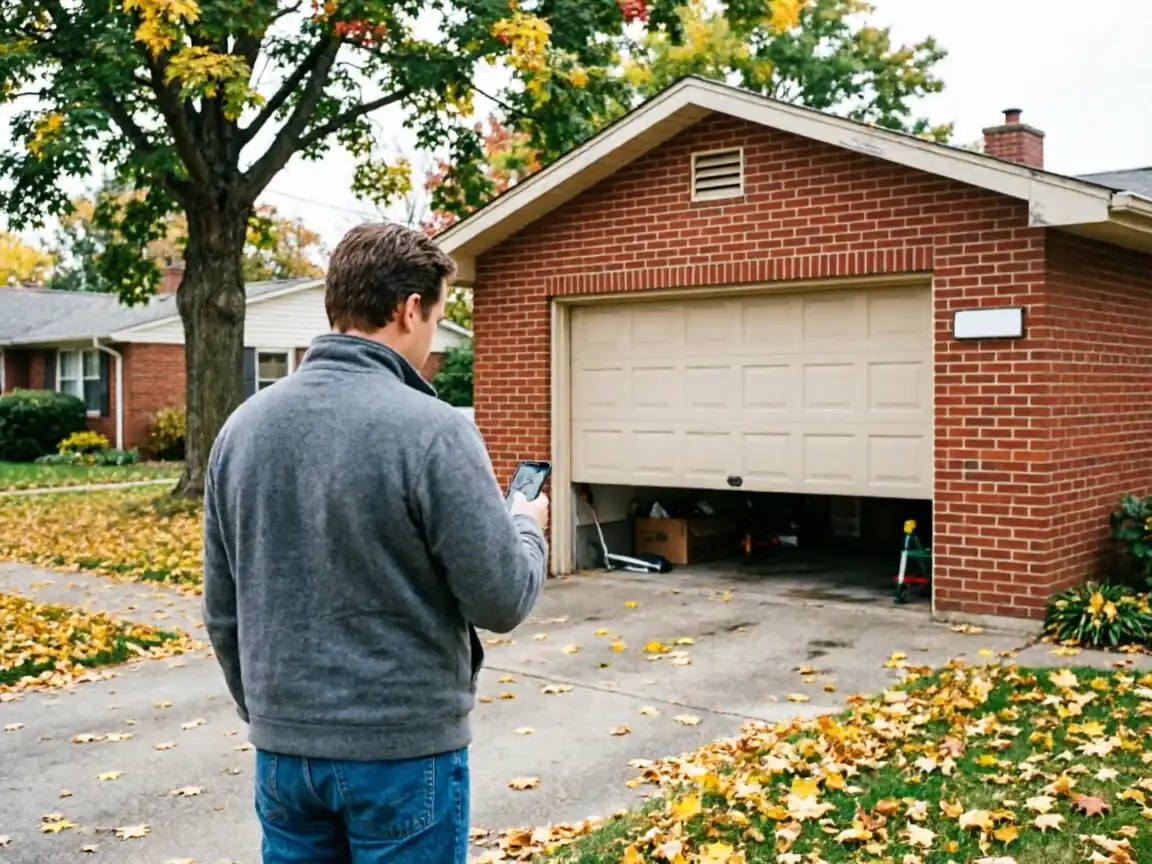
A man stands in a driveway looking at his phone, with a partially open garage door behind him.

Tell us what’s wrong

Describe the symptom - won’t open, loud bang, opener runs but the door won’t move.

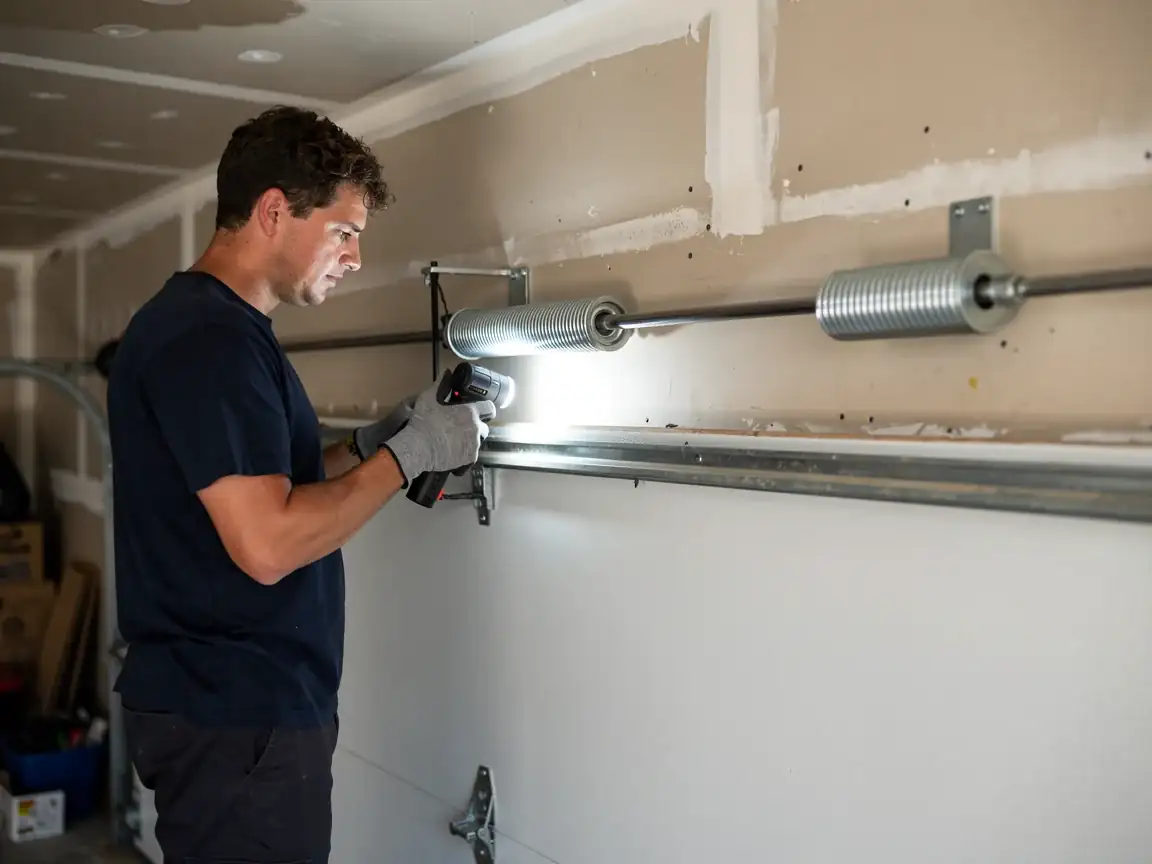
A technician shines a flashlight on a garage door torsion spring.

On-site diagnosis

A technician tests the door under power and by hand and finds what actually failed.

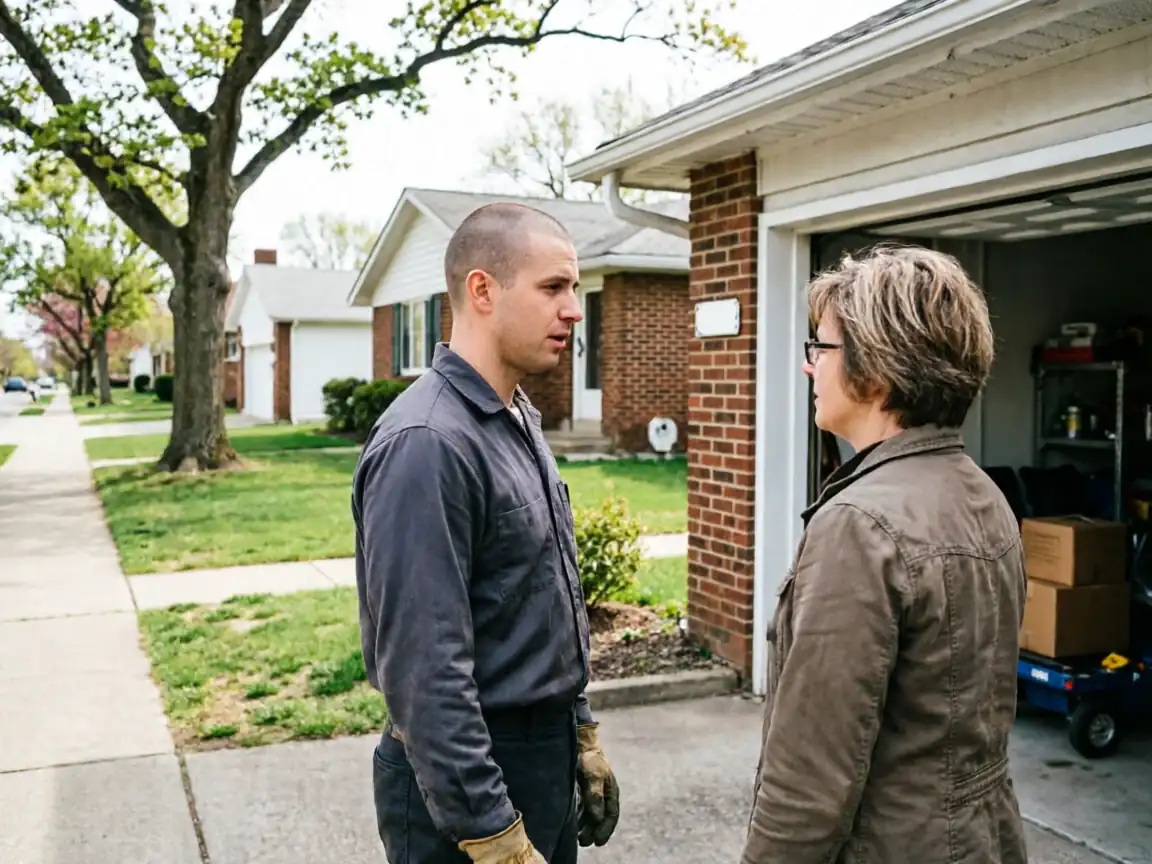
A technician in a gray shirt talks to a woman in a brown jacket outside a garage.

Clear, up-front plan

You get the fix that’s needed and what drives the cost - before any work starts.

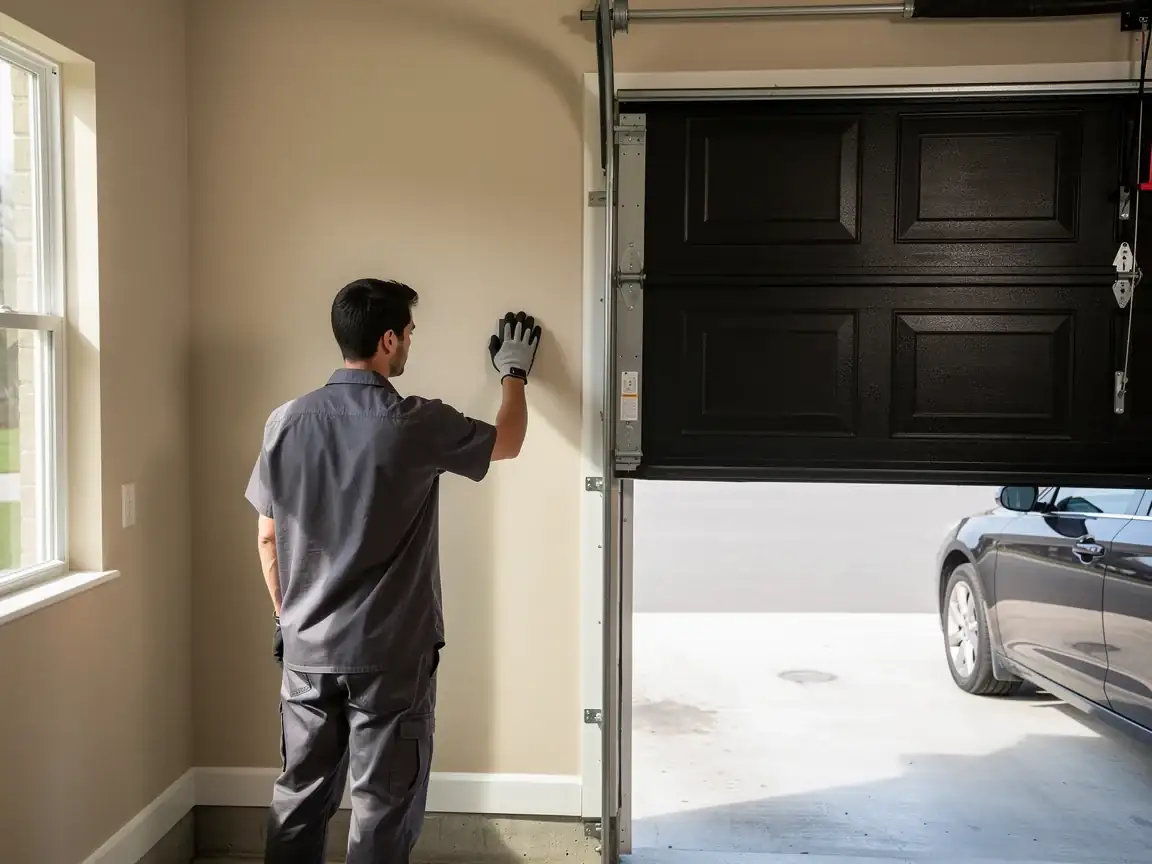
A technician in a gray uniform is touching a wall next to an open garage door.

Repaired & tested

The repair is done, the door is set true and tested, and the work area left clean.

Not sure which repair your door needs in Lorain, OH? Describe what it’s doing - every job starts with a diagnosis.

How we work

What to expect

Diagnosis firstEvery visit starts by finding what actually failed - not a pre-written parts list.
The right part for the doorSprings and openers matched to the door’s weight and age, so the fix holds up.
Straight answersWhen a repair makes more sense than a replacement - or the reverse - you hear it plainly.
Clean, careful workTension released safely, hardware set true, the door tested under power before we leave.
What we do

Garage Door Services

Repair and installation work for Lorain homes and businesses.

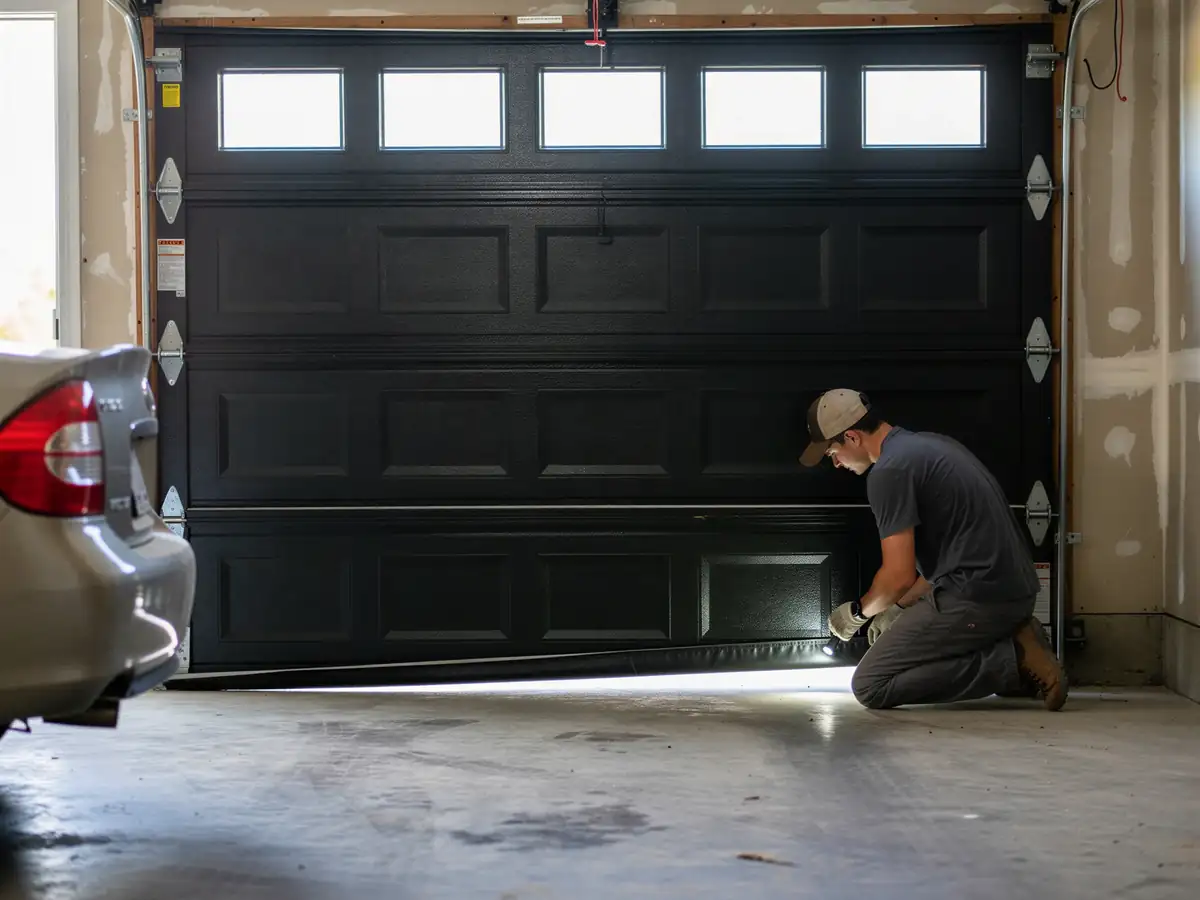
A technician kneels, shining a flashlight on the bottom of a black garage door.

Garage Door Repair

Garage door repair for Lorain homes built mostly in the 1960s and 70s, where original torsion hardware and cold-climate wear cause the most common failures.

Learn more
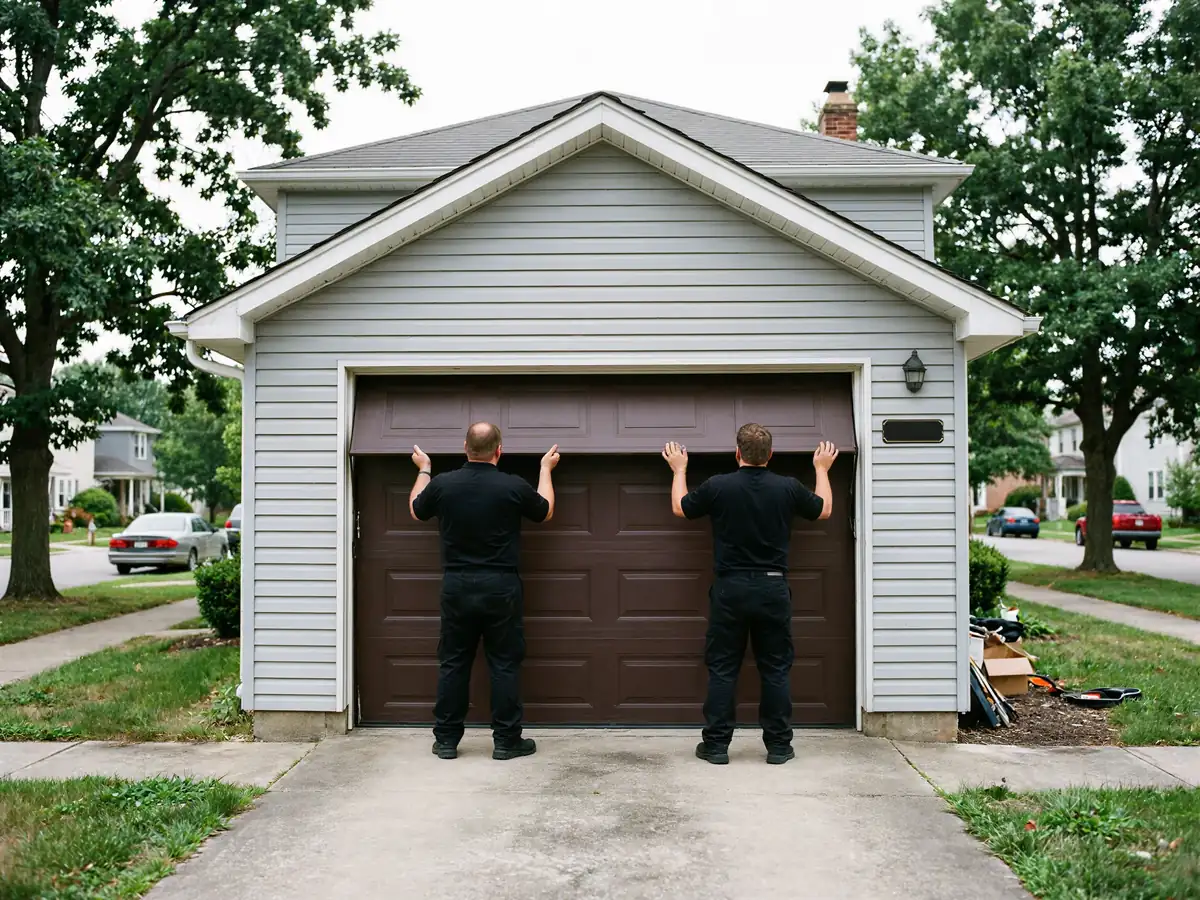
Two technicians are installing a brown garage door on a light gray house.

Garage Door Installation

New garage door installation in Lorain, OH, sized for the city's 1960s-70s housing stock and cold-climate wear. Call for a straight look at your door and opener.

Learn more
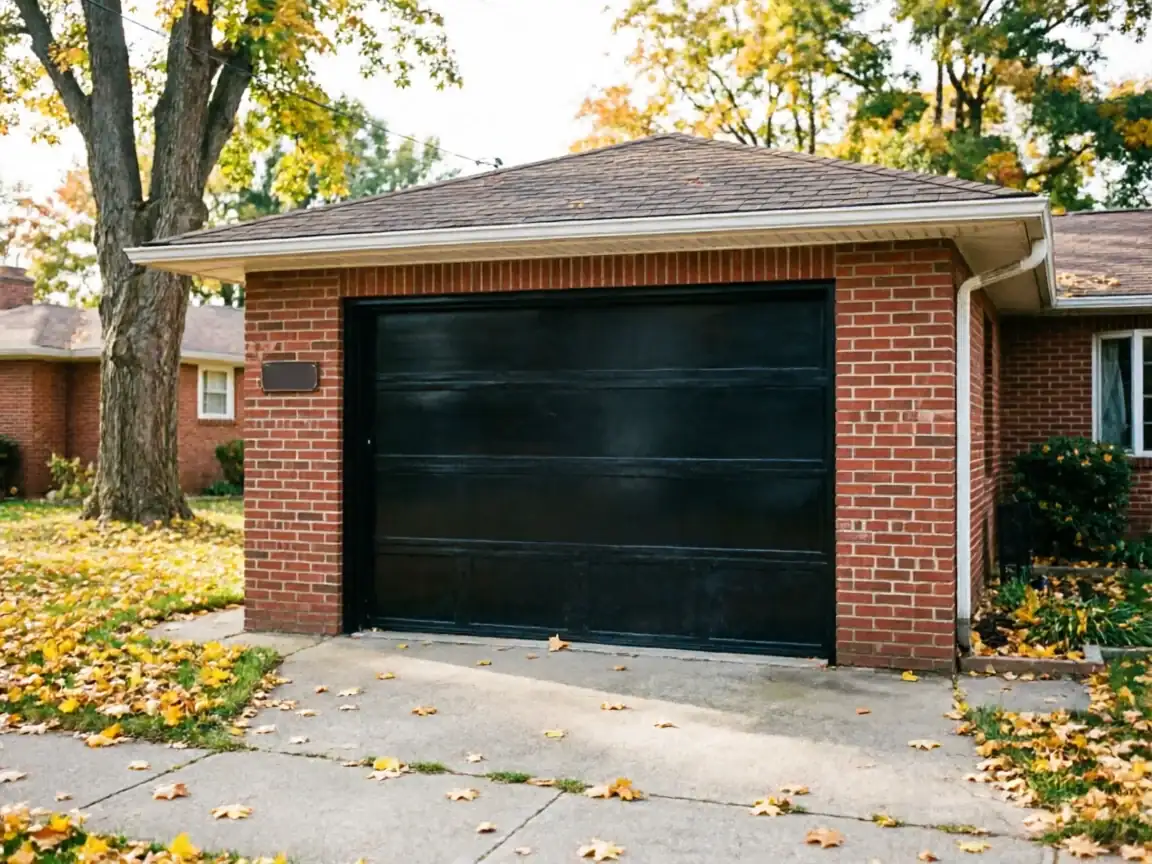
A black garage door is on a brick garage with autumn leaves on the ground.

Garage Door Service

Garage door repair and tune-ups for Lorain homes built mostly in the 1960s and 70s, where original hardware and cold winters wear springs and tracks fast.

Learn more
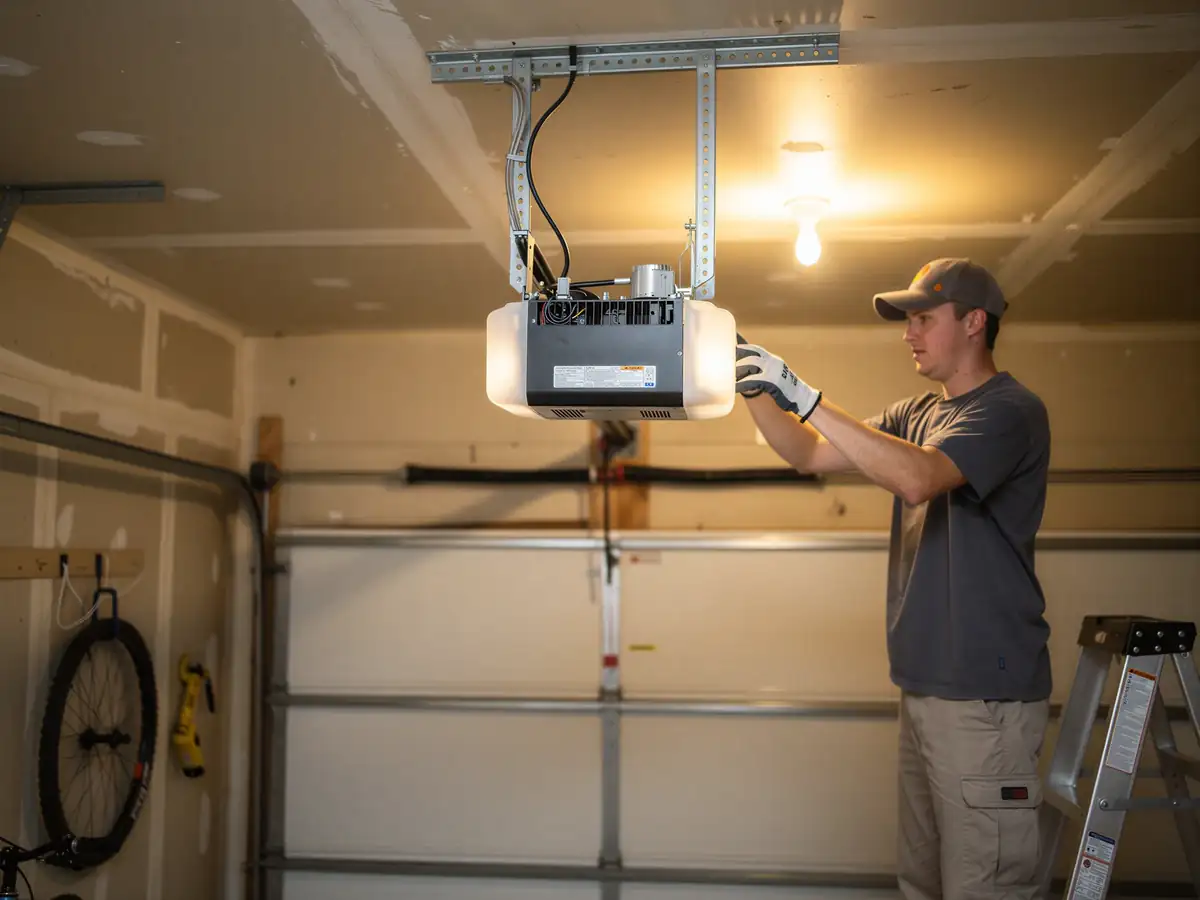
A technician in a cap and gloves installs a garage door opener.

Opener Repair

Opener repair for Lorain's 1960s-70s housing stock: dead sensors, slipping gears, and cold-weather logic board failures. Same service area, straight talk on cost.

Learn more
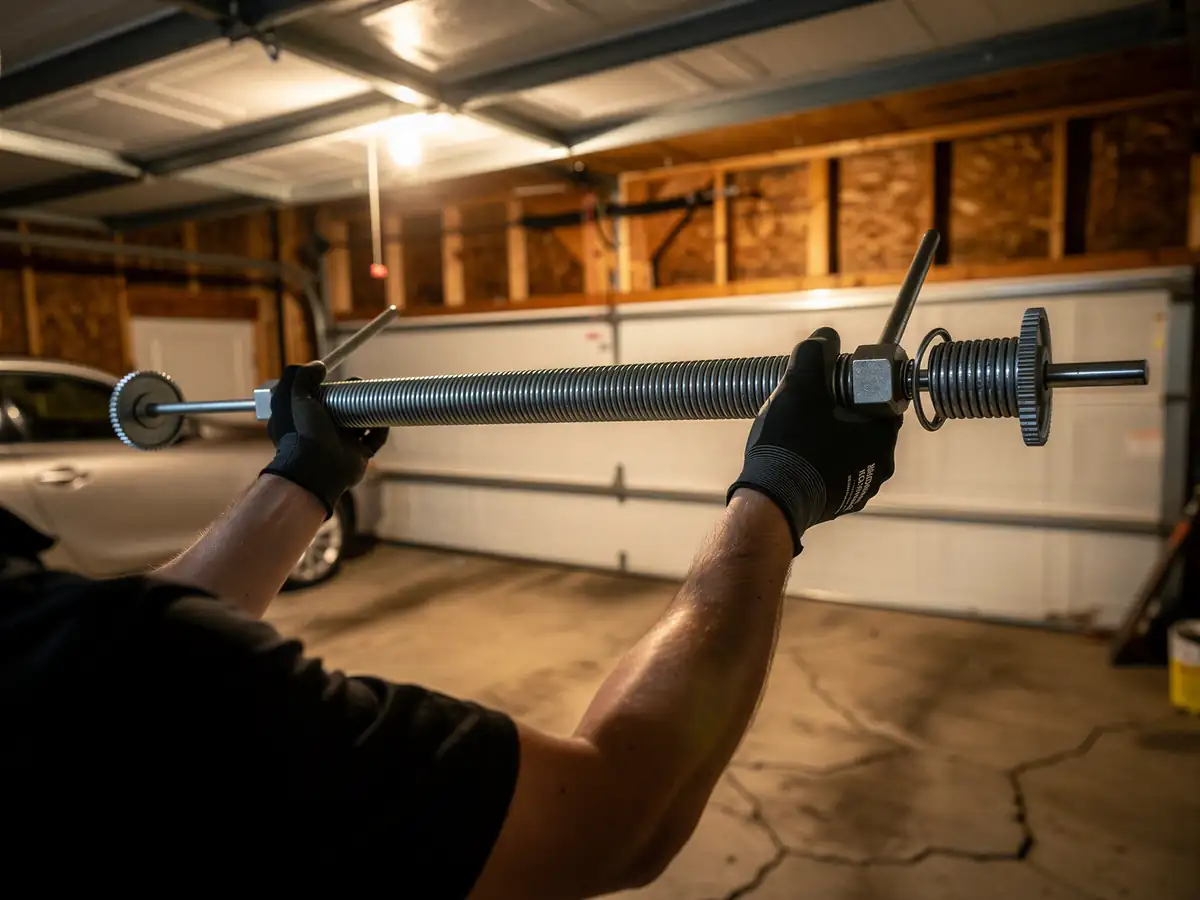
A technician wearing gloves holds a torsion spring in a garage.

Spring Repair

Torsion and extension spring repair for Lorain-area homes built mostly between the 1960s and 1980s. Same lake-effect cold snaps, same worn-out springs. Here's what we see.

Learn more
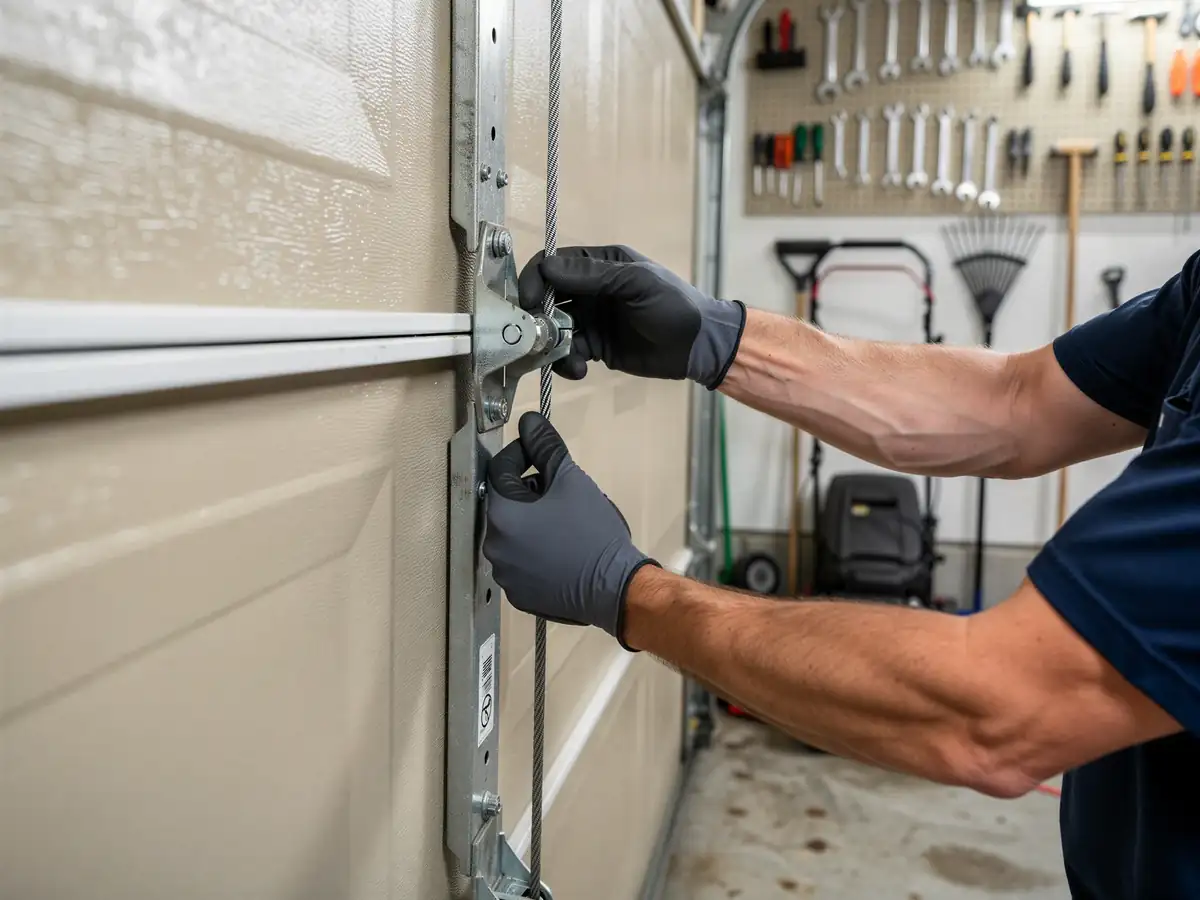
A technician wearing gloves adjusts a garage door cable and bracket.

Cable Repair

Broken garage door cable in Lorain? We fix snapped lift cables on the torsion and extension hardware common in this area's 1960s-70s housing stock. Call for same-visit work.

Learn more
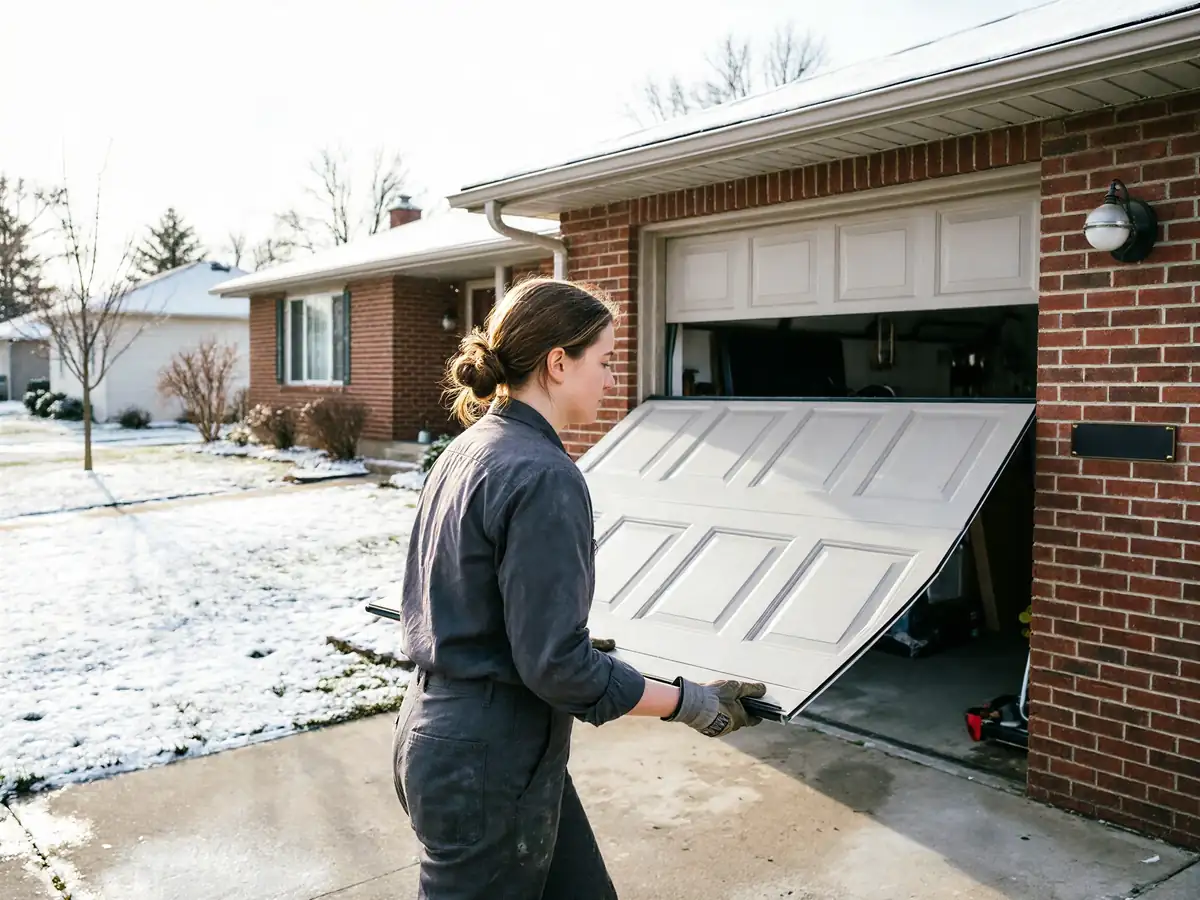
A technician in gray overalls carries a white garage door panel on a snowy day.

Panel Replacement

Panel replacement for Lorain's 1960s-70s housing stock, matched to original door width and track style. Serving Lorain and nearby Amherst, Sheffield, and Vermilion.

Learn more
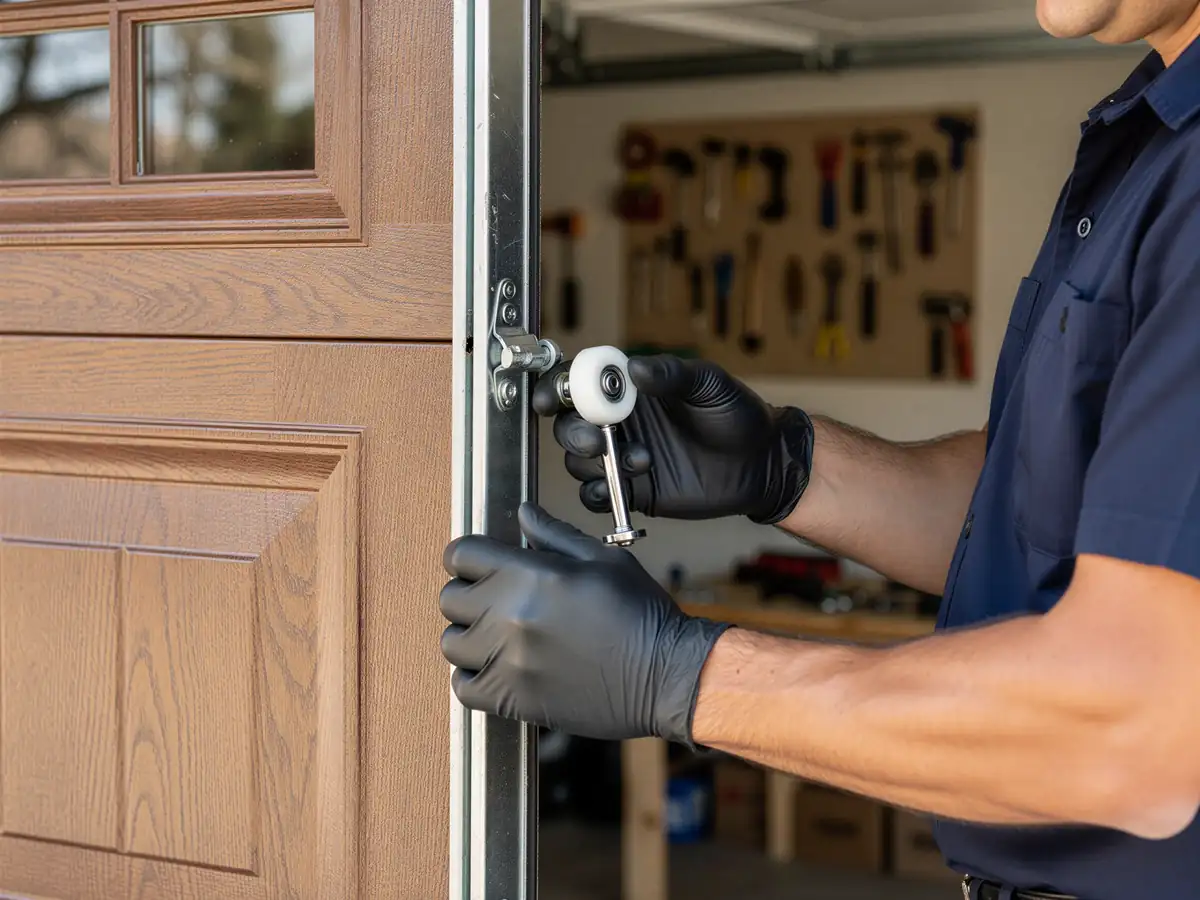
A technician in black gloves installs a new roller on a brown garage door.

Roller Replacement

Worn rollers on Lorain's 1960s-70s housing stock bind, jump track, and fail in cold-climate freeze-thaw cycles. Here's what the job costs, looks like, and why it happens here.

Learn more
Questions

Frequently asked

Straight answers about garage door repair in Lorain. Still unsure? Ask us directly.

Why does my garage door only make noise in the winter?

Cold thickens the grease in your spring coils and opener gearbox, and steel track contracts slightly in the cold. A roller or hinge that was marginal in warm weather often starts catching once temperatures drop, so a door that ran quiet through fall can suddenly sound rough in December without anything new actually breaking.

Is WD-40 okay to use on a noisy door?

No. WD-40 is a solvent - it strips existing grease off springs and rollers rather than lubricating them, which can make noise worse over a few weeks. Garage doors need a silicone or lithium-based grease made for the job, applied to the spring coils, hinges, and roller stems, not a general-purpose spray.

My door is original to a 1960s house. Does the noise mean it's done?

Not necessarily. A lot of doors from that era are still structurally sound; the noise is usually coming from rollers, hinges, or a spring that's never been serviced. We'd want to look at it before assuming the whole door needs replacing - isolated parts often explain the sound.

Can you tell what's wrong just from the sound I describe?

Not reliably. A squeal can mean a dry hinge or a bearing on its way out, and those get fixed differently. Noise diagnosis on an older door really needs a hands-on look at the track, springs, and rollers before we'll tell you what's actually failing.

Ready to get your garage door sorted?

Tell us what it’s doing and where you are in Lorain - we’ll take it from there.

Request a QuoteCall