Can You Do This Yourself
Amherst is a smaller town than most of what we cover
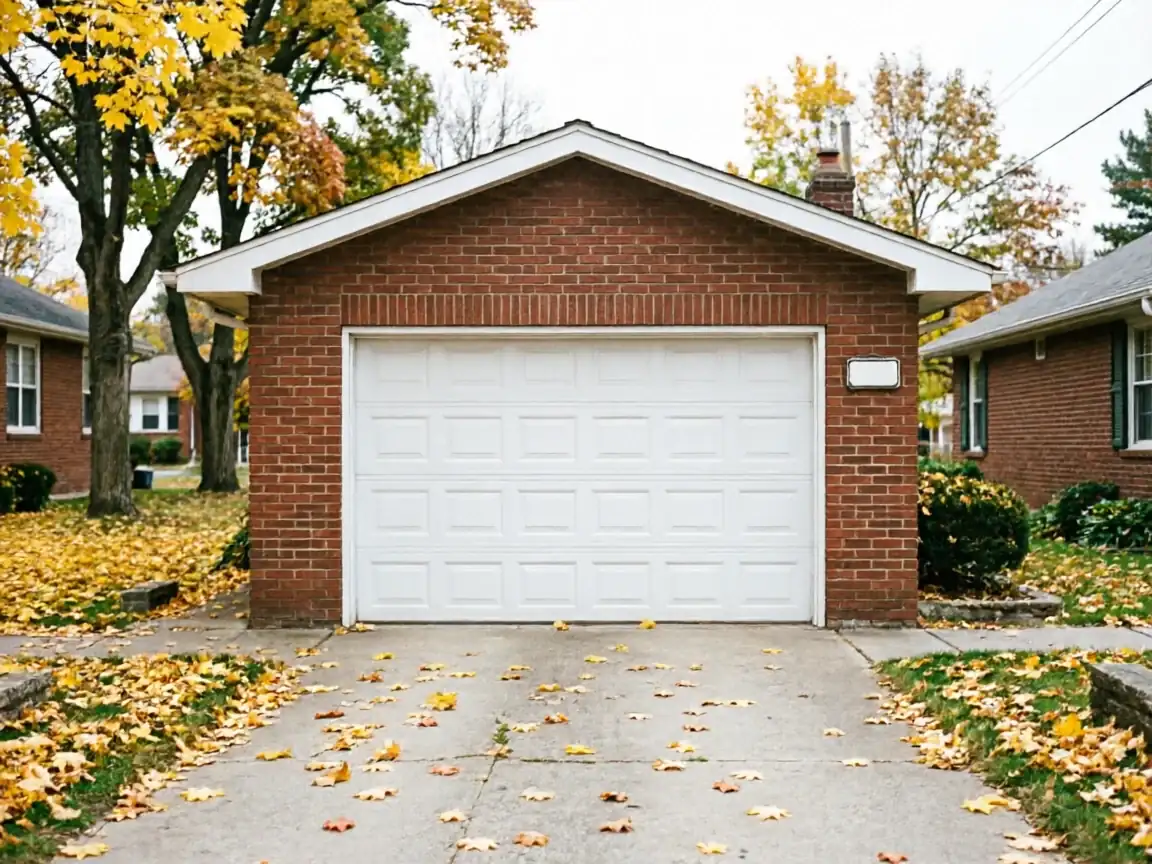
Around 4,854 households, not the sprawl you get in the bigger suburbs further out. That size matters because it means the housing here is fairly uniform: most of it went up around 1971, give or take a few years on either side. A tight build window like that means a tight range of original hardware, and it's the kind of thing a homeowner can actually size up before calling anyone.
- 4,854 households
If your door is noisy but still opens and closes evenly, you can often handle it yourself
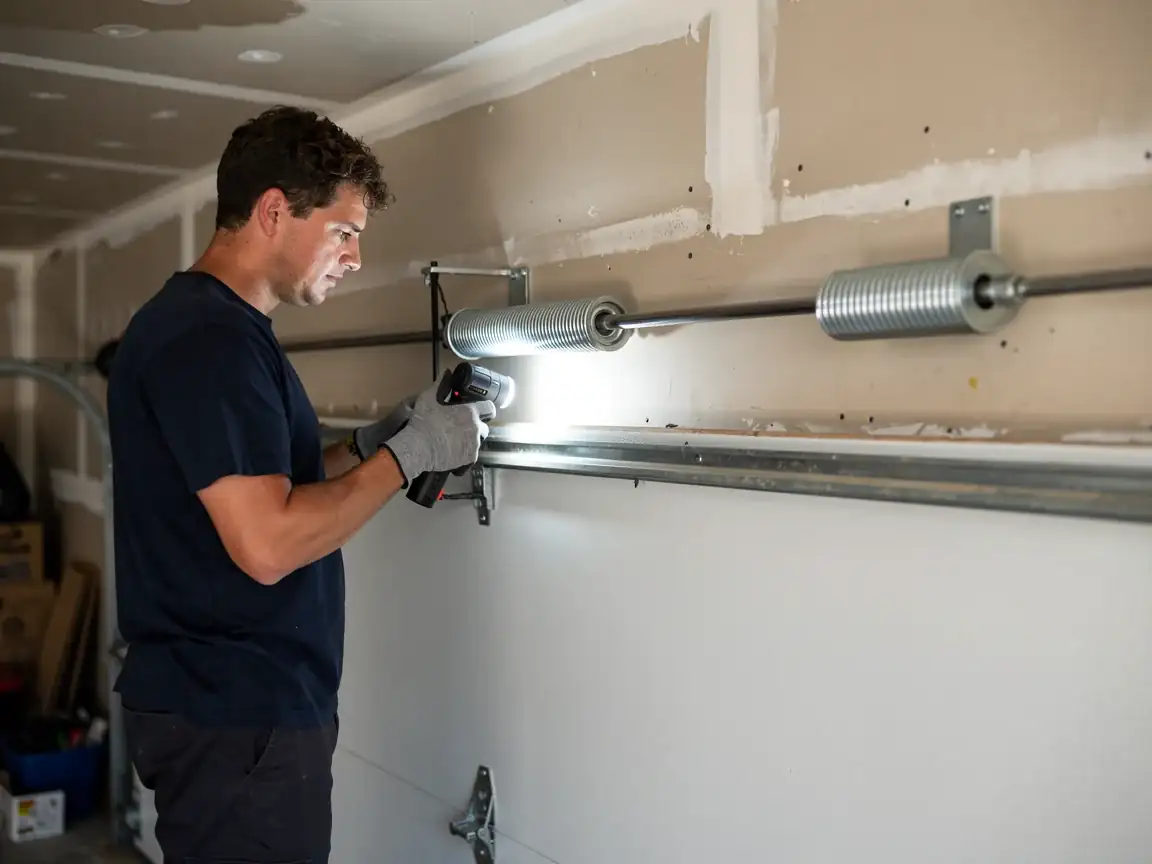
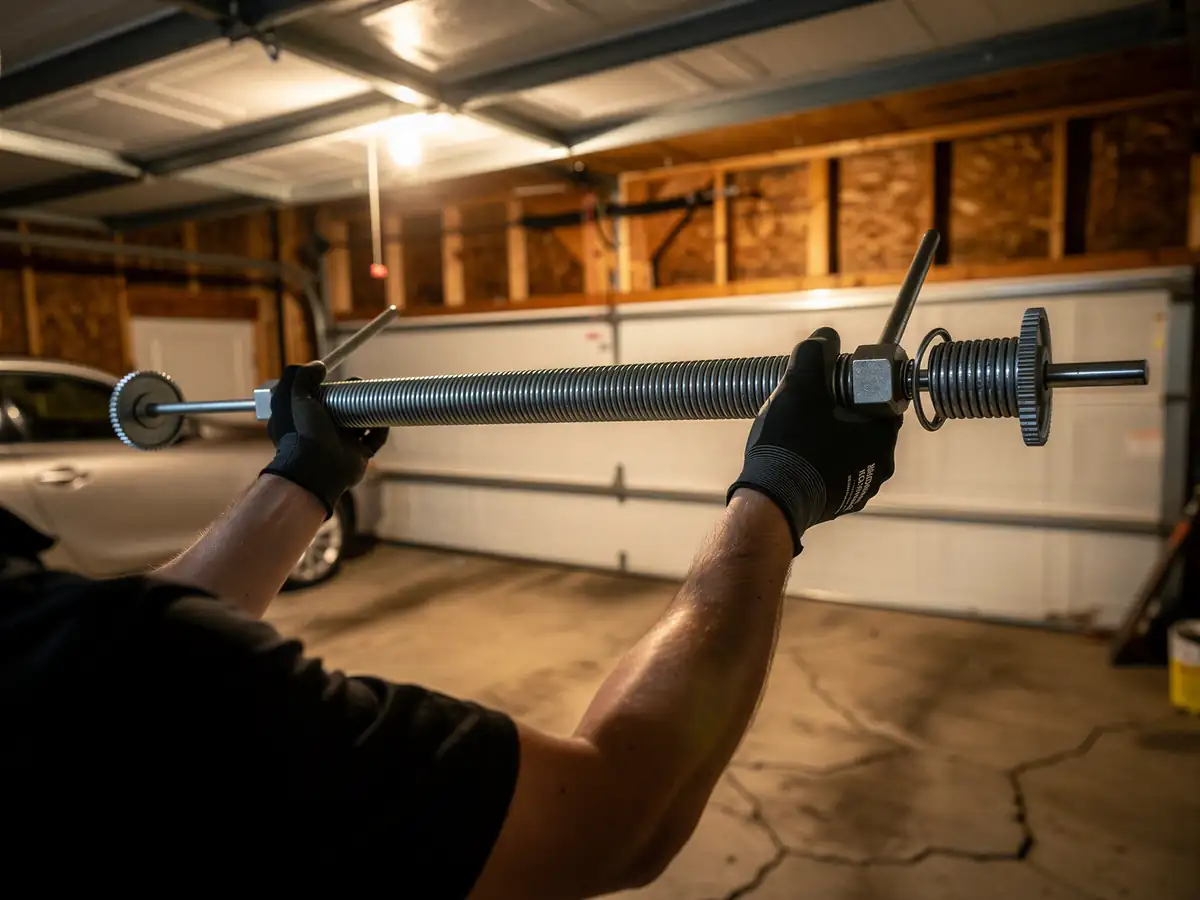
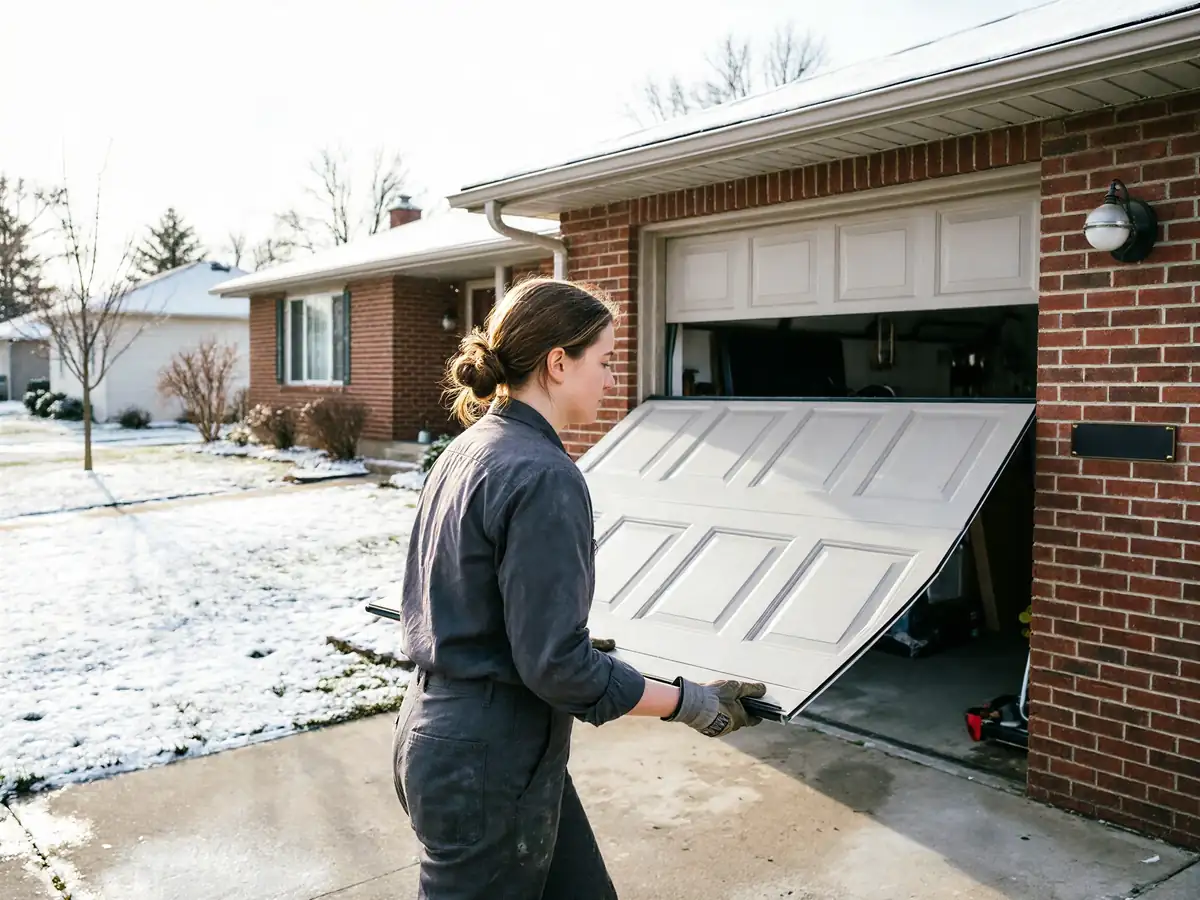
Tightening hardware, lubricating hinges and rollers, checking the track for visible gaps against the rollers. What you shouldn't touch is the torsion spring. On a door from the early 1970s era, that spring has usually never been replaced, and the tension stored in it can break a wrist or worse if you're not using the right winding bars. Same goes for anything involving the cables under tension. If the door is off-track, binding, or one side drops faster than the other, that's a call, not a weekend project.
How to Book
We run out of Lorain, about four miles from Amherst, so a booked call here isn't a cross-town trip - it's a short run down the road. Go to the Amherst area page to see what we cover for this part of the service area, or check the main Lorain service page for the full rundown of what we do.
When you call, have the door's age ready if you know it, or at least the age of the house - since Amherst building stock centers on the early 1970s, that one detail tells us a lot about what spring size and track style we're likely bringing on the truck. It saves a second trip if the first one turns up a part we didn't expect.
The Complications
A median income of $93,043 in Amherst is higher than a lot of the surrounding area, and that shows up in the kind of calls we get here - more owners asking for a full opener upgrade instead of just a patch, more interest in insulated panels instead of a bare repair. That's a reasonable call to make, but it's worth knowing upfront that a full door replacement costs more than a spring swap, and we're not going to talk you into one if the door's fine.
The complication particular to a town built mostly in one era is that original hardware from 1971 doesn't match what's sold today. Torsion spring winding cones, drum sizes, and even track gauge changed over the decades, so a repair on an unmodified door from that period sometimes needs a part ordered rather than pulled off the truck. We carry common sizes, but we won't pretend every older spring is a same-visit fix - sometimes it's a return trip once the part's in.
At four miles out, travel isn't the issue. Matching 50-year-old hardware sometimes is.
What the Fix Involves
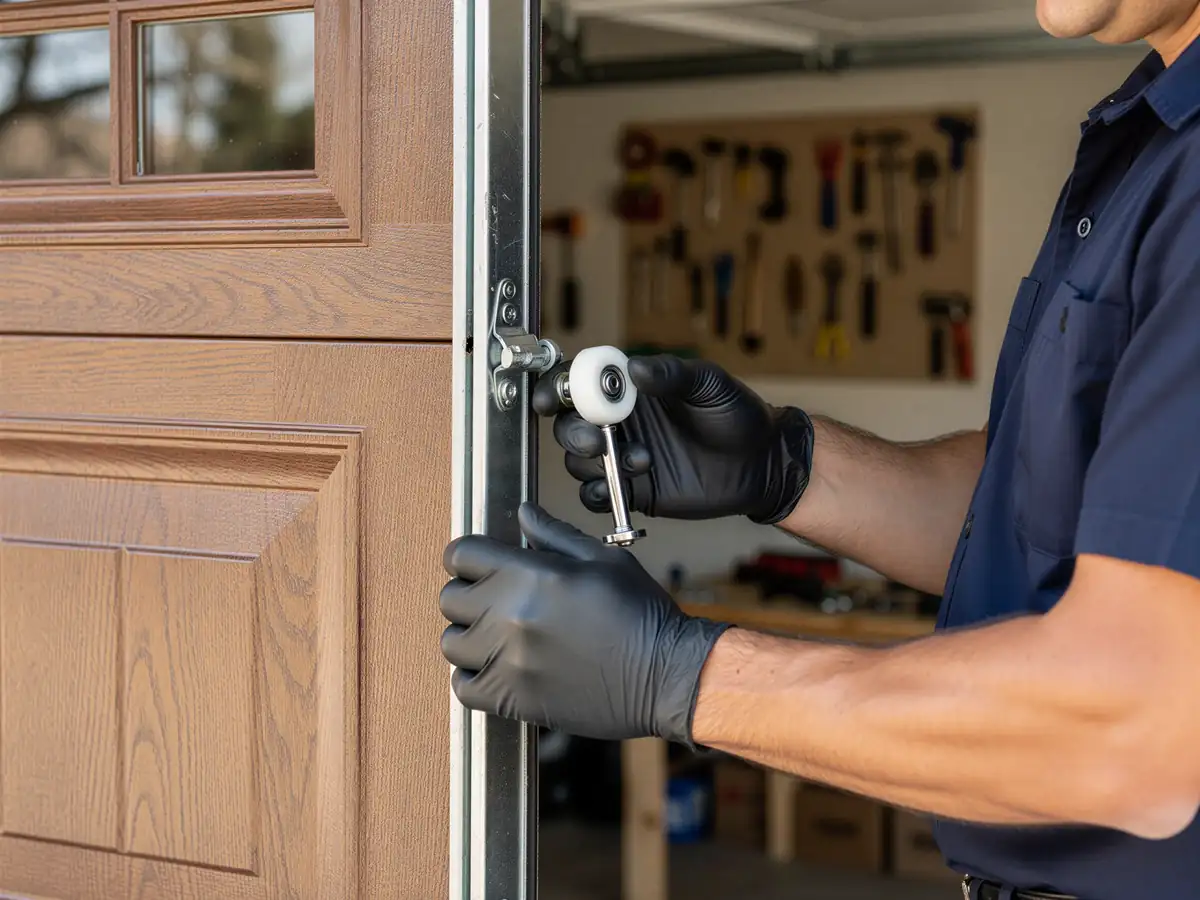
Most of what we see on Amherst doors from the early-70s stock is spring fatigue, worn rollers, and cable fraying
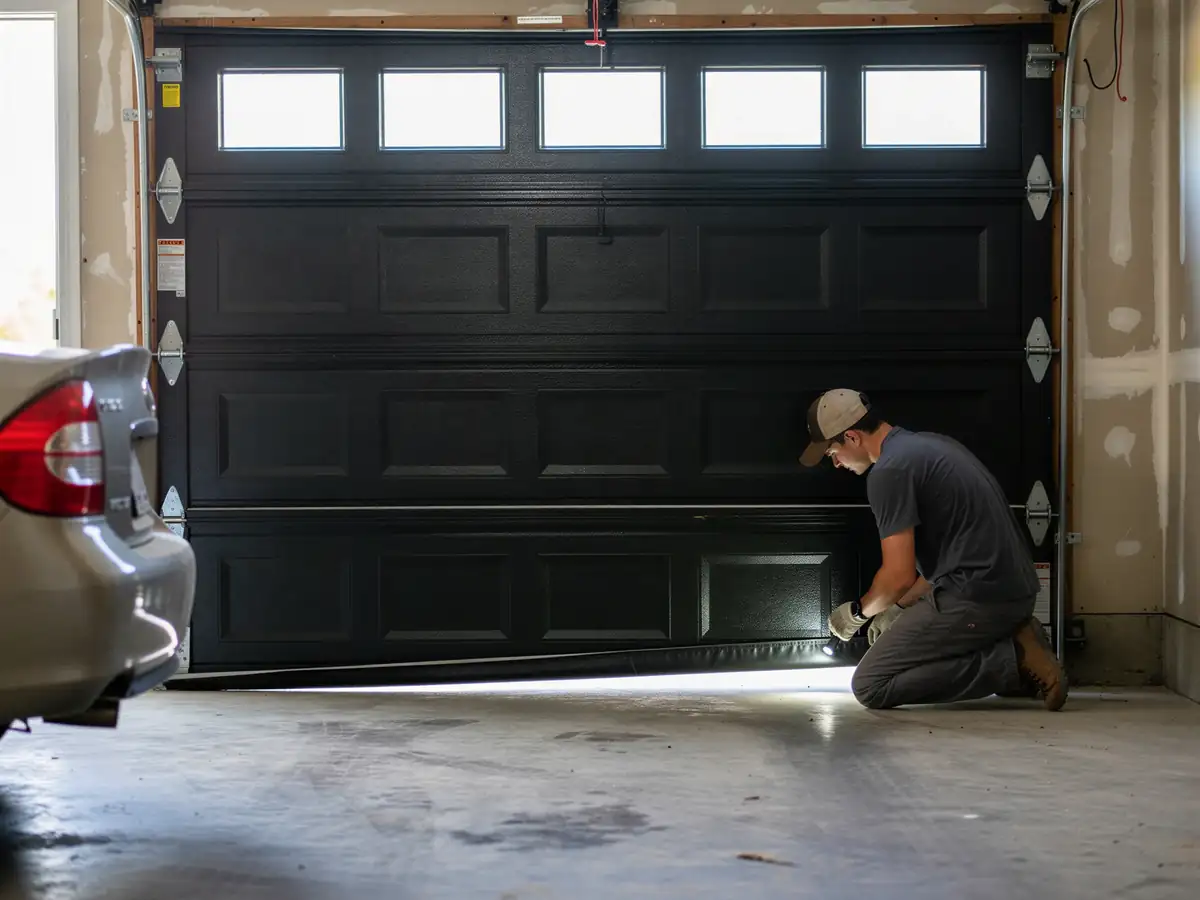
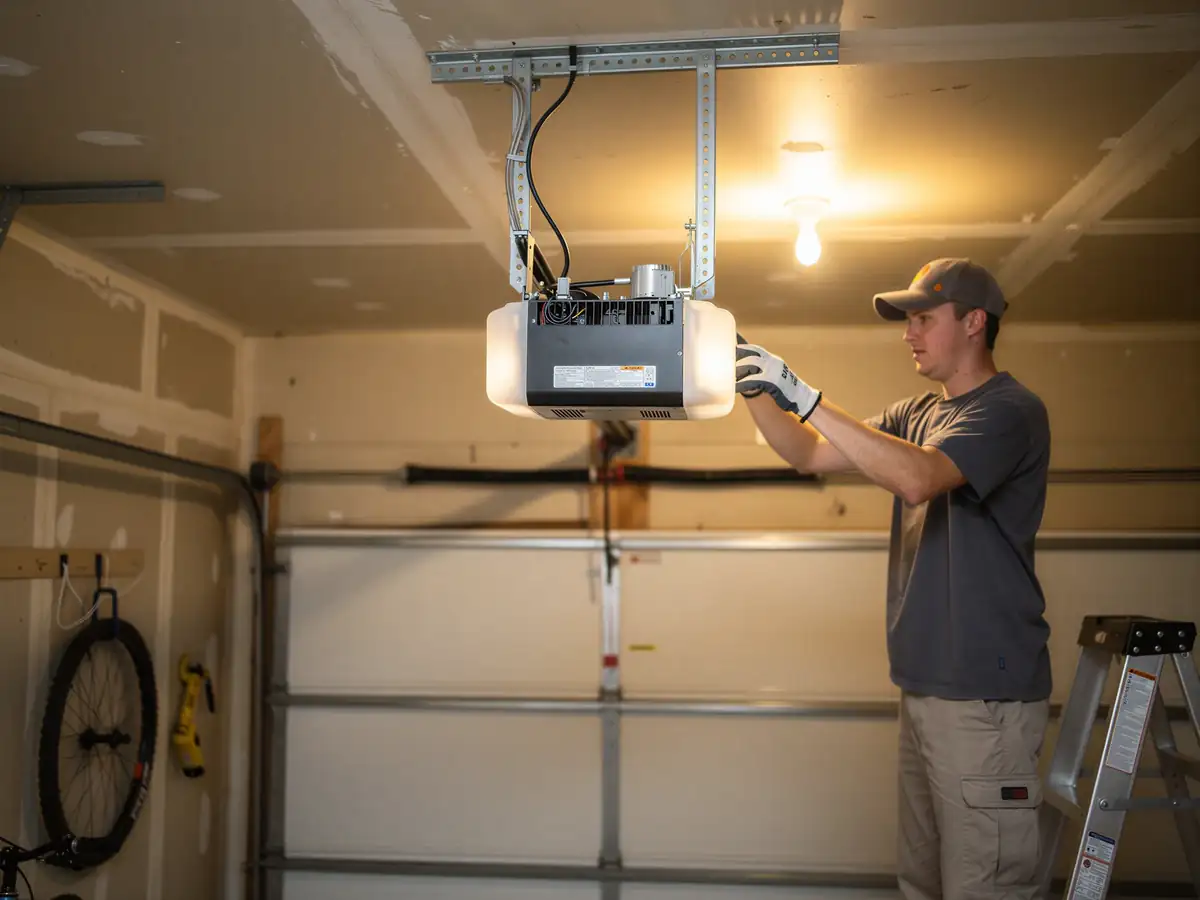
Normal wear for hardware that's been cycling for five decades. The fix usually starts with pulling the door panel off the opener arm, releasing spring tension safely, and inspecting the track alignment before anything gets replaced.
If the spring's gone, we measure the wire gauge and inner diameter against the door weight rather than guessing off the old part's label
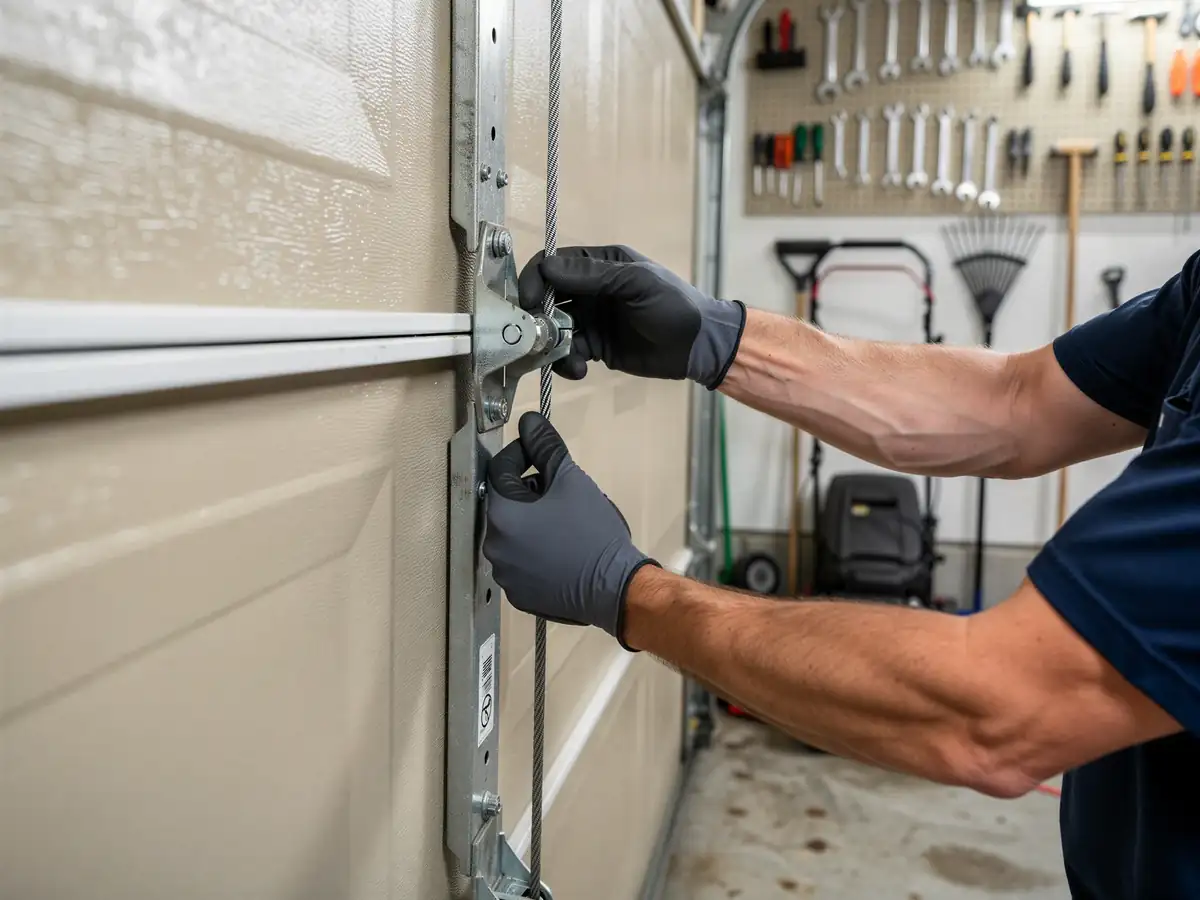
Since original labels on hardware this age have often worn off entirely. Rollers get swapped as a set, not one at a time, because mismatched wear changes how the door tracks. Cables get replaced in pairs too.
On a cold-climate winter, stiff grease and brittle plastic rollers show up more often as the triggering complaint
Even when the underlying cause is just age. We note that upfront so you're not surprised when a