The Cost of This Job
Sheffield Lake is a small lake-shore town, about 4,272 households, and that size matters for what kind of opener call comes in
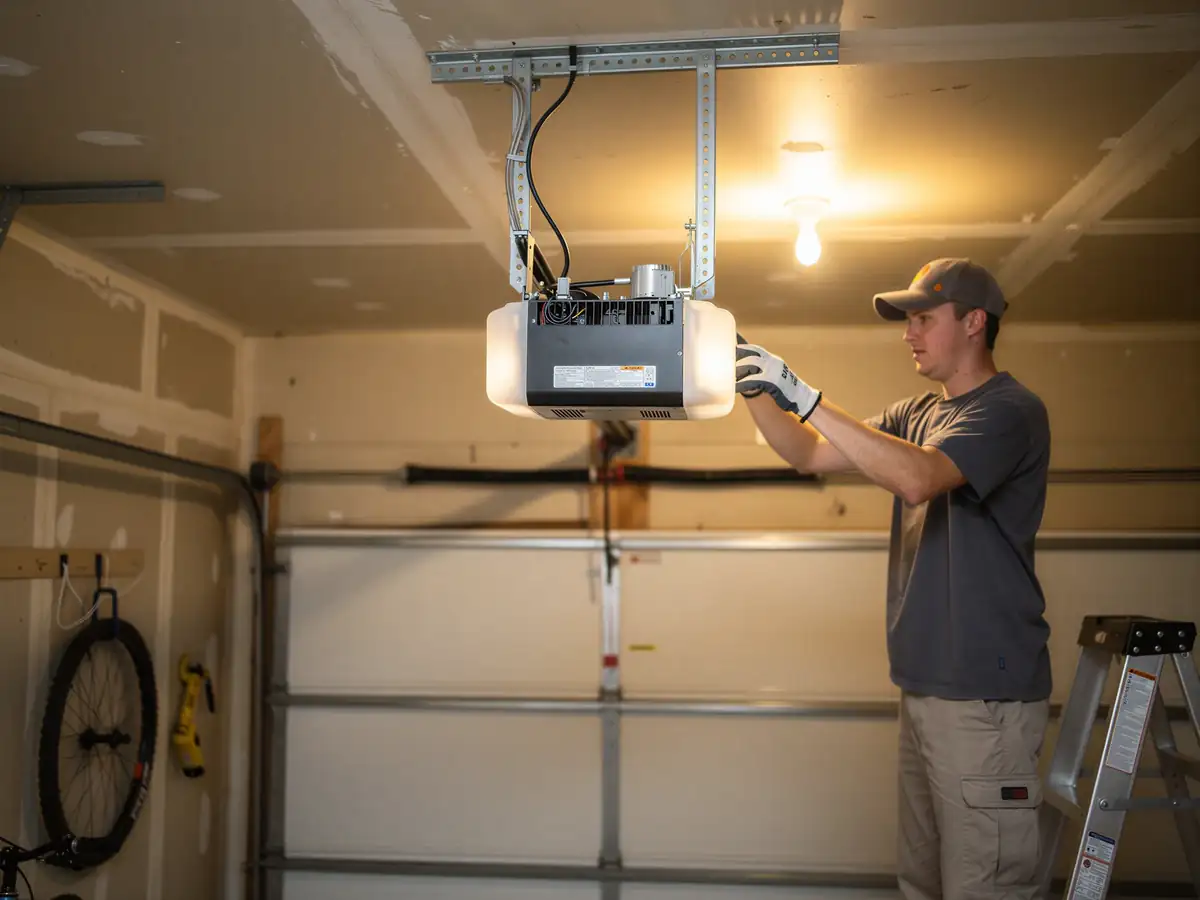
You don't get a mix of twelve different builder-grade opener brands the way you would in a sprawling subdivision built out over fifty years. The housing stock here clusters tight, median build year around 1967, and a lot of those houses never had their original chain-drive opener swapped out until it finally gave up for good. That means the job is often less "diagnose a mystery" and more "replace a unit that's been dying slowly for a decade."
- 4,272 households
What drives the price is whether we're repairing or replacing
A bad capacitor, a stripped gear, a worn sprocket on a chain drive from that era - those are parts fixes. A dead circuit board on a logic unit, or a motor that's seized, usually means the opener itself is past the point of repair and we're talking a new unit. We don't quote a number here because we haven't seen your opener yet, and guessing at a price before we know whether it's a $40 part or a full swap would be doing you a disservice. We'll tell you straight once we're looking at it.
How Long You Are Without the Door
We run this call from Lorain, five miles out, so there's no local branch sitting idle in Sheffield Lake waiting on you. That's not a weakness, it's just how the company is built - one shop, one set of trucks, covering the towns around it. The drive itself isn't the bottleneck.
What can slow things down is parts. If your opener is one of the older chain-drive units common in houses built in the 1960s, the exact gear kit or logic board for that model may not be sitting on the truck. Screw-drive and belt-drive openers installed more recently are usually a same-visit fix because those parts move faster. We're not going to promise a number of hours here, because we don't know your opener's age or brand until we see it, and a wrong promise is worse than no promise.
How It Shows Up
The symptom usually tells you the decade of the opener. In the older houses around Sheffield Lake - plenty of them going back to 1967 or close to it - the failure mode is mechanical: a grinding chain, a door that reverses for no reason, a motor that hums but the door doesn't move, a light that flickers before the whole unit quits. Those are wear failures, parts that have been working thirty-plus years finally giving out.
In houses with newer openers, the symptom tends to be electrical: the remote stops talking to the unit, the wall button does nothing, or the opener runs but the logic board won't tell it when to stop, so it either stalls or slams. Cold weather doesn't help either side of that split - in this climate band, a sluggish door in January is often just thick grease on old hardware, not a dead opener at all. Worth ruling out before you assume the worst.
Can You Do This Yourself
Some of it, yes
Swapping a remote battery, cleaning and lubricating the chain or belt, tightening a loose mounting bracket - that's reasonable weekend work and doesn't need a call. Resetting the travel limits on a modern opener is usually a few turns of a screw or a few button presses, and the manual that came with the unit walks you through it.
What we'd stop you on is anything involving the spring side of the door or the opener's force settings
An opener set too aggressively can slam a door onto a hand or a car hood, and that's not a setting you want to guess at. If your opener is original to a house built in the 1960s, the logic board inside it may not match anything sold today, and troubleshooting it with a modern manual can send you chasing the wrong fix entirely. That's the point where it's worth a call instead of another hour in the garage.