The Cost of This Job
We don't quote a flat number on this page because every job in Bay Village depends on what's actually behind the panel
What we can tell you: this is a higher-income pocket of our service area, with median household income around $122,083, well above the broader area's $86,893. That doesn't change what parts cost, but it does mean we see more owners opt for full hardware upgrades instead of patch repairs once we're in the garage anyway - torsion conversion instead of just replacing a snapped extension spring, for instance. We price the job in front of you, not over the phone, because the difference between a spring swap and a full opener-and-track job on a 1959 door is not small.
What we won't do is guess a price here and have you hold us to it sight unseen
If a quote matters to you before you book, say so when you call and we'll talk through what's likely given the age of the house.
How to Book
We run this call out of Lorain, about 13 miles out, so Bay Village isn't a drive-by stop - it's a scheduled trip. Tell us the age of the house if you know it; a 1959-built home changes what we load on the truck versus a 1990s one. You can see the general Lorain service page for what we cover across the area, or check the Bay Village area page for the towns nearby we also run routes through.
We don't keep a branch or a standing crew in Bay Village itself, so we're not going to promise a same-hour arrival just because you're close to the lake. We schedule the trip, confirm the issue over the phone first when we can, and bring the right spring size and track hardware based on what you tell us about the door and the house.
The Complications
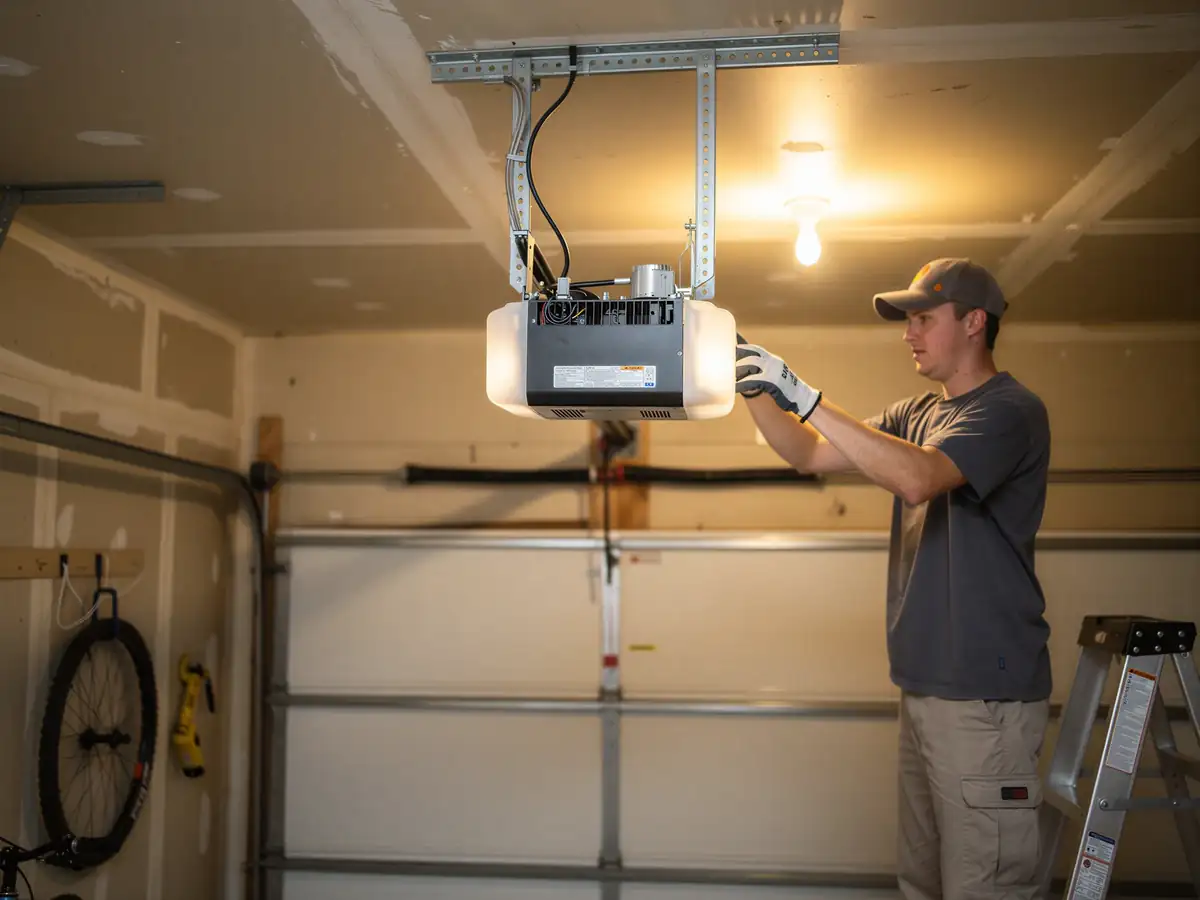
A house built in 1959 almost never has the opener that's on it now as its first one - most of these have been retrofitted once, sometimes twice, and the bracket work from that retrofit isn't always square to the original frame. We find lag bolts stripped into softened jamb wood, header brackets reinforced with whatever scrap was on hand at the time, and tracks that were bent slightly to fit an opener they were never built for.
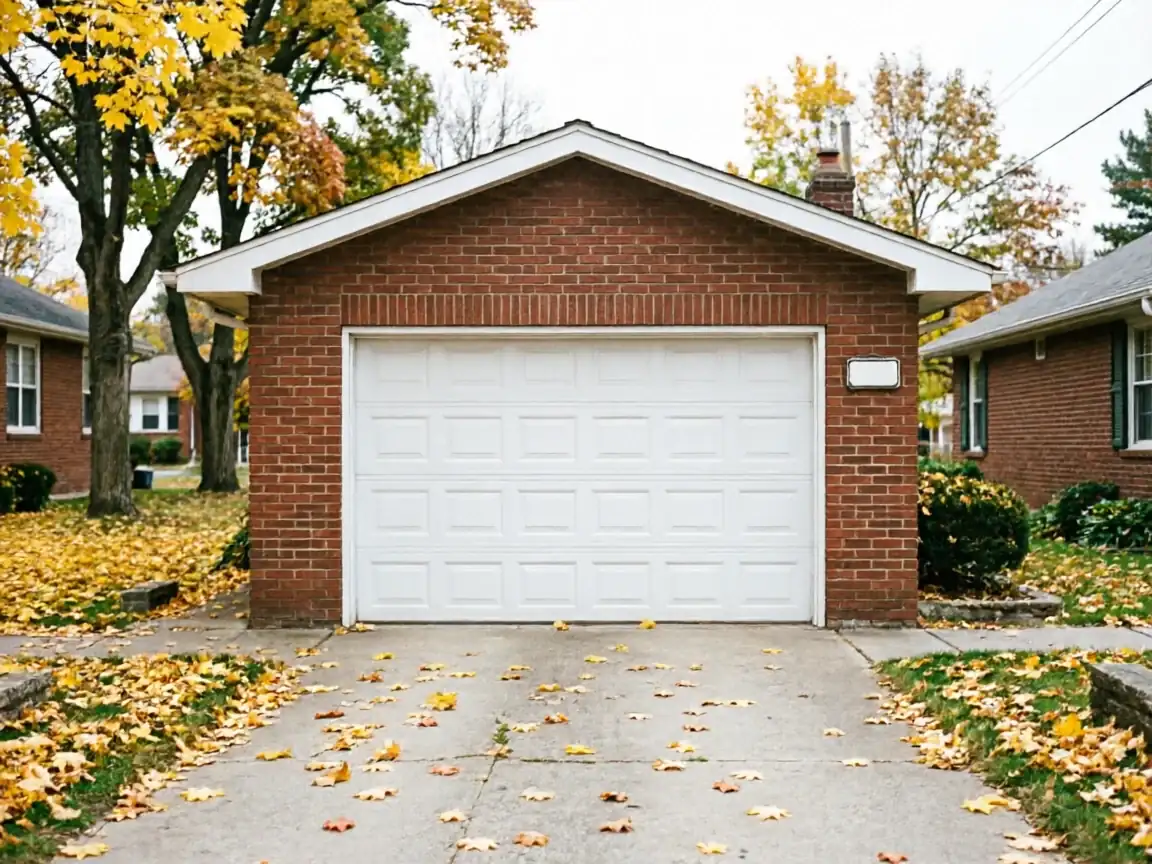
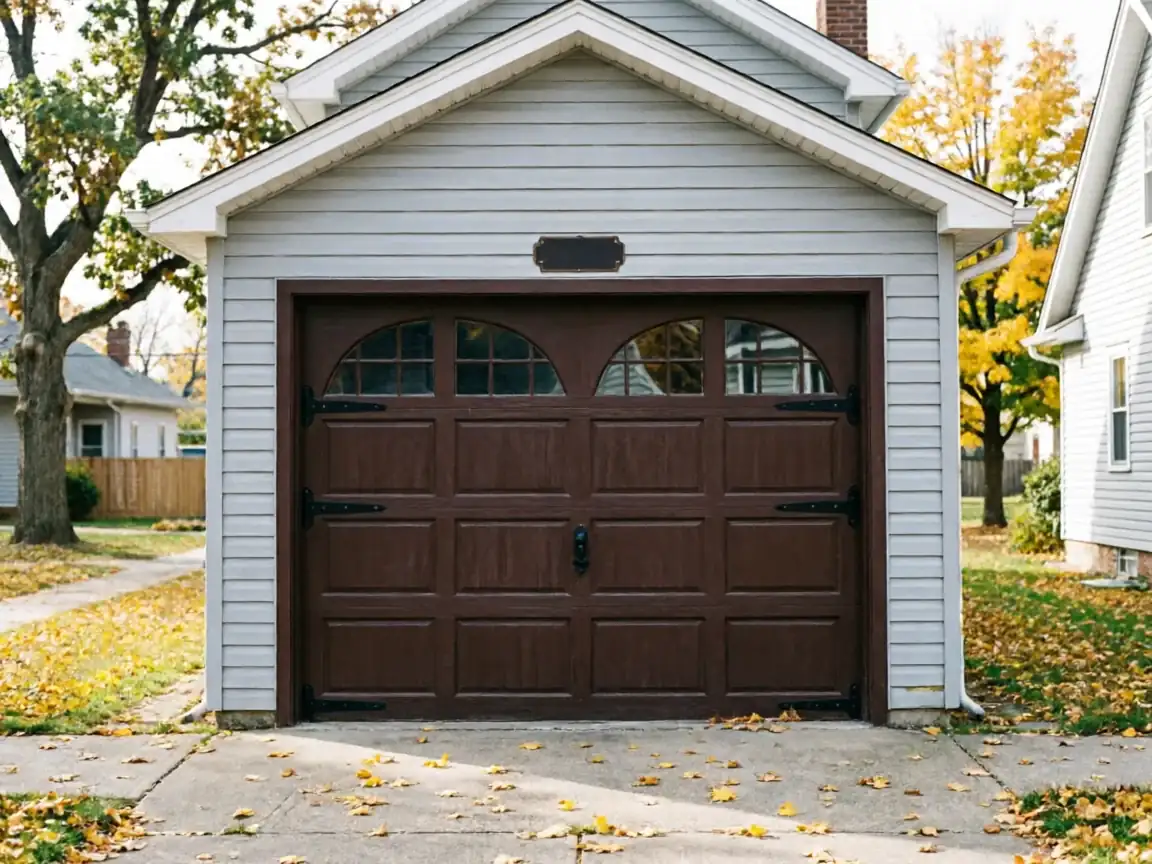
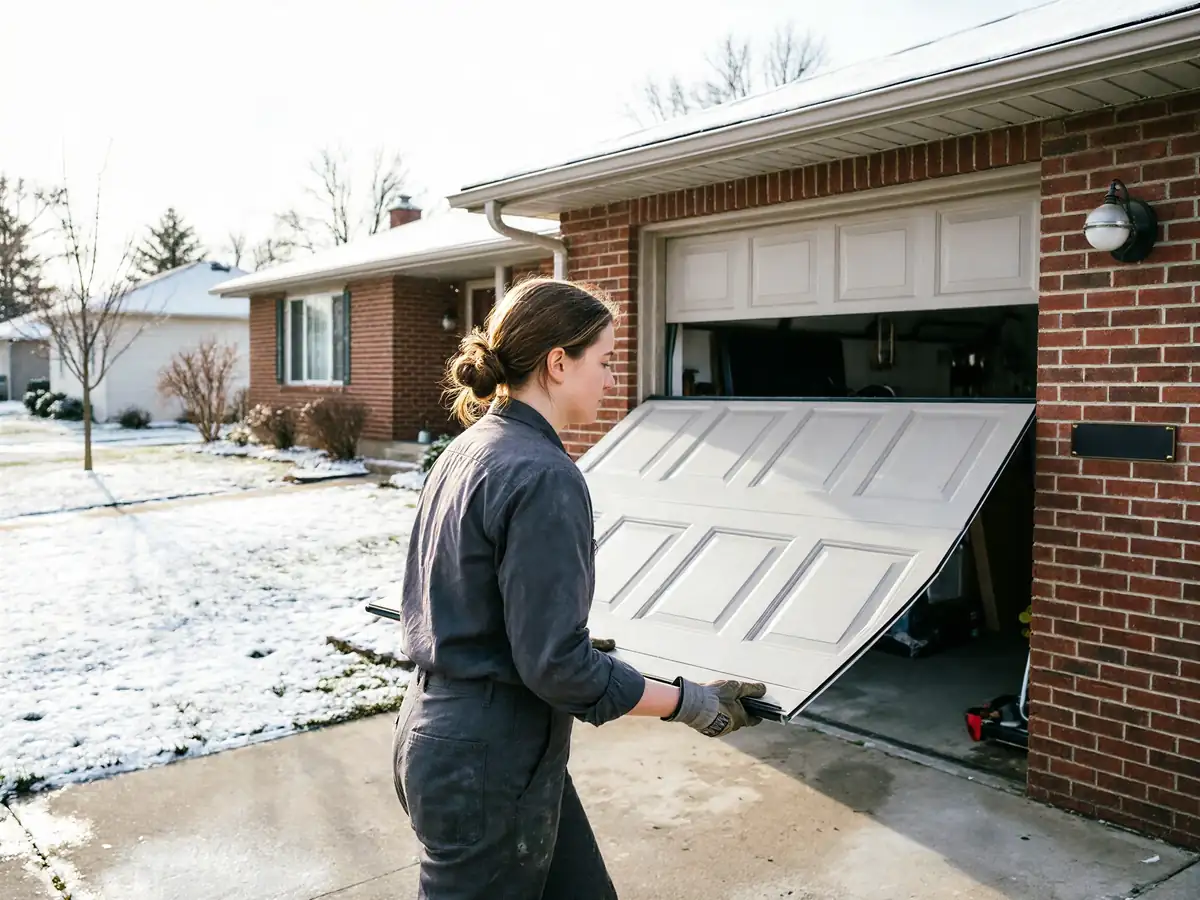
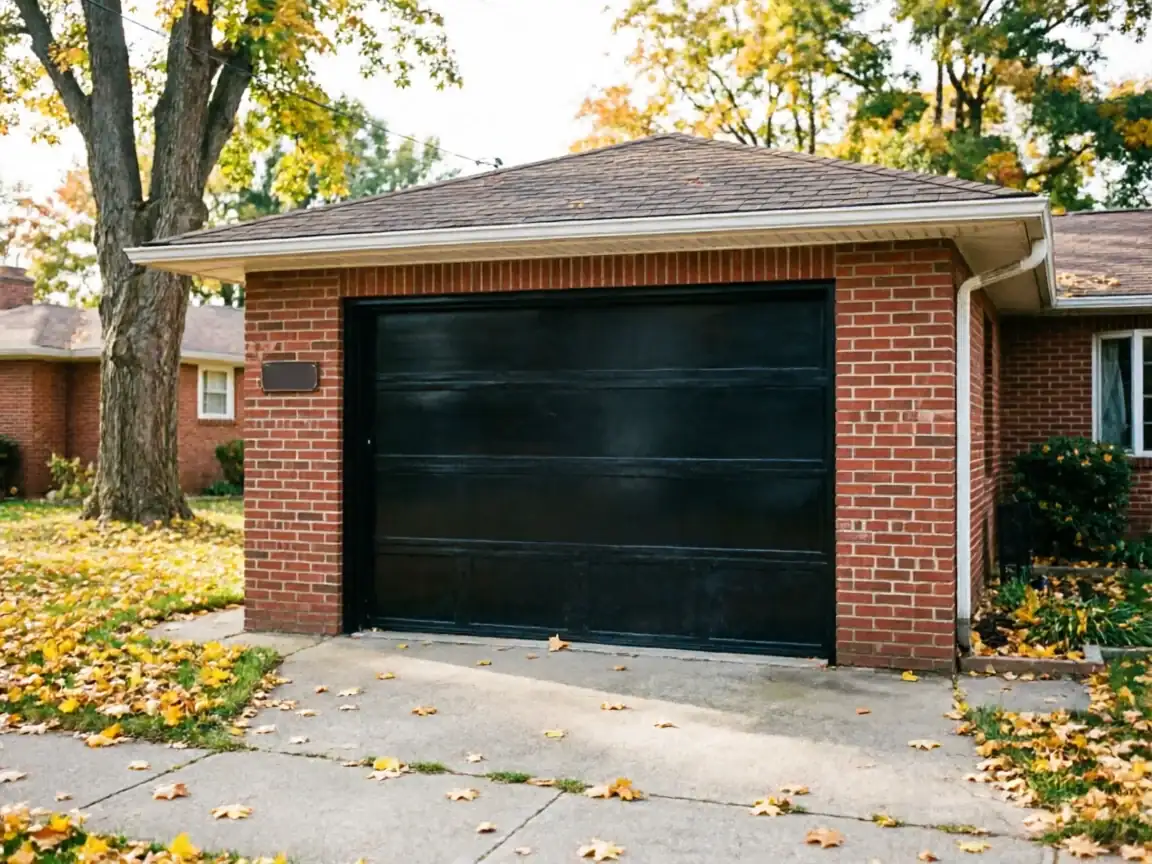
The other complication is parts. Original 1959 door panels, where they survive, were often sized to openings that don't match today's standard widths. If a panel needs replacing and the door itself is original, we may not get an exact match off the shelf - that's the honest limit here, and it sometimes tips the decision toward replacing the whole door rather than chasing one panel.
How It Shows Up
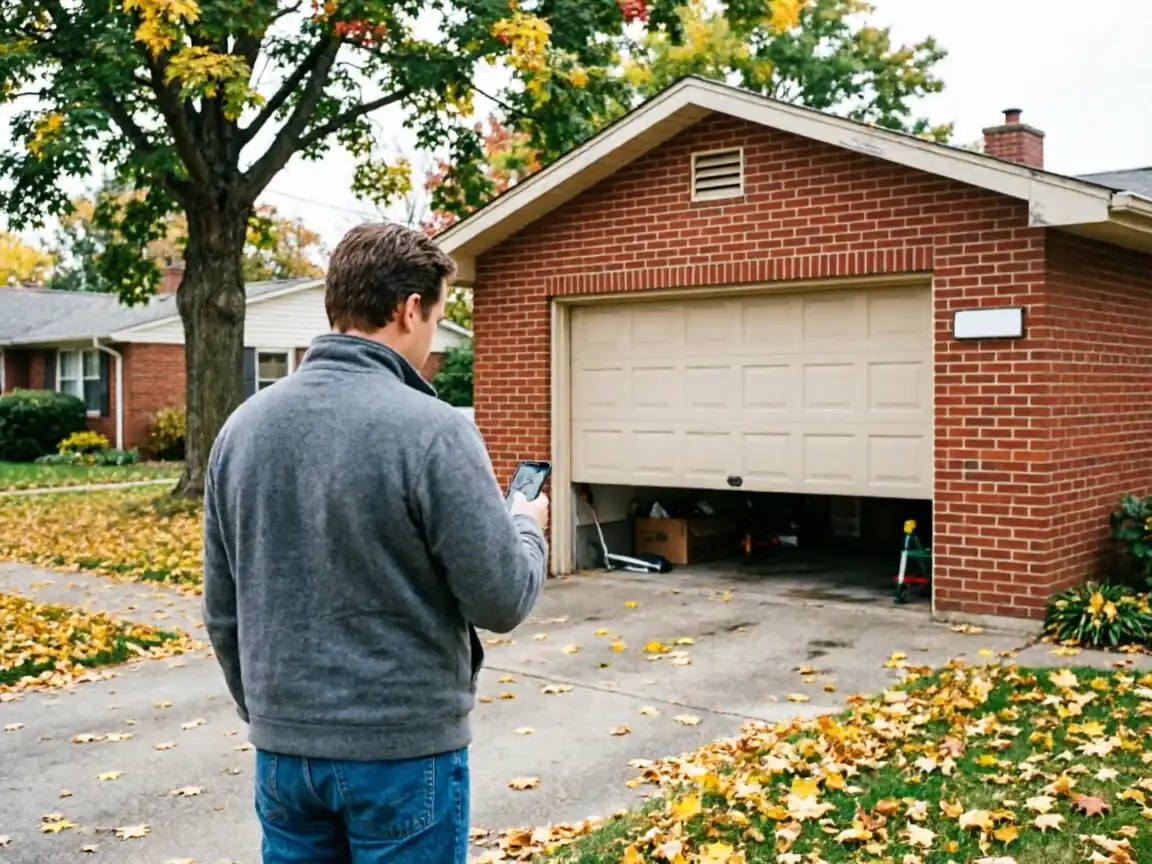
On a house from this era, the complaint we hear most is a door that's gotten heavy to lift by hand
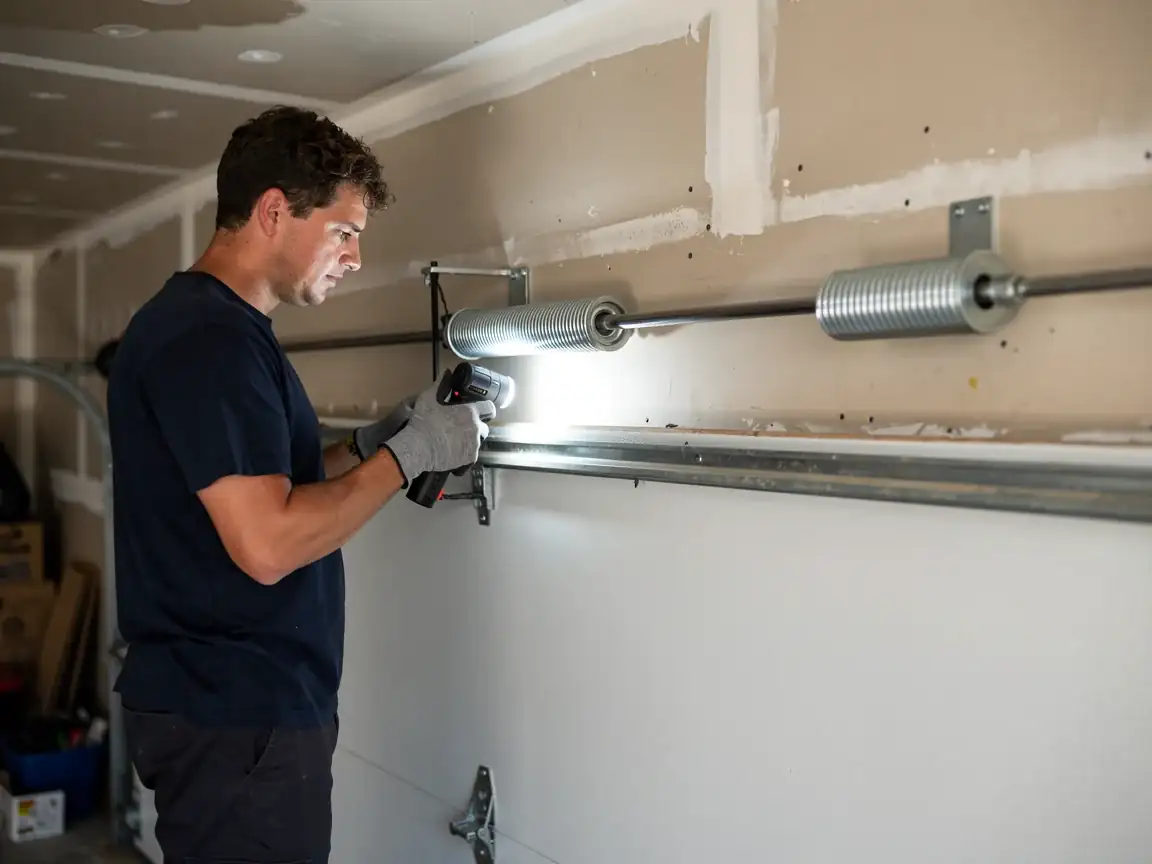
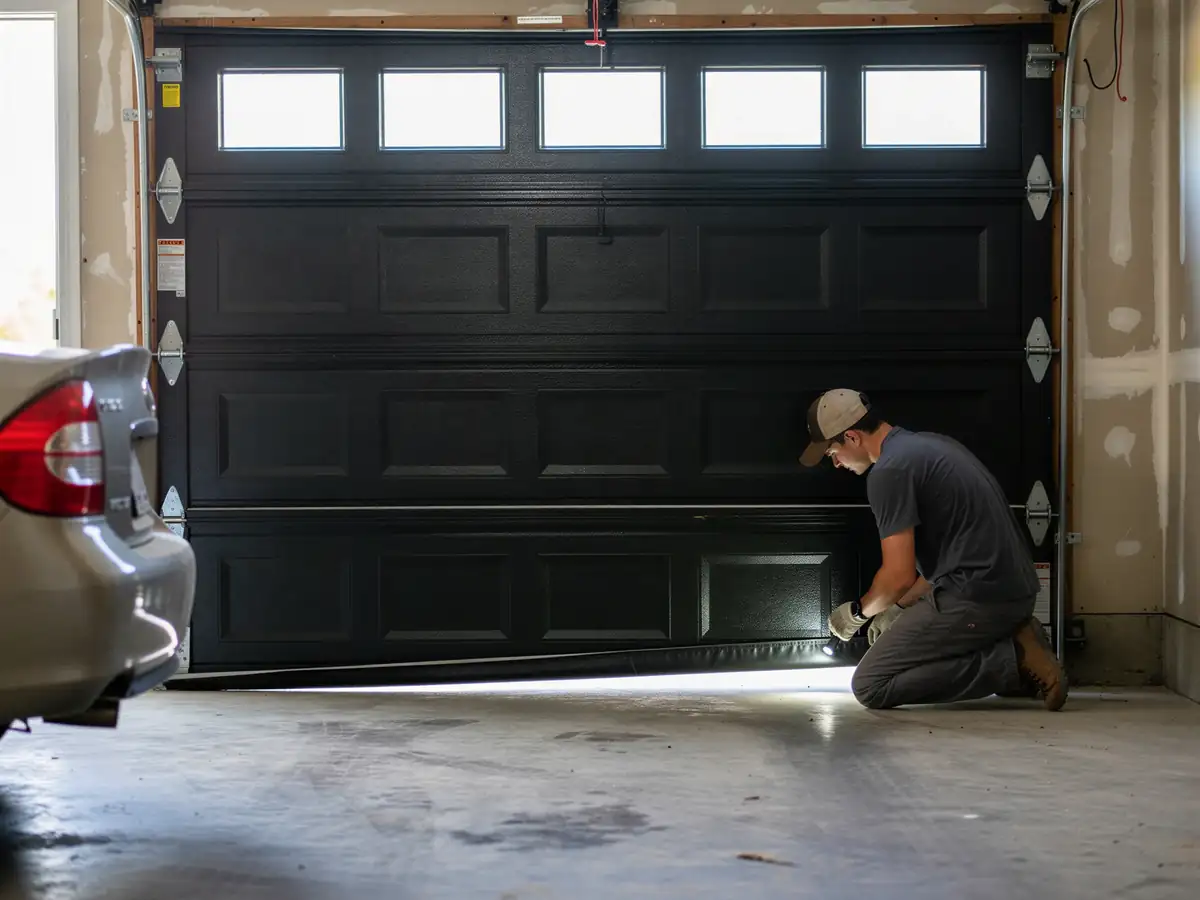
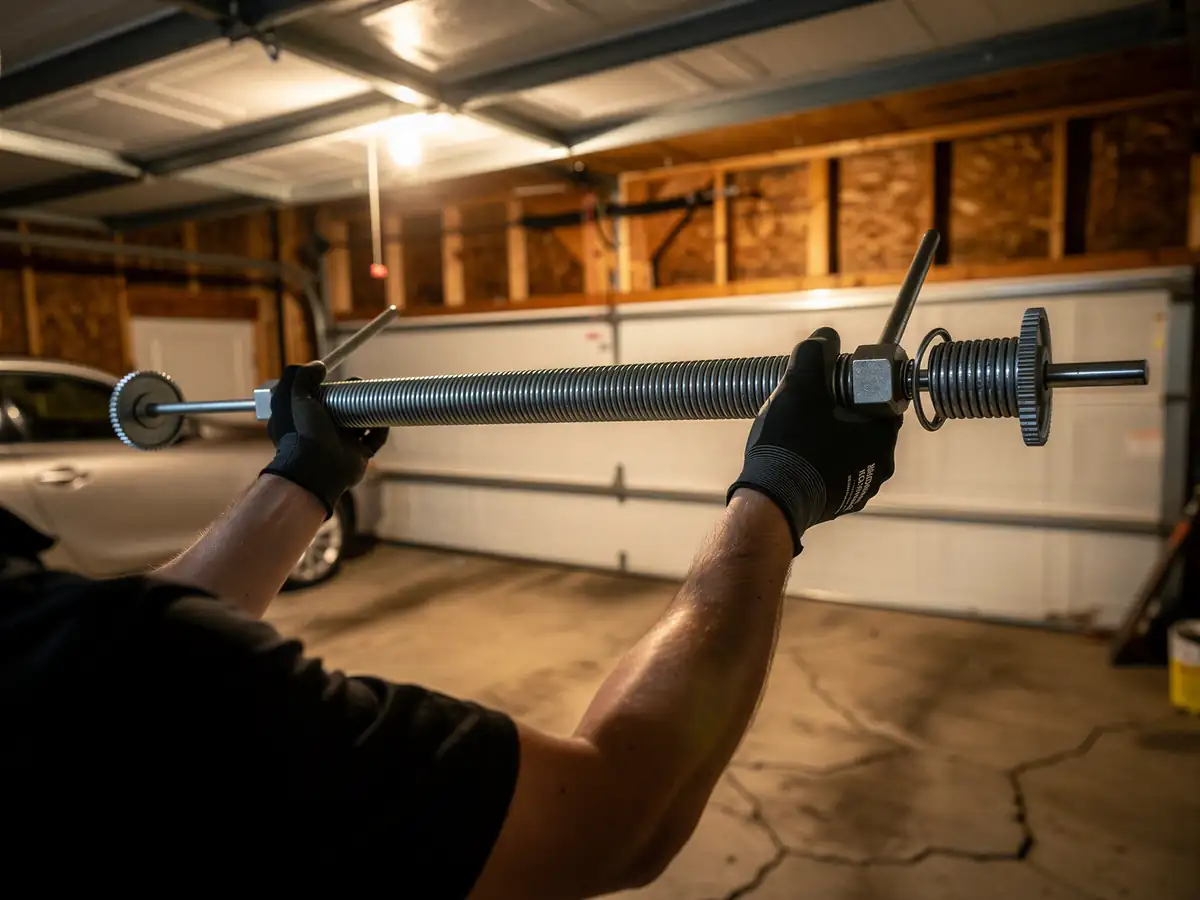
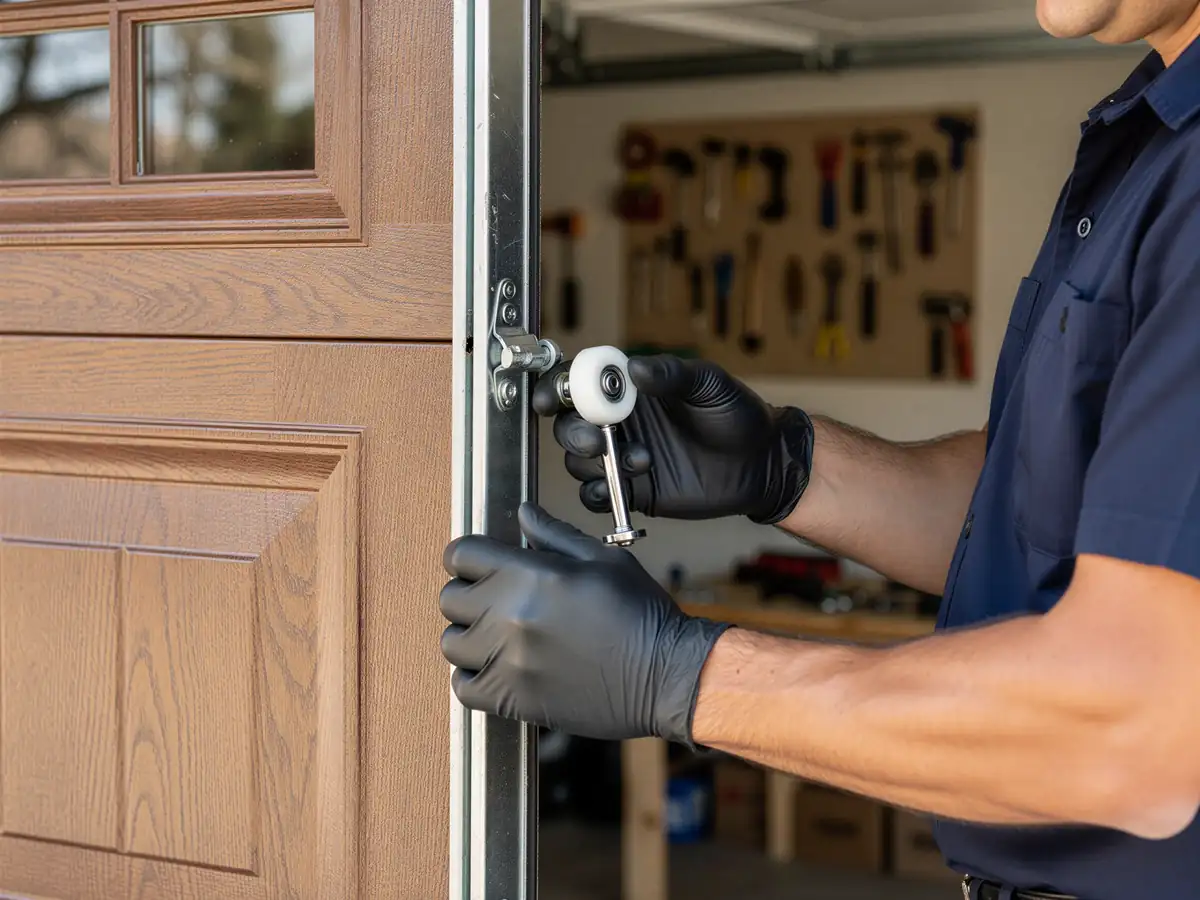
Or an opener that grinds and stalls partway up. That's usually the spring, not the motor - extension springs from a mid-century retrofit lose tension unevenly over the decades, and one side goes before the other, so the door cocks slightly as it travels.
We also see a lot of noise complaints
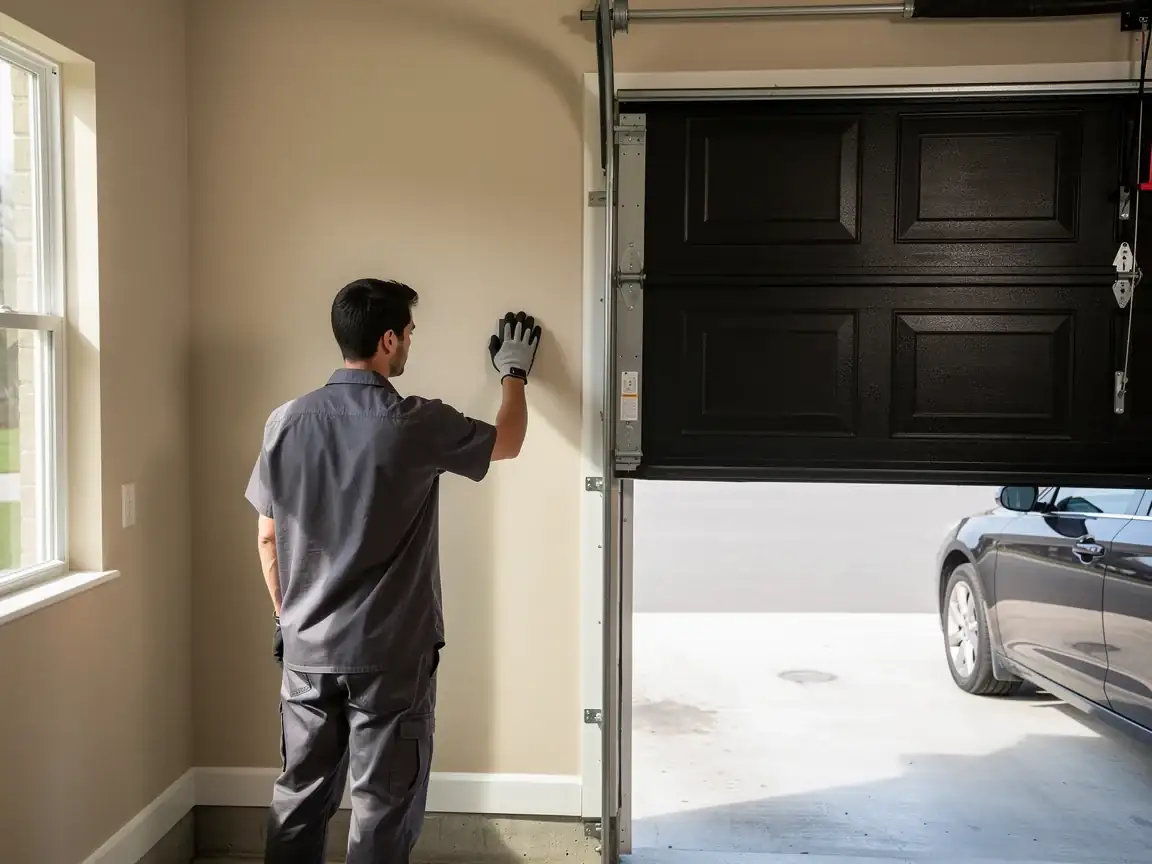
A rumble or a bang on the way down that wasn't there a year ago. On original hardware, that's often a roller that's worn its track groove wider than spec, letting the door rock side to side as it lands. It's not dangerous yet, but it's the kind of thing that becomes a cable problem if it sits.
Why It Happens Here
This area sits in a cold, moderate climate band, and that matters more on 1959-era steel hardware than on anything built after 2000. Metal spring coils contract in hard cold, and on a spring that's already decades past its rated cycle count, that contraction is often what finally snaps it - usually on the first genuinely cold morning of the season, not mid-winter.
Households here number around 6,104, and a meaningful share of them sit on lots from that same late-1950s building wave, so this isn't a one-house problem - it's a pattern we see across blocks in Bay Village on the same seasonal timing every year.
What the Fix Involves
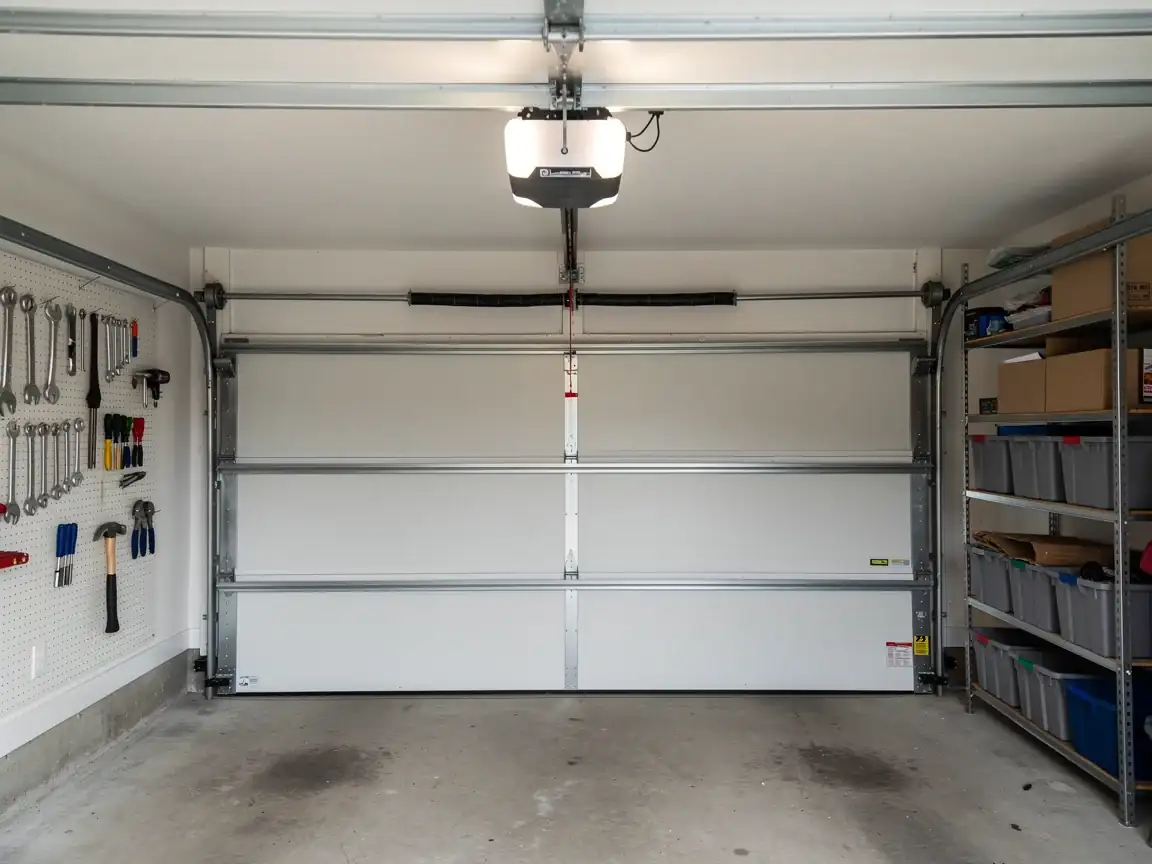
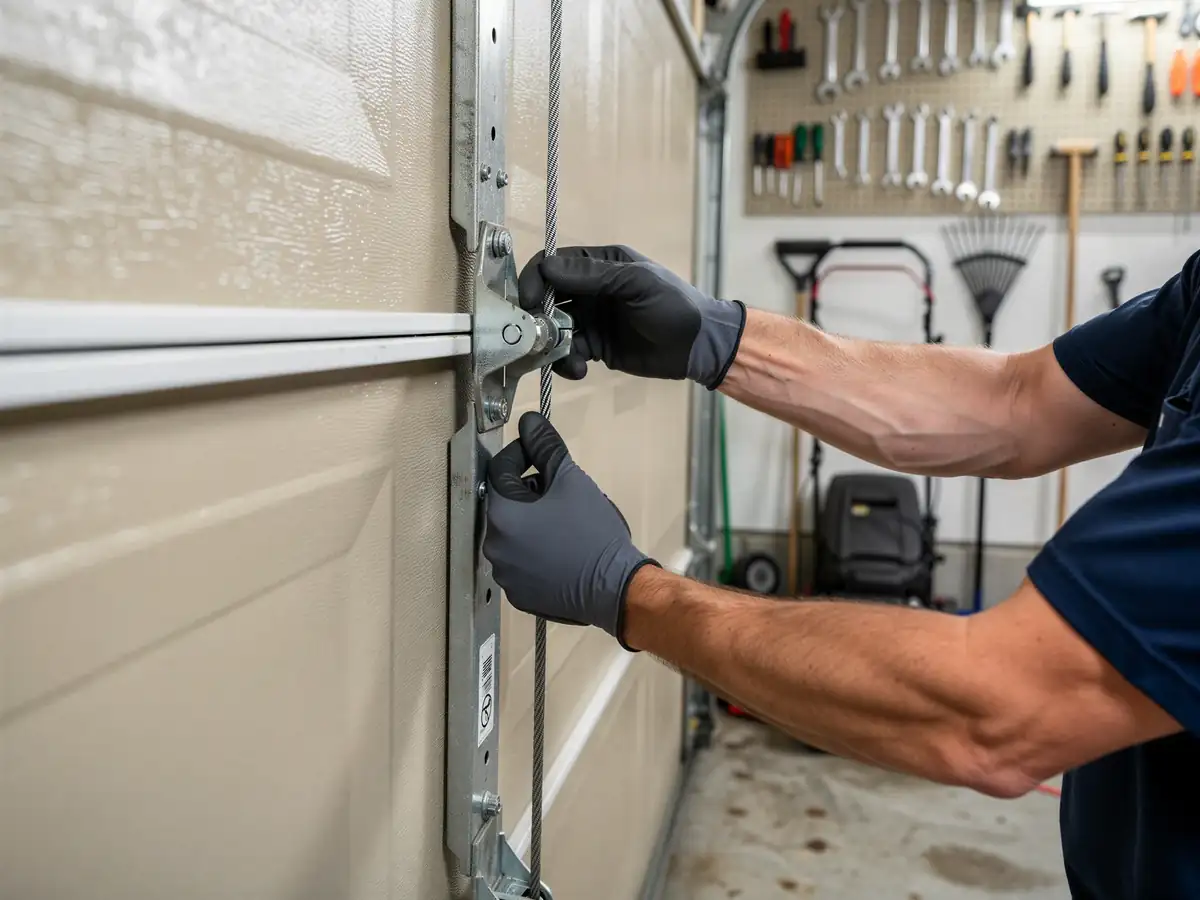
For a door of this age, the fix usually starts with a decision: repair the specific failed part, or convert the whole spring and track system to current hardware while we're already in there. If the door panels themselves are sound, we lean toward repair - new torsion springs sized to the door's actual weight, new rollers, and bracket work re-set square to the frame.
If the panels are warped, rusted through at the bottom, or the original size doesn't match stock replacement parts, we tell you that plainly rather than forcing a patch that won't hold. That's the honest limitation on this job: we can't always match a 1959 panel exactly, and a full door swap is sometimes the faster, cheaper path than hunting for one.