What the Fix Involves
Most opener calls we take in Vermilion aren't about the motor itself
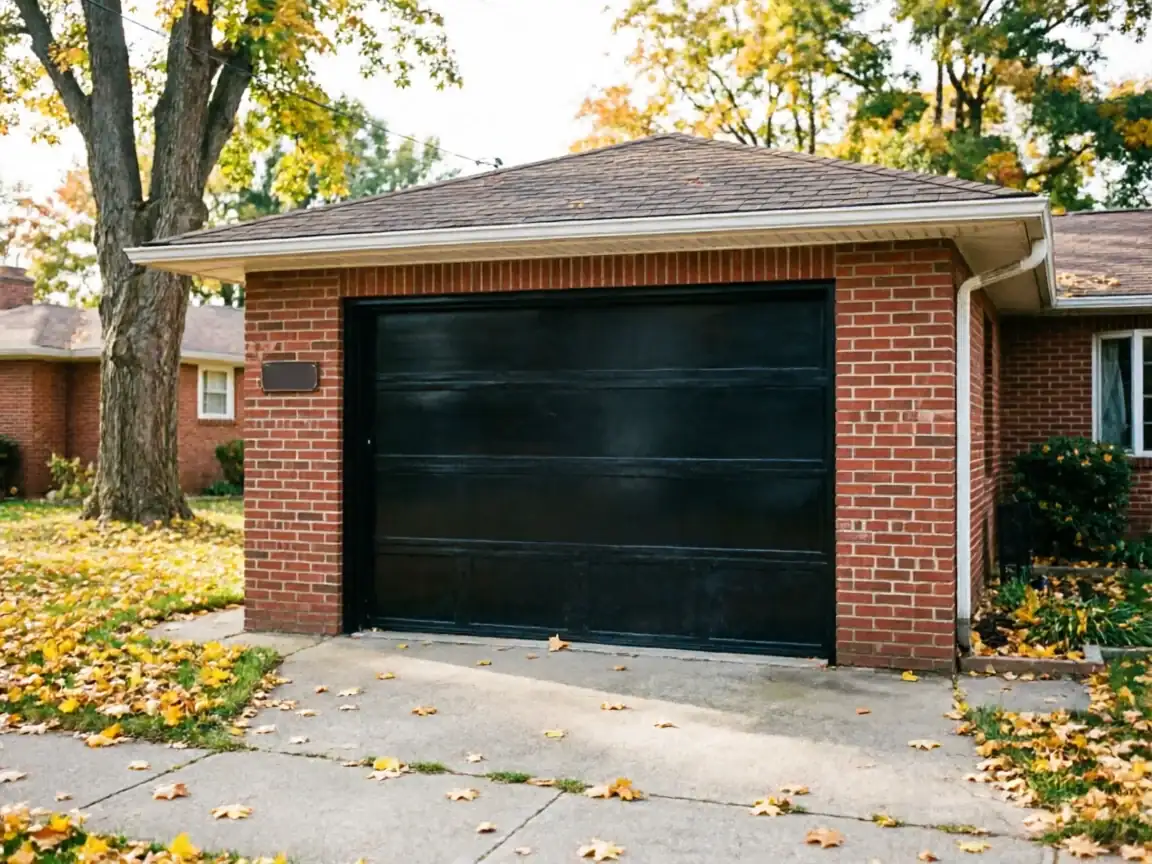
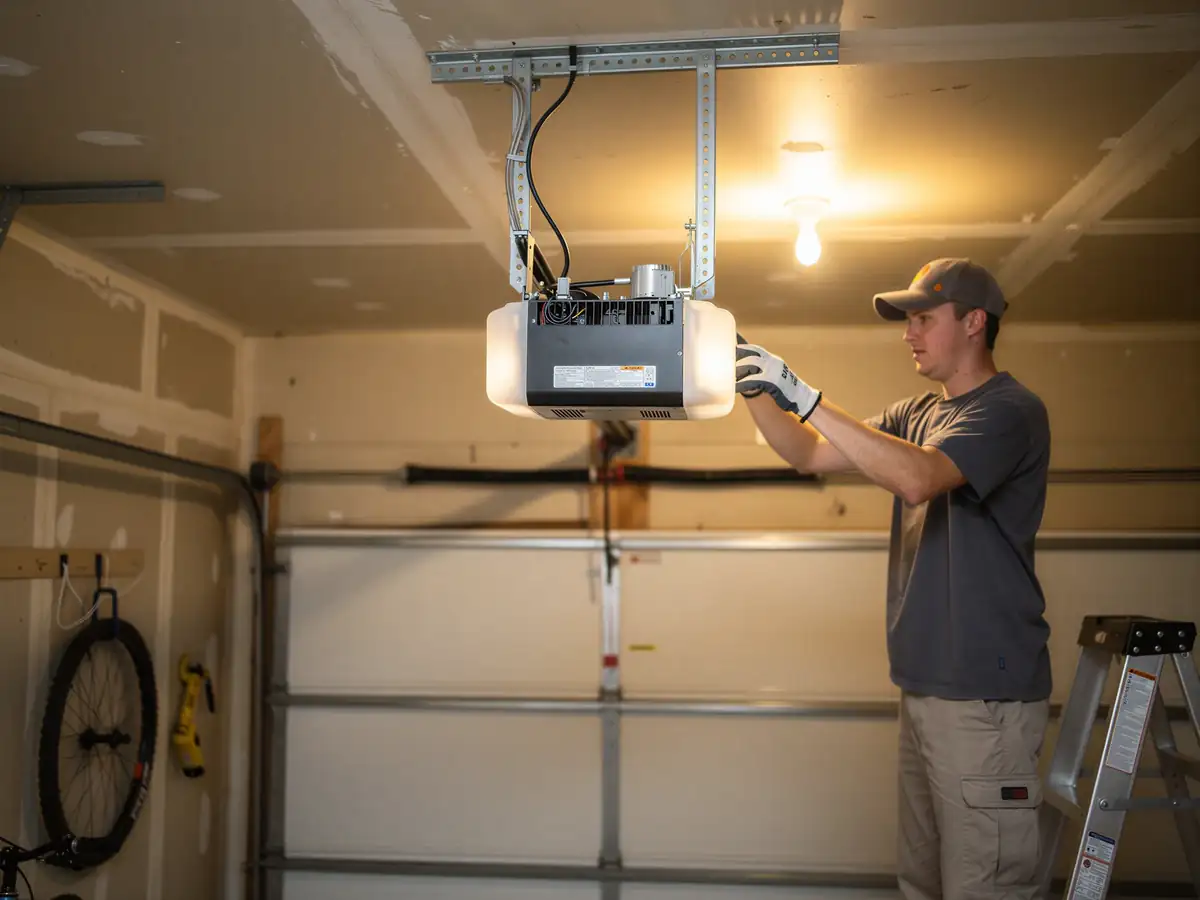
The house was built around 1966, give or take a few years either side, and what's failing is everything bolted to that original motor: the travel limit switches, the capacitor, sometimes the whole logic board if it's been swapped once already by a previous owner. A chain-drive unit from that era wasn't built to run quiet, and when it starts grinding or reversing on its own, that's usually a worn sprocket or a stripped gear inside the housing, not something you can tighten your way out of.
We check the obvious stuff first: photo-eye alignment, travel limits, the wall button wiring
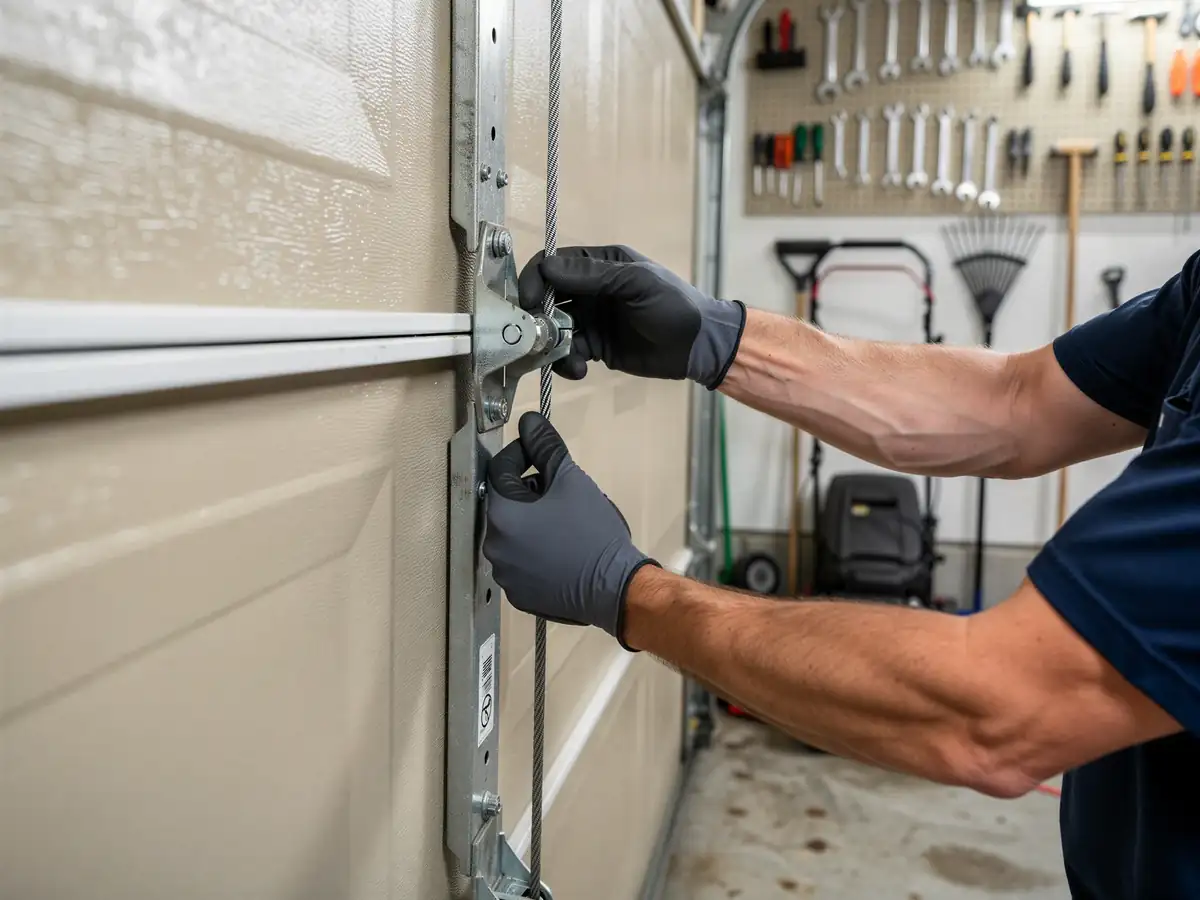
Then we get into the drive mechanism itself. On a house this age, you'll sometimes find a chain-drive opener paired with hardware that's been replaced piecemeal over 50-plus years, so the opener is fighting a door that doesn't move the way it did when both were new. Fixing the opener alone doesn't always solve the real problem, and we'll tell you that up front instead of billing you for a part that won't fix the symptom.
How It Shows Up
The complaint we hear most from Vermilion is the door reversing halfway up, or the opener running but the door not moving at all - that's a stripped gear, common on units pushing past their expected life. Cold mornings make it worse. With the moderate-cold winters this area gets, grease inside an old gearbox stiffens up, and a motor that start fine in July can stall out in January.
Some owners tell us the remote works from the driveway but not from the car at the curb - that's usually a dying antenna wire inside the unit, not a dead remote battery. Others notice the light blinks a set number of times before the door won't budge; that's the board telling you exactly what's wrong if you know the pattern for your model. We've also seen openers in this area wired straight to an outlet with no surge protection, which shortens board life faster than the manual says it should.
How Long You Are Without the Door
We come out from Lorain, about 7 miles over, so there's no local branch sitting around the corner - plan on us arriving after a trip, not a walk-in. Most straightforward repairs, a capacitor swap or limit switch reset, get the door moving again in the same visit. Gear and sprocket kits we carry on the truck cover a lot of the chain-drive units common to houses built in this window, so those don't usually need a second trip either.
Where it stretches out is logic boards. If your opener is old enough that the board itself has failed, and it's not a model we stock, that part can take a few days to source. We'll tell you at diagnosis whether we're looking at a same-visit fix or a return trip, and we won't guess at a timeline we can't back up.
Parts We Carry
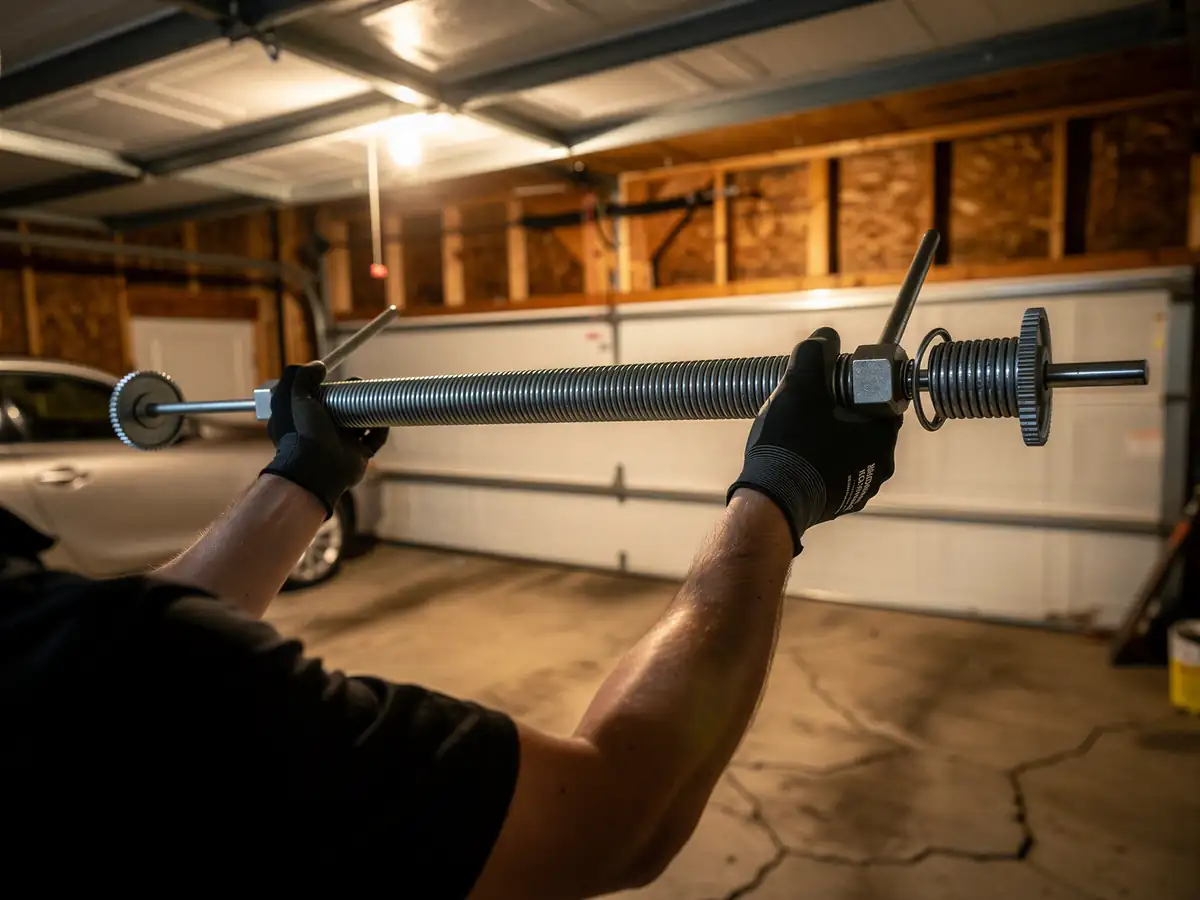
We stock the gears, sprockets, capacitors, and limit switch kits that fit the chain-drive and screw-drive openers most common to the 1938-2002 housing stock across this service area - which in Vermilion means mostly units installed or replaced sometime after the mid-1960s build wave
Circuit boards are the exception. There are enough opener brands and model years out there that we don't carry every board on the truck, and pretending otherwise would mean charging you for a guess.
We also carry basic safety sensor kits
Since photo-eye failures are common on any opener that's been through a few Ohio winters of road salt and moisture creeping into the garage. If your unit takes a board we don't have on hand, we'll order it and let you know realistically when it'll land rather than quoting a number to make the call easier.
Can You Do This Yourself
Resetting travel limits or replacing a remote battery is reasonable to do yourself, and plenty of Vermilion homeowners handle that without calling anyone. Where we'd stop you is opening the opener housing to get at the gear or logic board - the capacitor inside can hold a charge after you unplug the unit, and that's not a risk worth taking to save a service call.
The other place to think twice is replacement versus repair. If your opener is old enough that the manufacturer doesn't sell parts for it anymore, which happens with units installed decades ago, a repair can turn into throwing good money after a board nobody makes. We'll say so plainly if that's where your unit stands instead of patching something that'll fail again in six months.