How It Shows Up
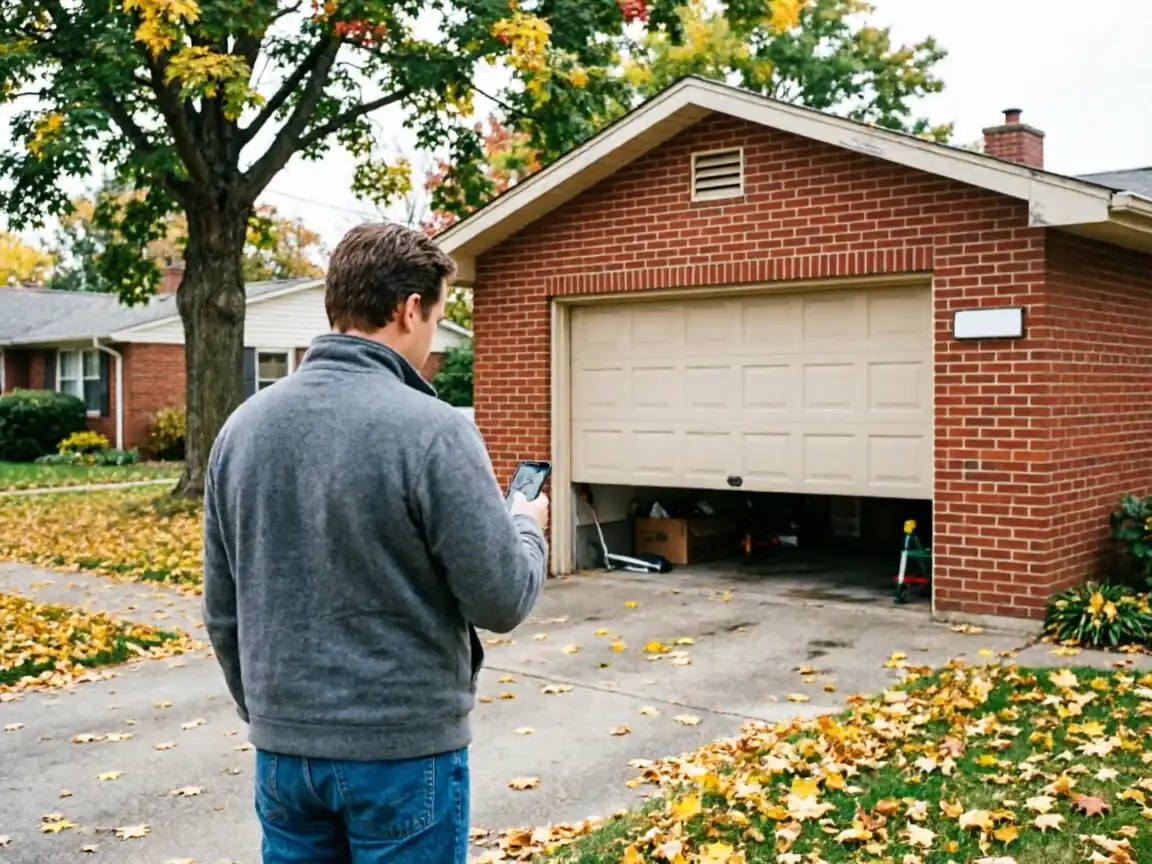
Most of the trouble calls we get across our service area come from houses built in the 1960s and 70s
Original hardware, warped single-layer panels, torsion springs nobody stocks anymore. Avon is a different story. The median home here was built around 2001, decades newer than the broader area average of 1968. That gap matters more than it sounds like it should.
A door going bad on a 2001-era house usually isn't failing because the hardware is obsolete
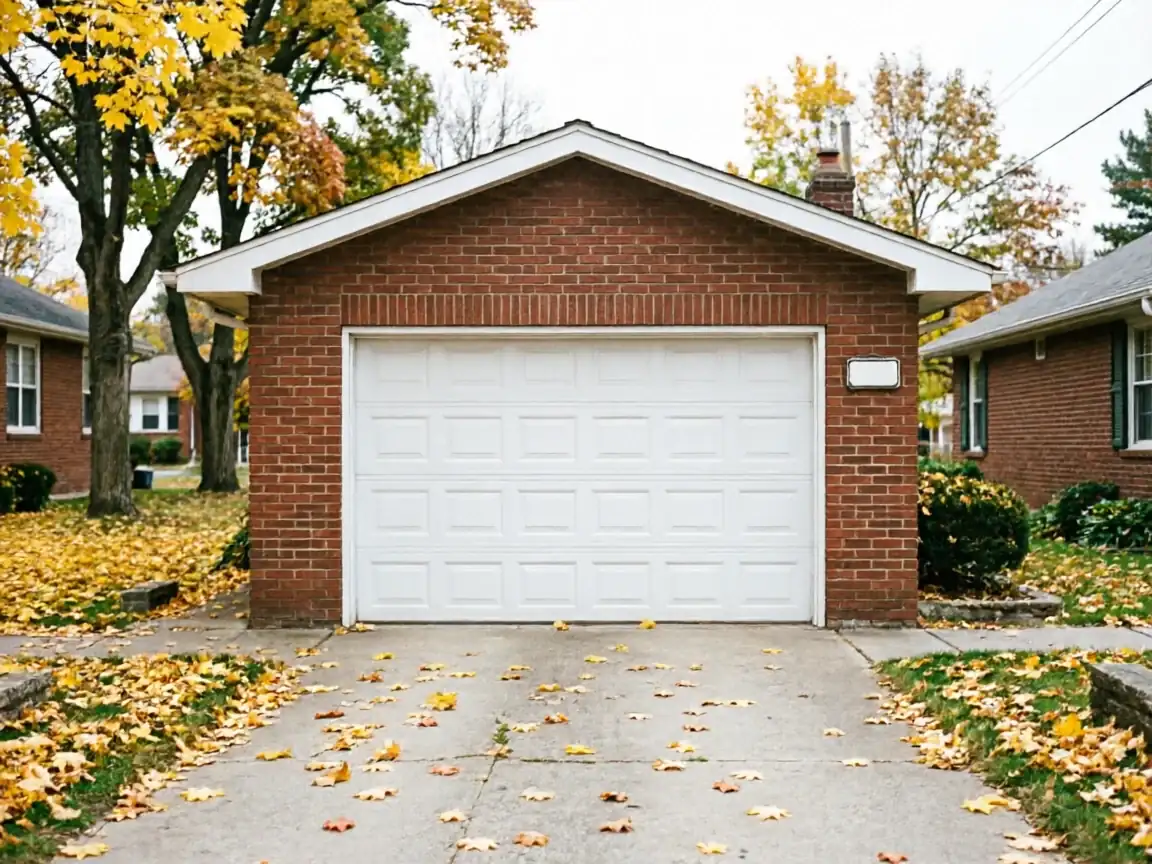
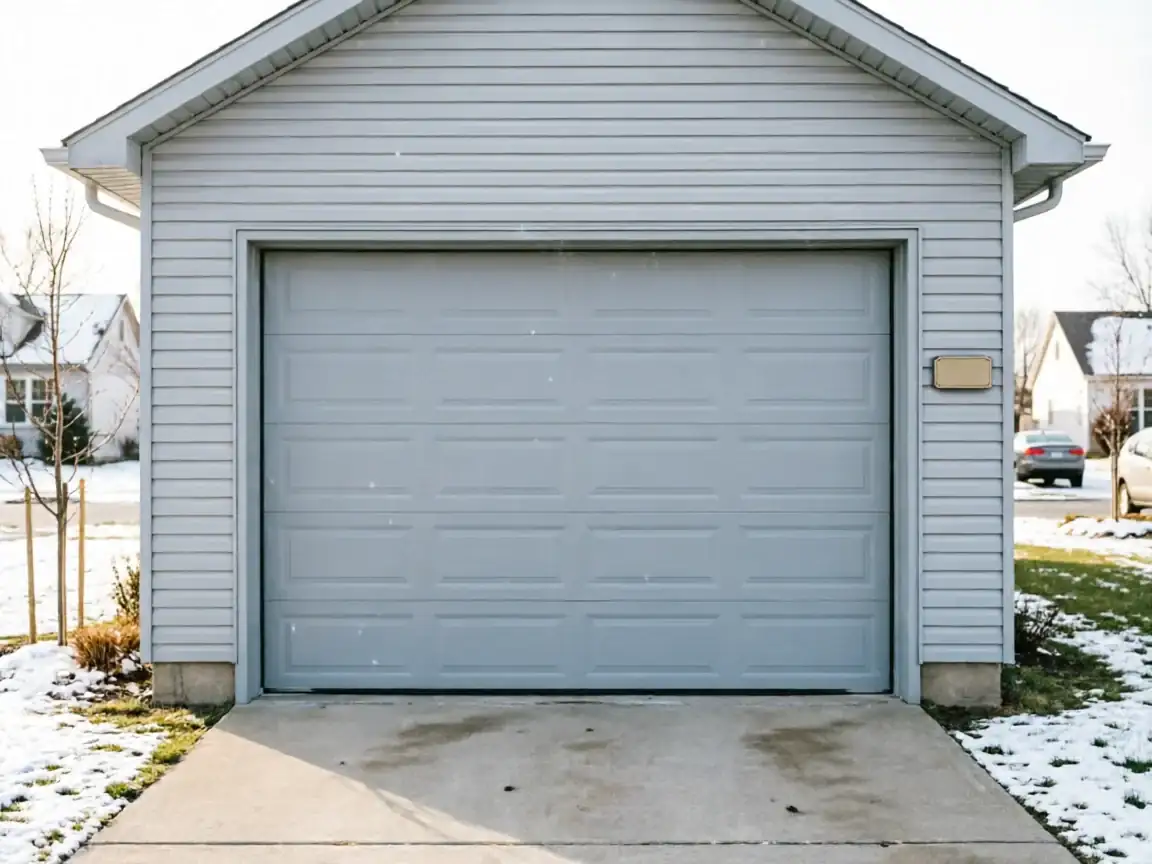
It's failing because the original builder-grade door - the one that came with the house when it was framed - was never a great door to begin with. Builders speced the cheapest unit that passed inspection, insulation was an afterthought, and the opener was whatever came in the box. Twenty-some years in, that's exactly the age bracket where panels start to oxidize at the bottom and sections flex where they shouldn't.
So when we get a call from Avon, we're rarely hunting for parts made for a style of door nobody builds anymore
We're usually replacing a serviceable-but-mediocre builder door with something actually sized and insulated for how the house is used now.
What the Fix Involves
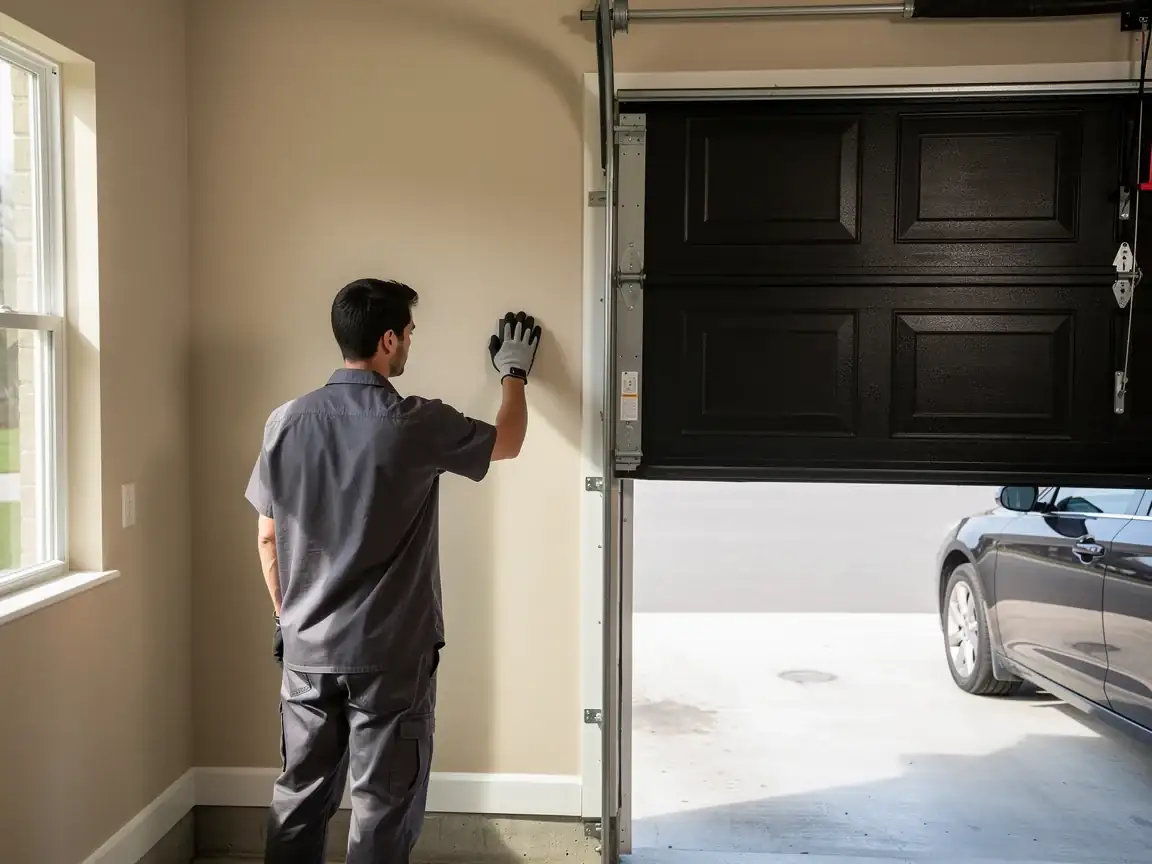
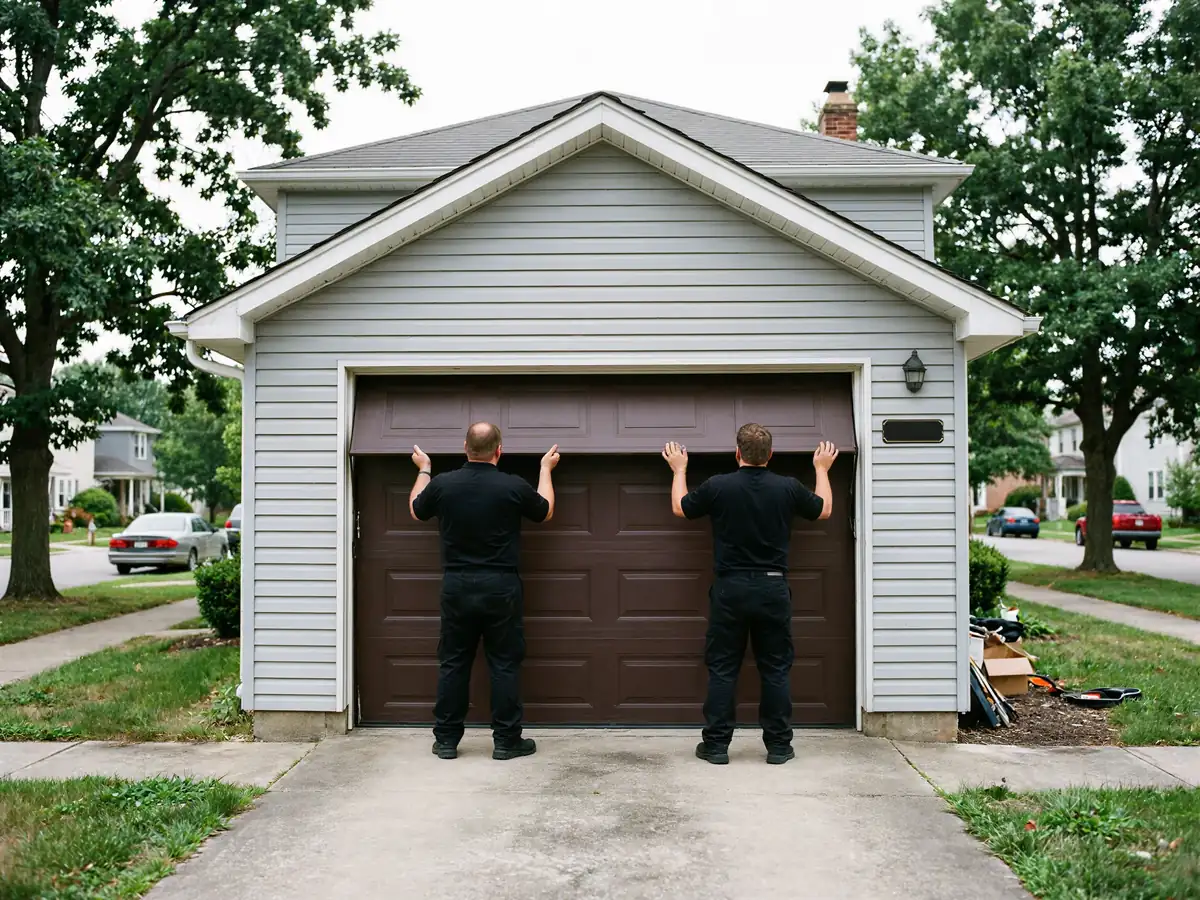
New installation on a house this age is mostly straightforward, which is worth saying plainly: we're not fighting non-standard rough openings or hand-fitting a jamb that's shifted over sixty years. Framing from the early 2000s is square, dimensions are standard, and the electrical for an opener is usually already run to the right spot.
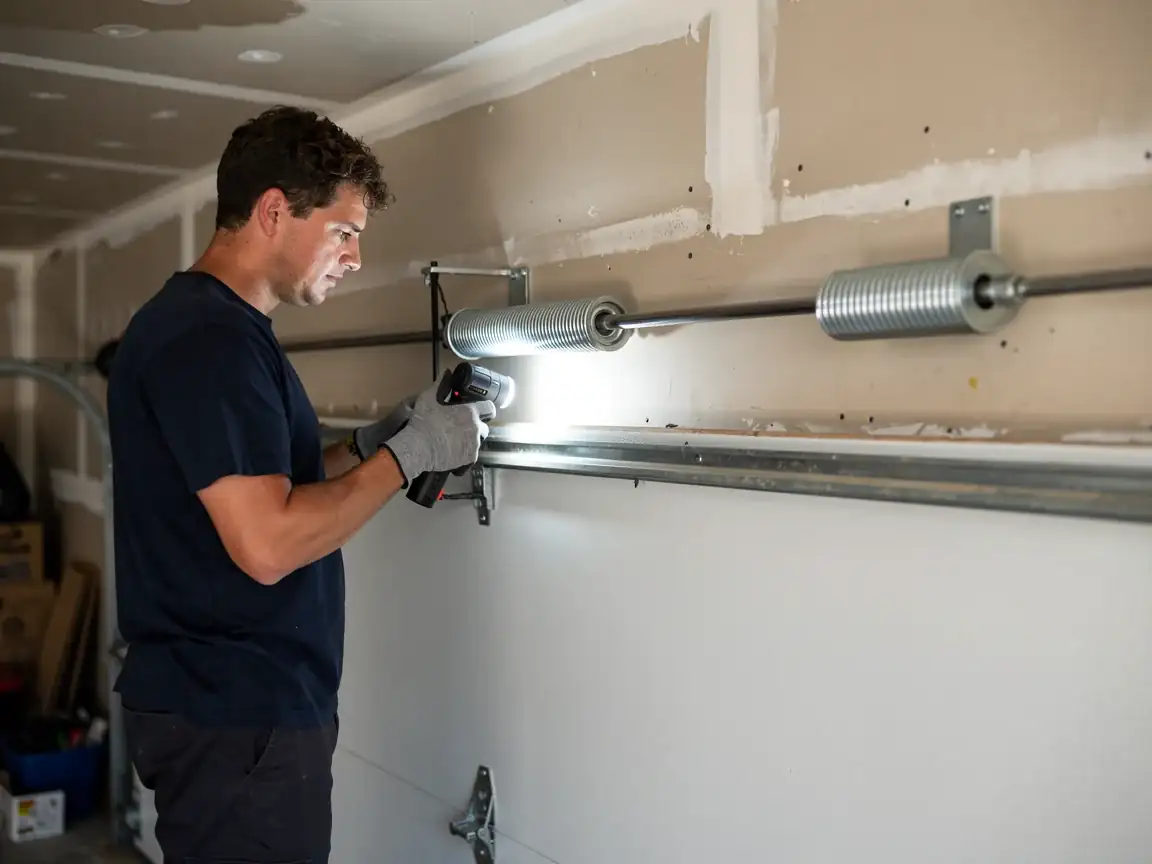
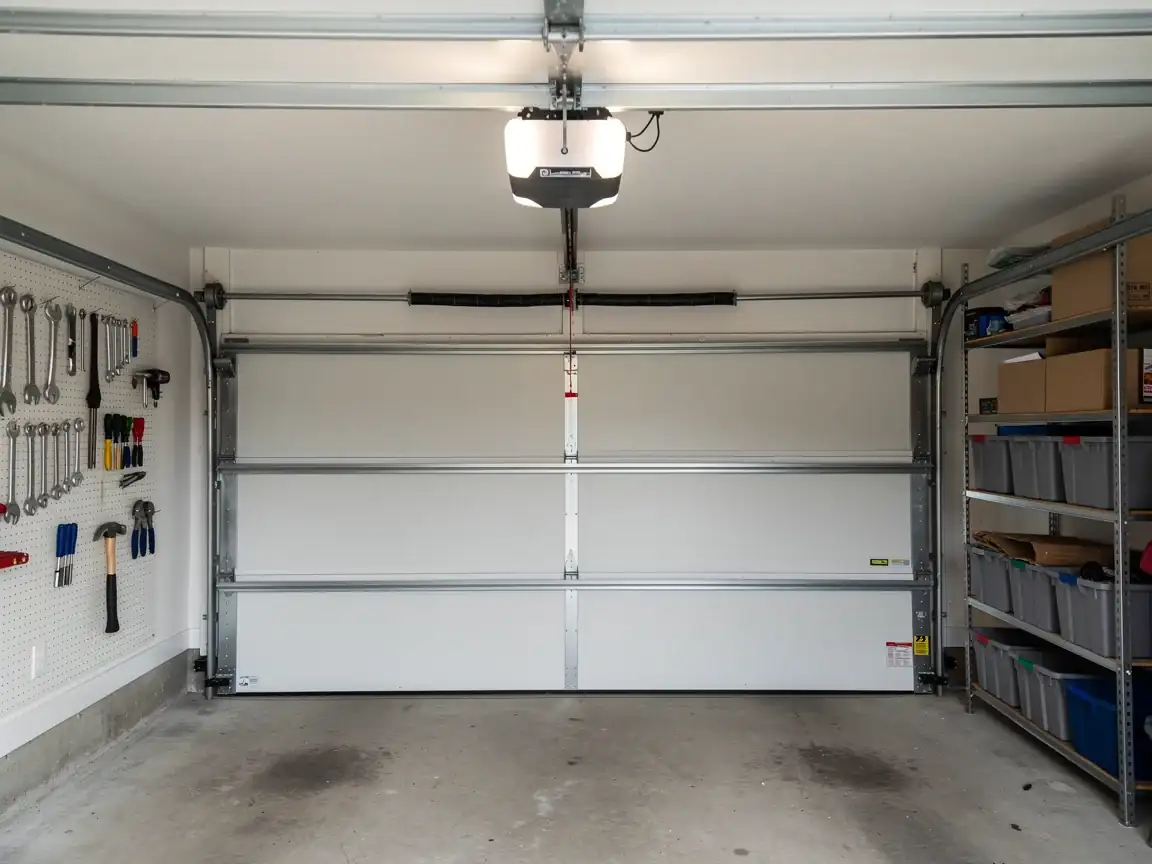
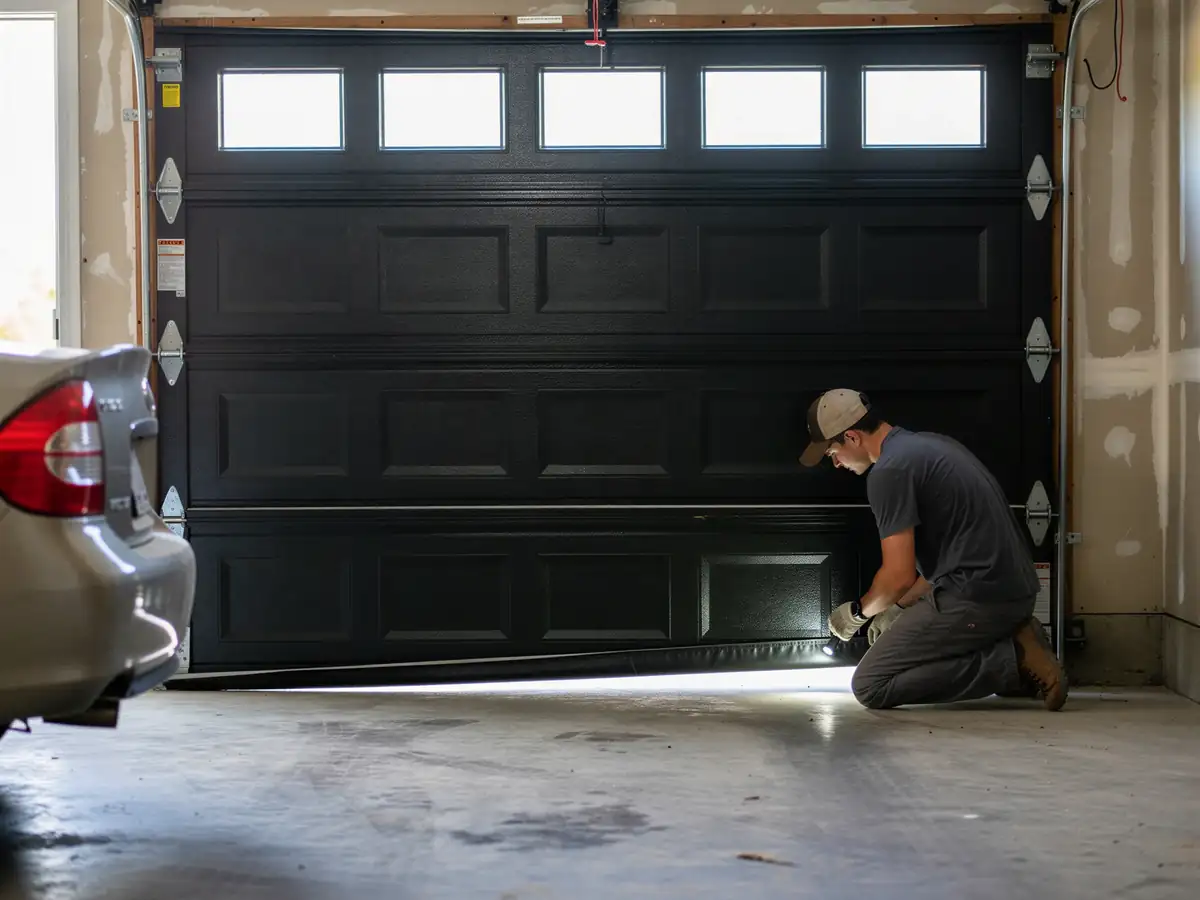
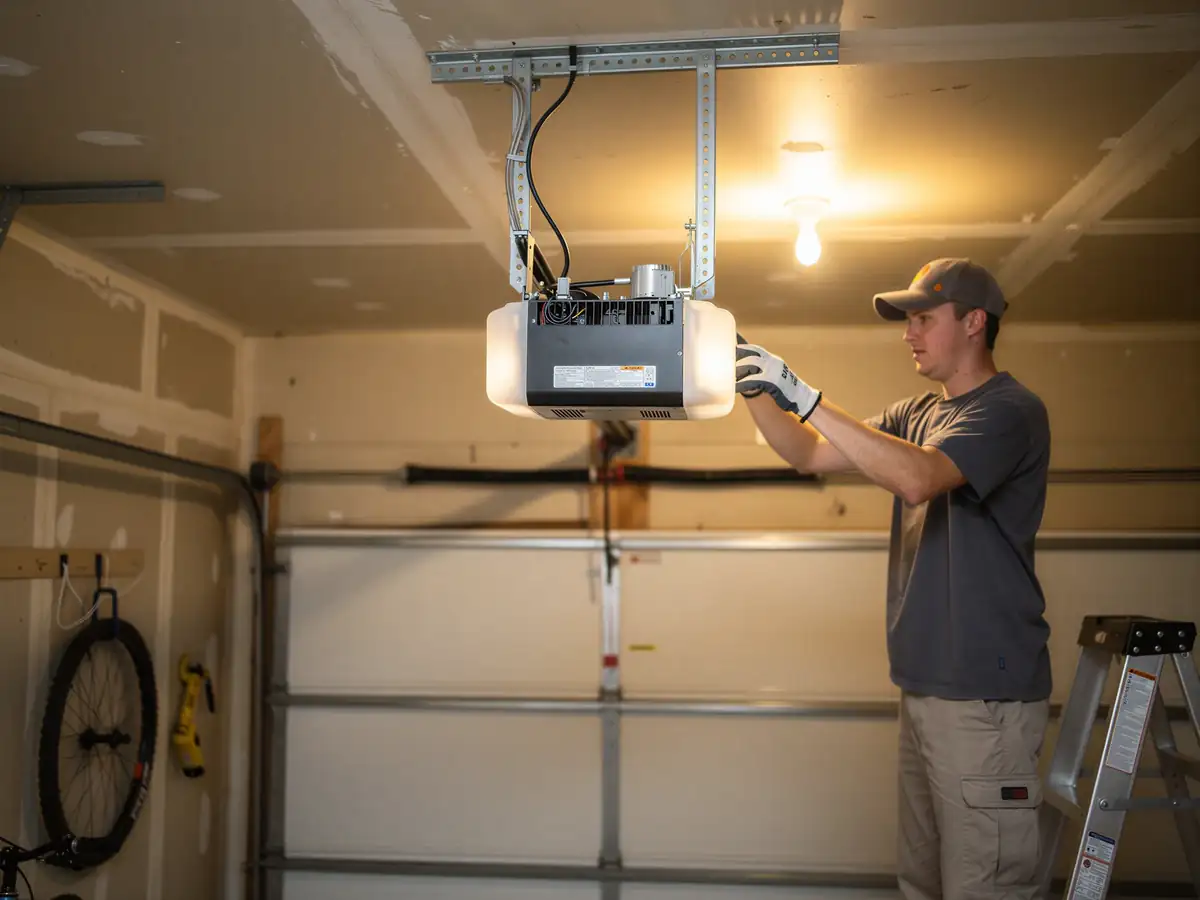
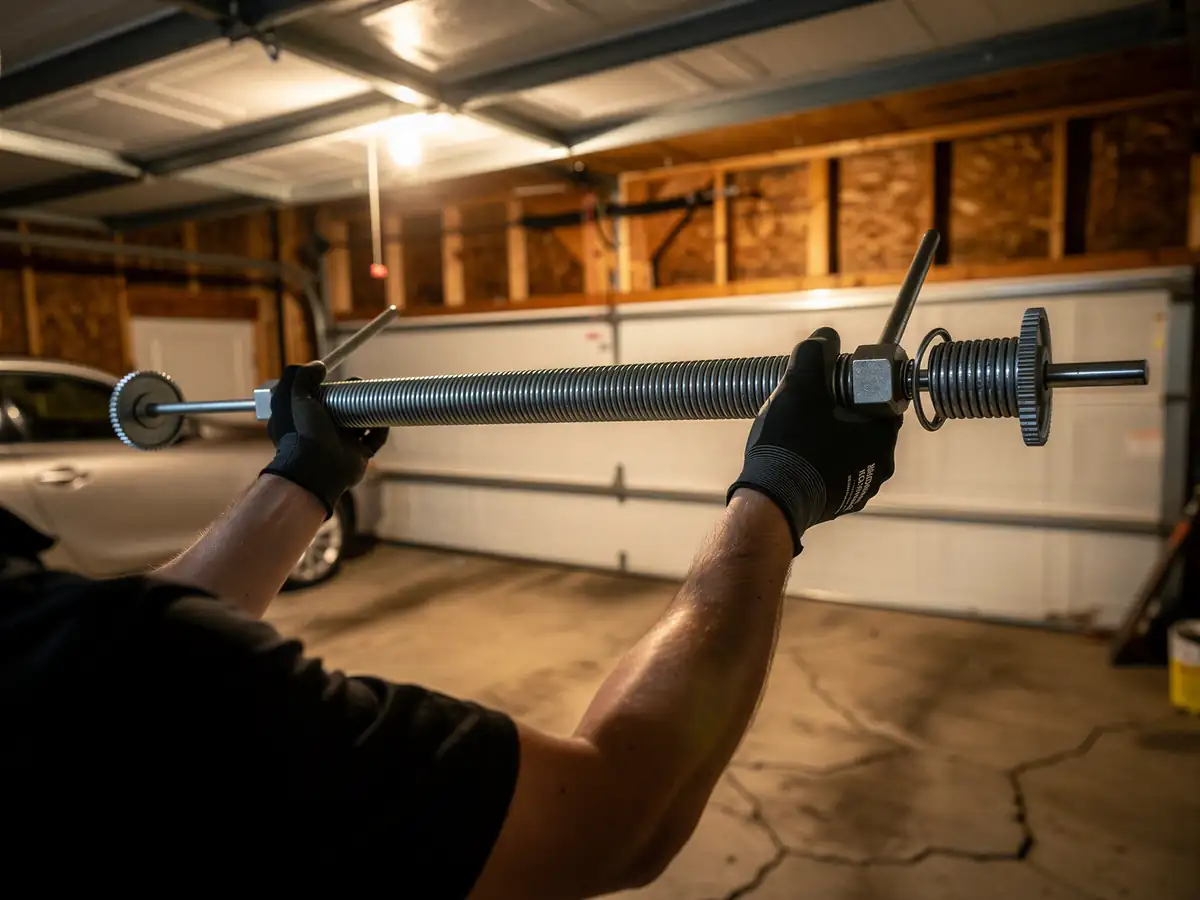
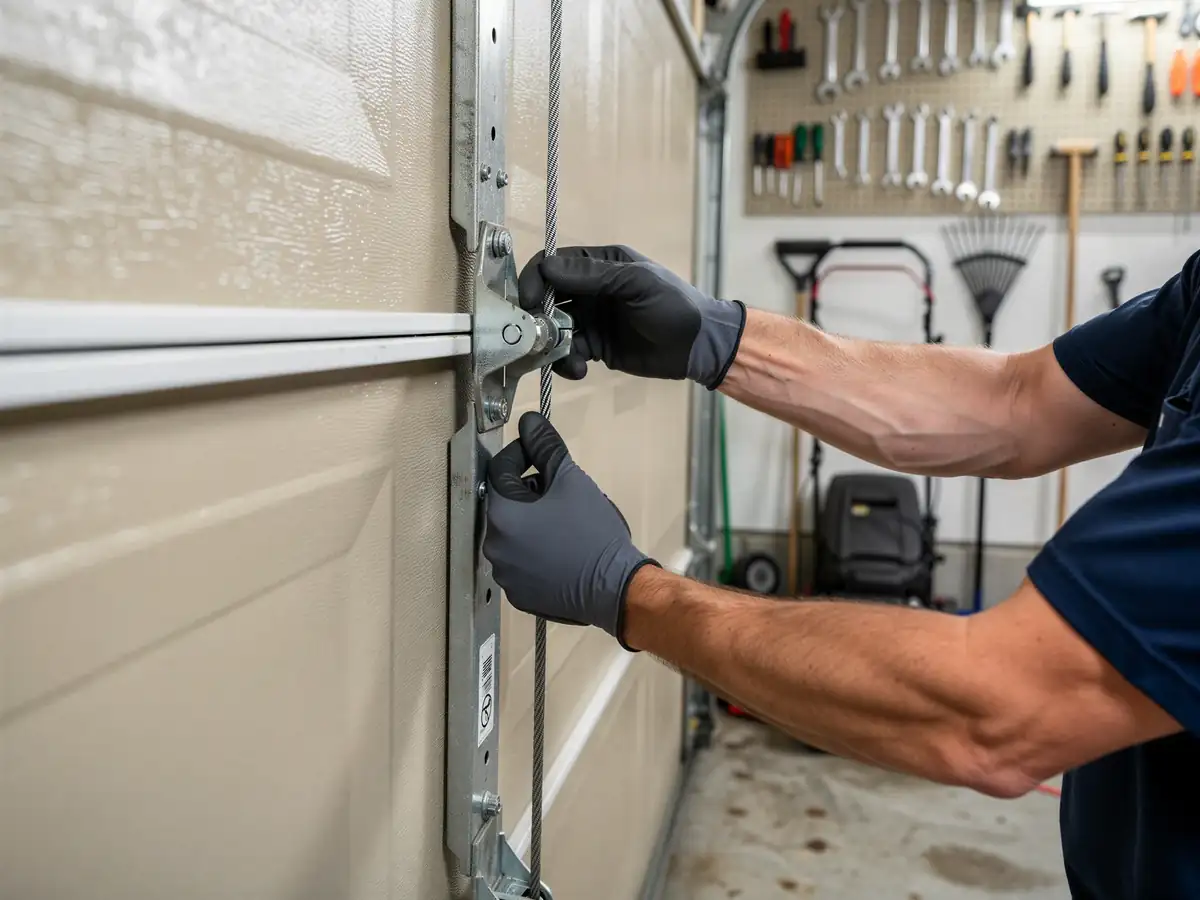
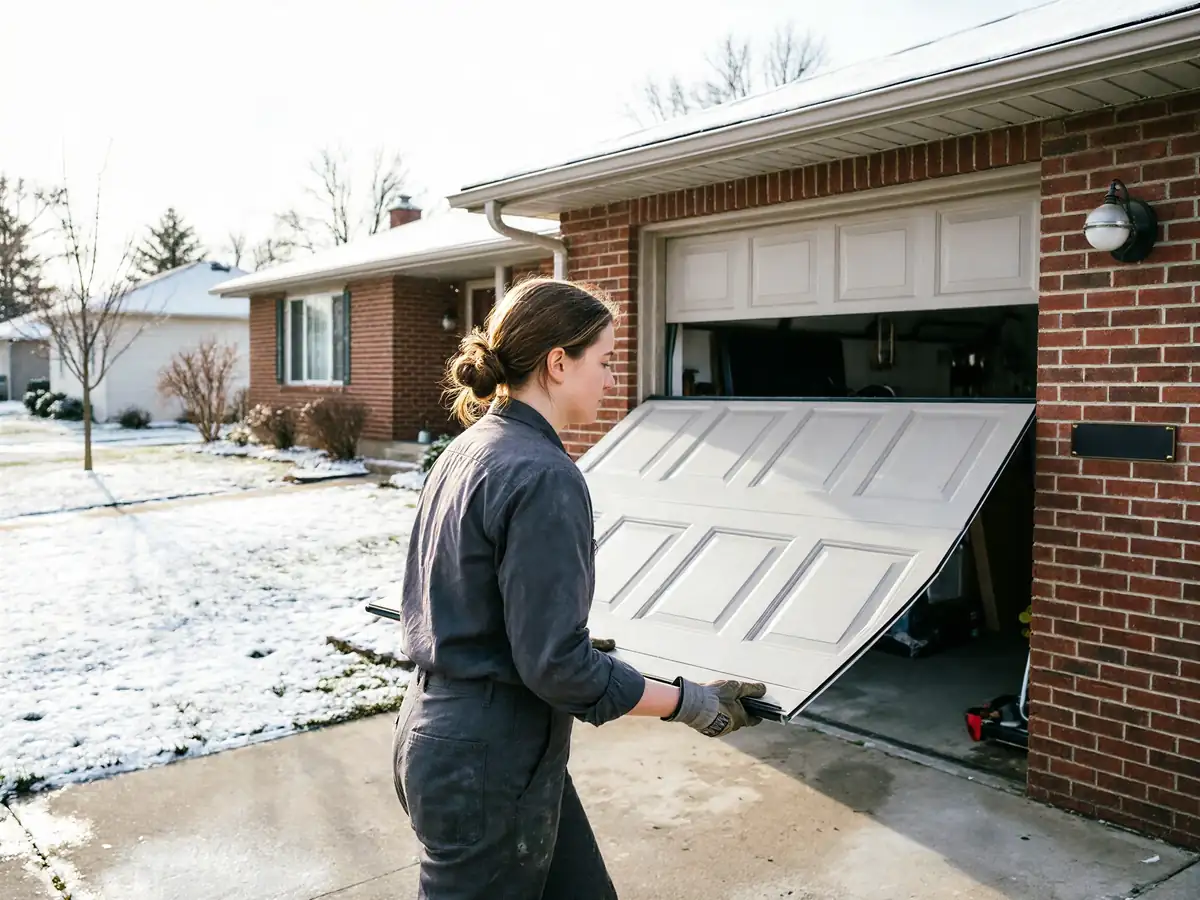
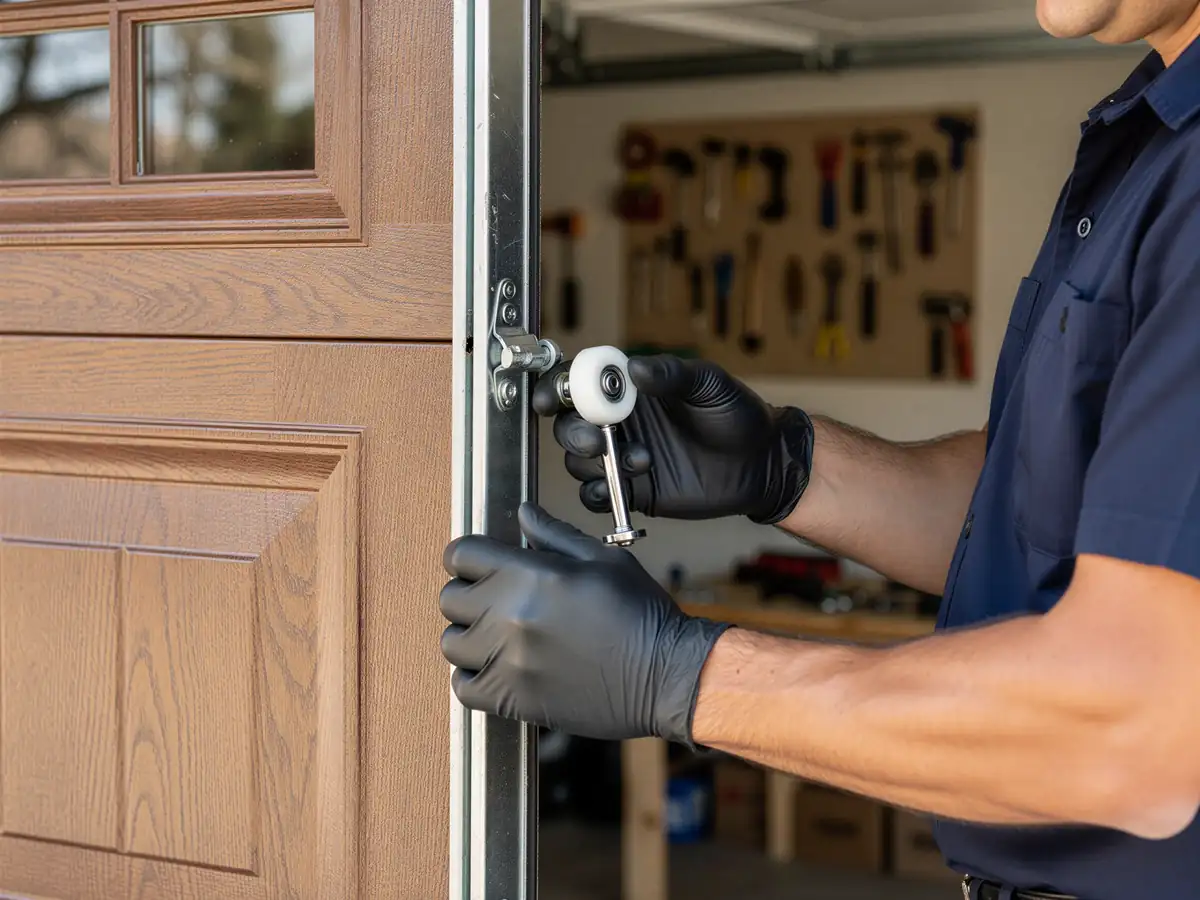
What we spend the real time on is sizing the new door to the opening correctly, matching track type to your ceiling clearance, and setting spring tension to the actual weight of the panel you pick - not a generic chart number. We pull the old door and track completely rather than bolt a new door onto old hardware; mixing a new panel with a twenty-year-old torsion spring is how you end up back here in six months.
We also talk through insulation and R-value with you up front, since a lot of builder-grade doors in this part of the area went in with none at all, and that's an easy upgrade to make while the opening's already apart.
Parts We Carry
We carry standard steel and insulated panel doors, standard-lift and high-lift track hardware, and torsion springs sized to common residential door weights - the parts that cover the vast majority of houses built from the 1990s through today. These are not special-order items for us.
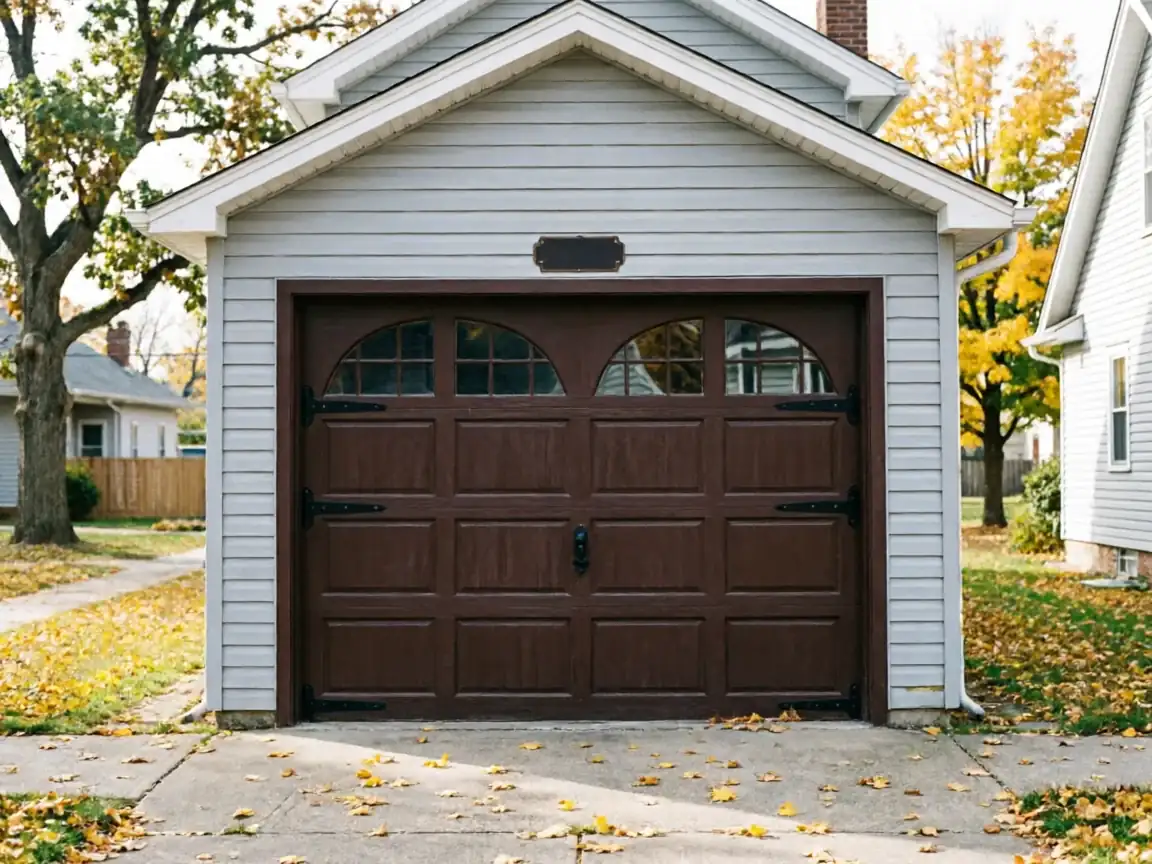
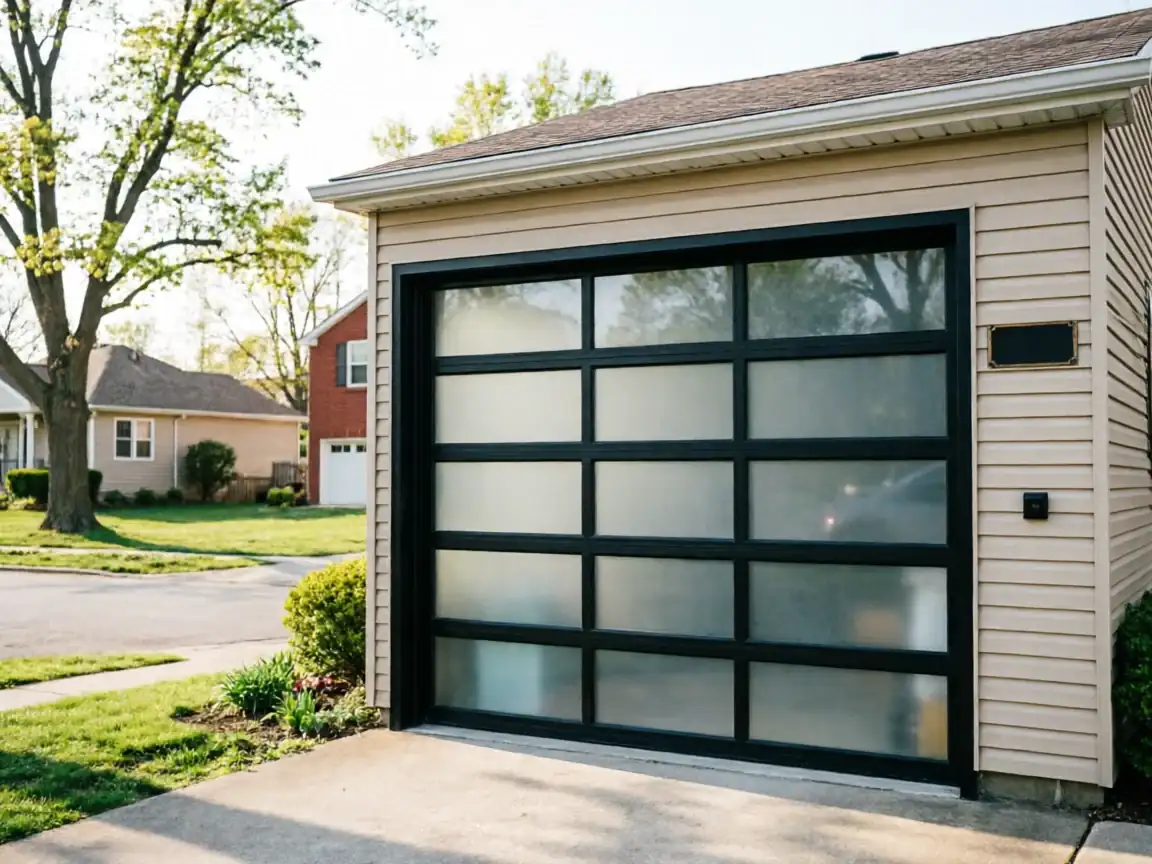
What we don't keep on the truck is anything custom-width, anything wood-composite, or glass-panel sections in non-stock sizes. Those get ordered in, and lead time depends on the manufacturer, not on us. If your opening is a standard two-car or single-car width - which most construction from this era is - you're looking at parts we already have, not a special order.
How Long You Are Without the Door
A full new-door install on a standard opening, once we're on site, runs a few hours start to finish
Old door and track out, new unit set, spring tensioned, opener mounted and tested. We travel from Lorain, about 9 miles to reach Avon, so factor that into when we can get there, not into how long the job itself takes once we arrive.
- 9 miles
If you're waiting on a custom-ordered panel or a non-standard size, the install day itself doesn't change
The wait is in the ordering, not the labor.
Can You Do This Yourself
Swapping panels on an existing door, sure, a handy homeowner can sometimes manage that. A full new installation is a different animal - you're setting spring tension on a torsion system under real load, and getting that wrong is how people end up in the ER with a hand or a face in the way of a spring that let go. We'd rather you call for this one.
Where we'll tell you honestly not to bother calling anyone: if your current door is cosmetically rough but mechanically sound - tracks aligned, springs good, opener working - a full replacement isn't worth the cost. That's a repaint or a hardware tune-up, not a new install.
The Complications
The one thing that catches people off guard on newer construction like this: some builder-installed openers from the early 2000s predate current safety sensor standards, and we won't reinstall a door without compliant photo-eye sensors, even if the old setup technically still ran. That's not us upselling you - it's not something we'll skip.
The other wrinkle is household size and garage use. With median income in Avon well above the broader area figure, we see more double-car and tandem openings here than in older parts of our territory, and taller or wider doors sometimes mean a different spring calculation than the standard chart gives you. We size for the actual opening, every time, not the average one.